01 HISTORICAL DOSSIERS
Still Missing
The artworks still sought. The families still searching.
Explore the cases
Documented art thefts, recoveries and restitutions, with links to the original sources.
Clocks show the time now. Below each clock: the latest documented case in that country from our archive.
Red mark: source-reported theft time. An arc shows a reported time window on the outer 24-hour scale. Only shown where timing is documented.
“Published” is the report date, not the theft date. Cases may cover thefts, recoveries or returns. Click a clock for the case details and source.
These are the six leading countries in an INTERPOL register snapshot published by a Cornell Data Journal team on 16 December 2023. Counts refer to objects registered as stolen, not theft incidents. This historical snapshot is not a current, comprehensive worldwide ranking.
Published analysis ↗Underlying data table ↗About the INTERPOL register ↗
Explore reported theft locations in the archive.
 2010
Paris caught the thief called “Spiderman”. Finding the paintings proved another matter entirely.
Read the story 3 min 2003
A tube, an anonymous call and an extraordinary claim: the thieves said they were exposing a museum’s weaknesses.
Read the story 3 min 2009
Two armed men took Olympia from the artist’s former home. Its recognisability may have become its best defence.
Read the story 3 min


The artworks still sought. The families still searching.
Explore the cases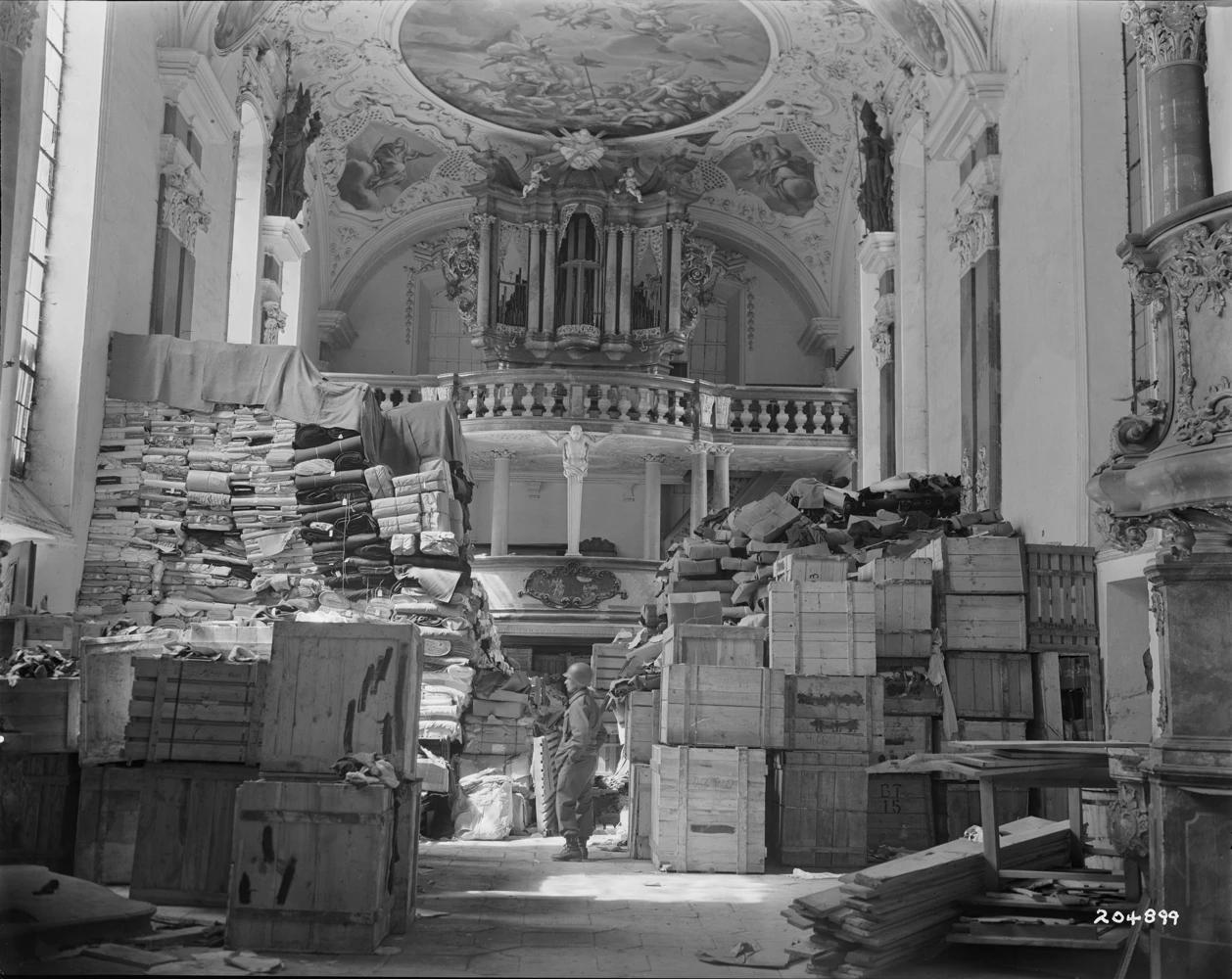
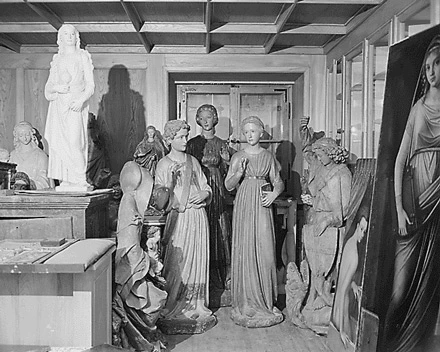

Dispossession, long battles and the paths to restitution.
Explore the casesThe upper strip shows details of the featured artworks; the lower strip uses World War II archive photographs as historical context.
87 entries · 88 documented offers · terms apply
Newest additions first · up to ten entries in each group.
Official sources checked; terms apply.
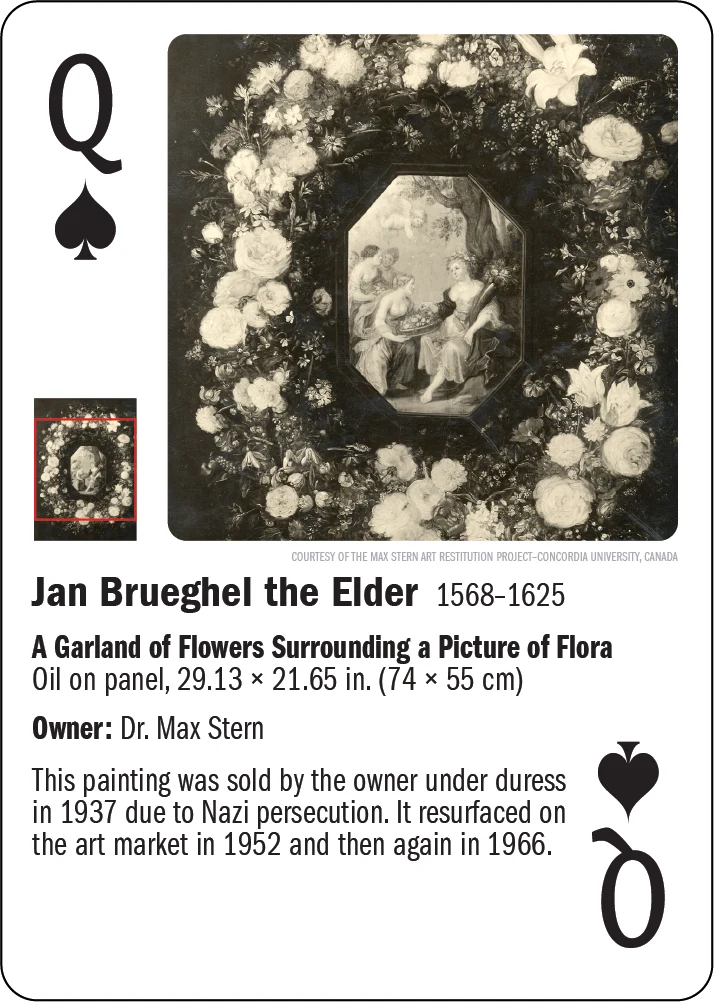 Jan Brueghel the Elder · A Garland of Flowers Surrounding a Picture of FloraUp to$15,000Monuments Men and Women FoundationEnds: 2026-12-31
 Jan Brueghel the Elder · Still Life with FlowersUp to$7,500Monuments Men and Women FoundationEnds: 2026-12-31
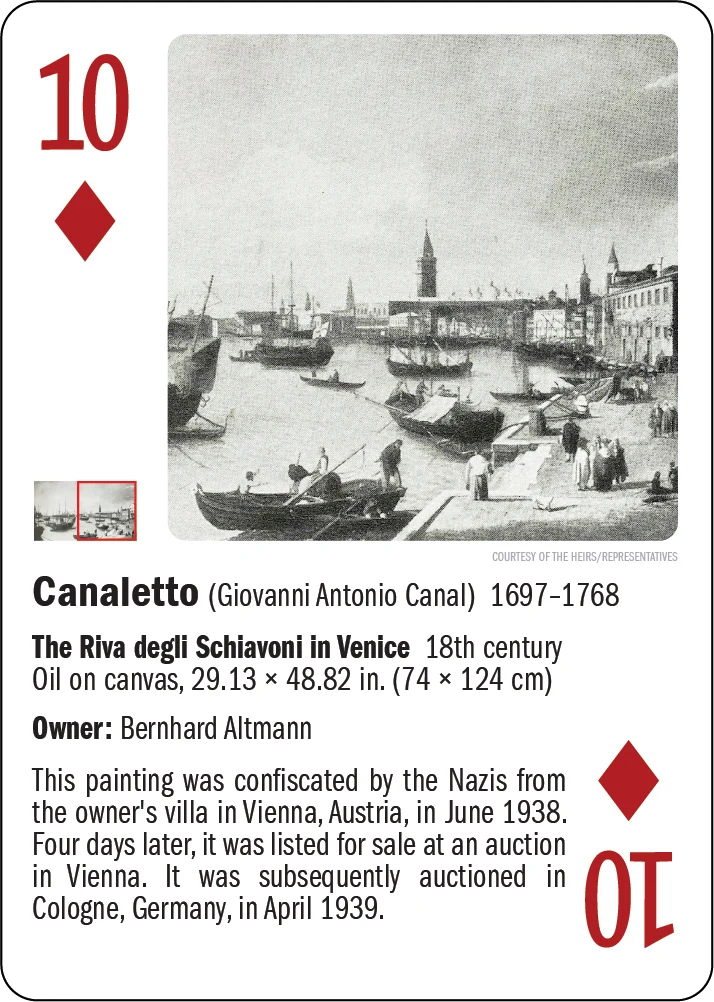 Canaletto · The Riva degli Schiavoni in VeniceUp to$7,500Monuments Men and Women FoundationEnds: 2026-12-31
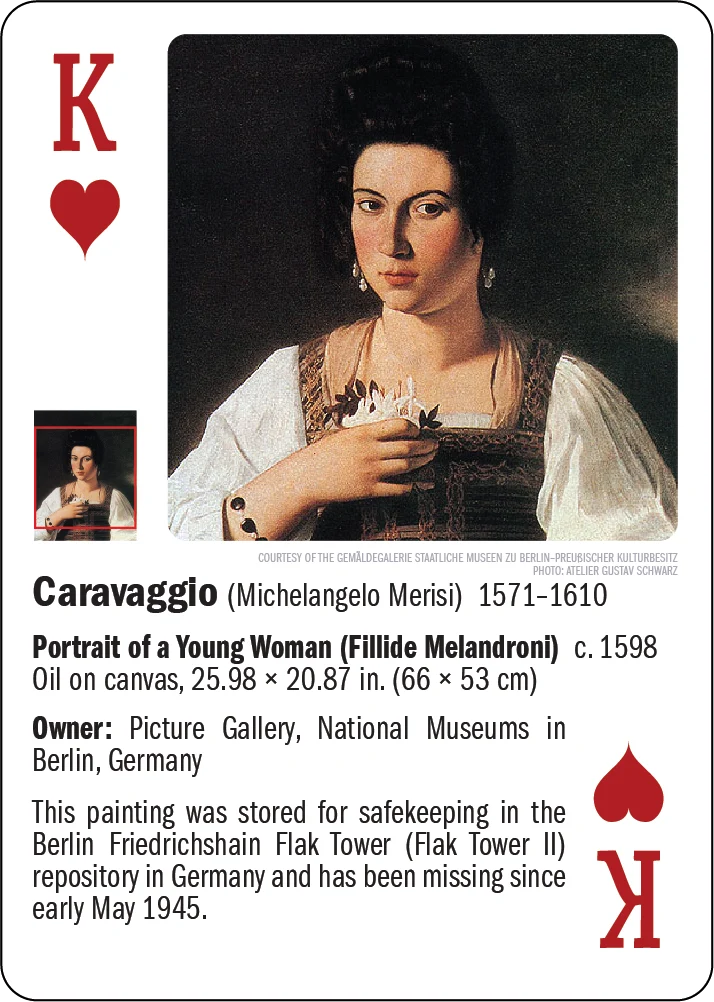 Caravaggio · Portrait of a Young Woman (Fillide Melandroni)Up to$20,000Monuments Men and Women FoundationEnds: 2026-12-31
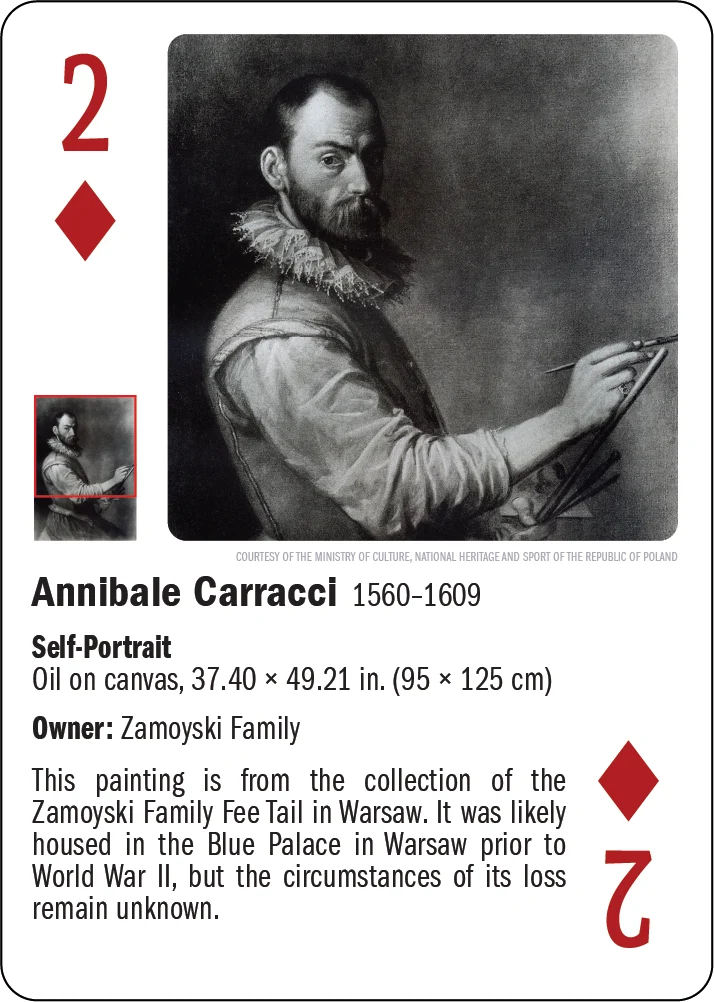 Annibale Carracci · Self-PortraitUp to$2,500Monuments Men and Women FoundationEnds: 2026-12-31
 Cima da Conegliano · Virgin and ChildUp to$2,500Monuments Men and Women FoundationEnds: 2026-12-31
 Lovis Corinth · Tyrolean with CatUp to$2,500Monuments Men and Women FoundationEnds: 2026-12-31
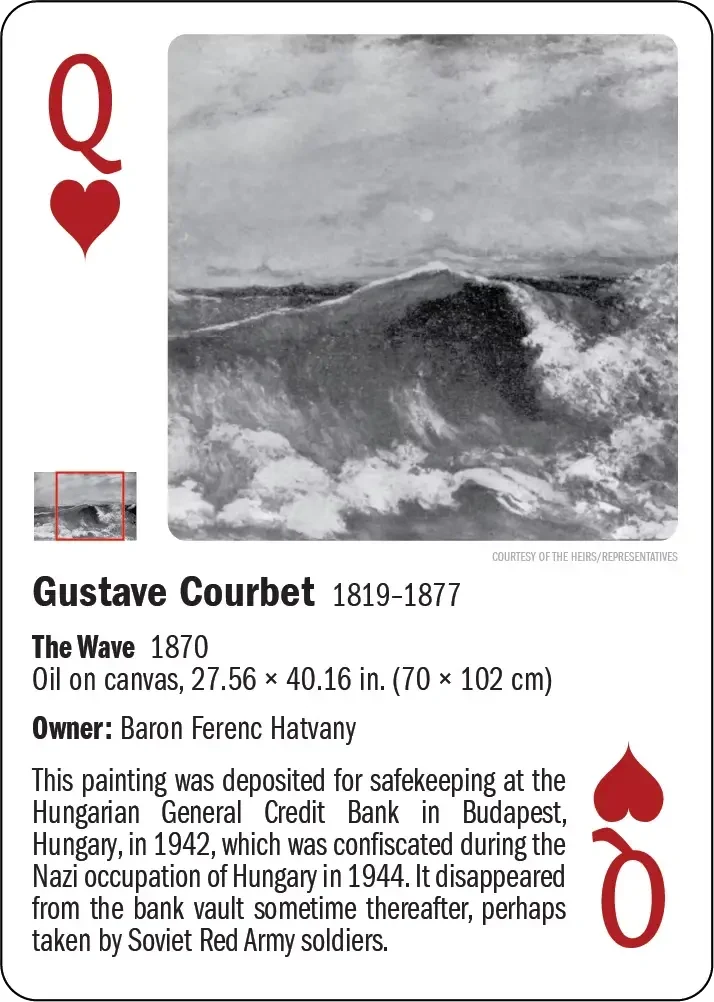 Gustave Courbet · The WaveUp to$15,000Monuments Men and Women FoundationEnds: 2026-12-31
 Lucas Cranach the Elder · Saint GeorgeUp to$7,500Monuments Men and Women FoundationEnds: 2026-12-31
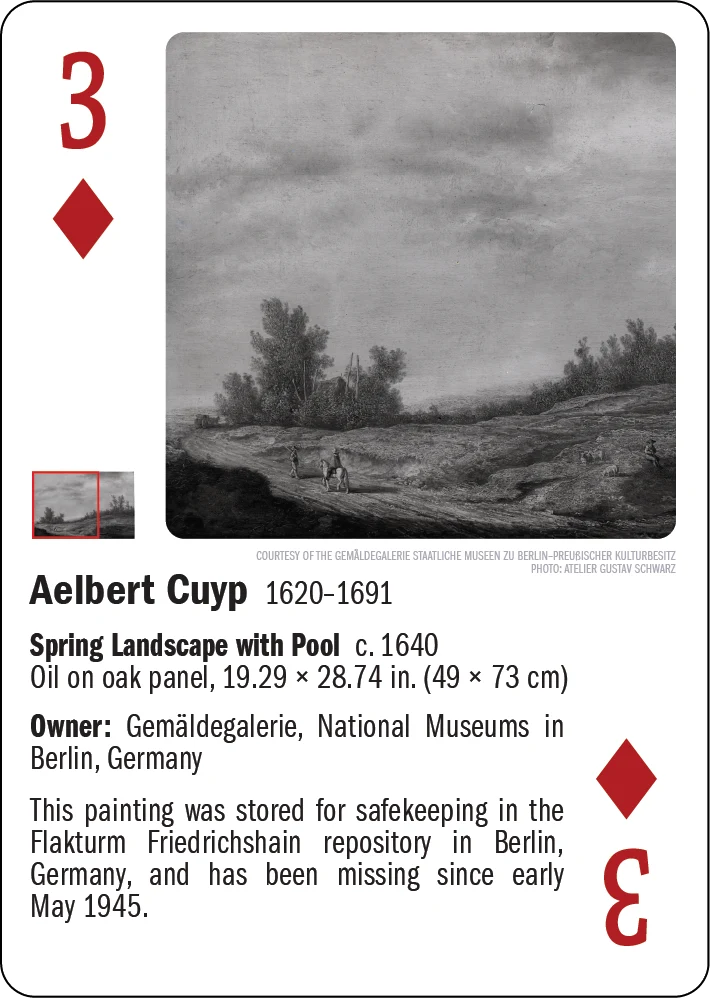 Aelbert Cuyp · Spring Landscape with PoolUp to$2,500Monuments Men and Women FoundationEnds: 2026-12-31
10 of 59 entries · see the full list for the rest.
Amounts reported by the cited sources, without confirmation that the offers remain valid.
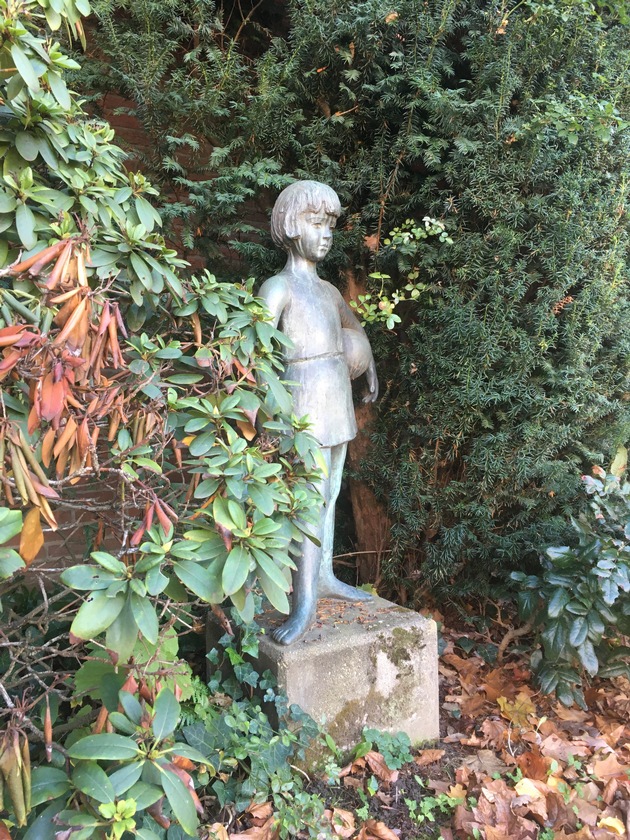 Heinrich Martens’s bronze girl with a ballUp to€5,000Validity unconfirmed
 LeRoy Neiman — Oscar de la Hoya – Shane MosleyAdvertised reward$5,000Centaur Art GalleriesValidity unconfirmed
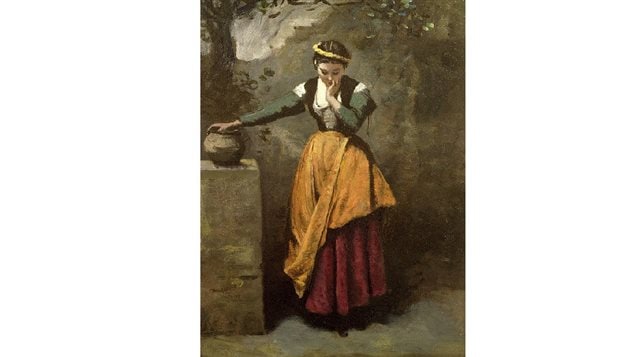 Montreal Museum of Fine Arts — 1972 theftAdvertised rewardAmount not publishedInsurers, according to Radio Canada InternationalValidity unconfirmed
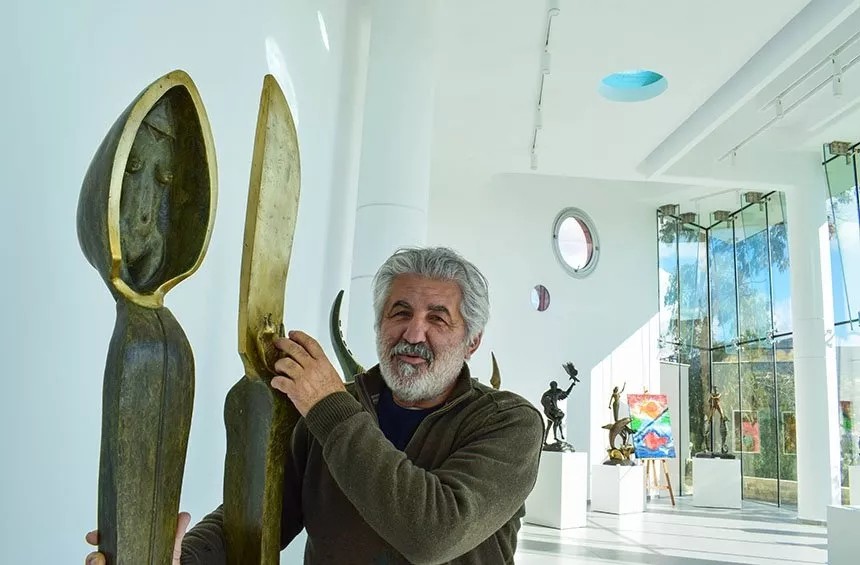 Giapanis · BalanceAdvertised reward€5,000Validity unconfirmed
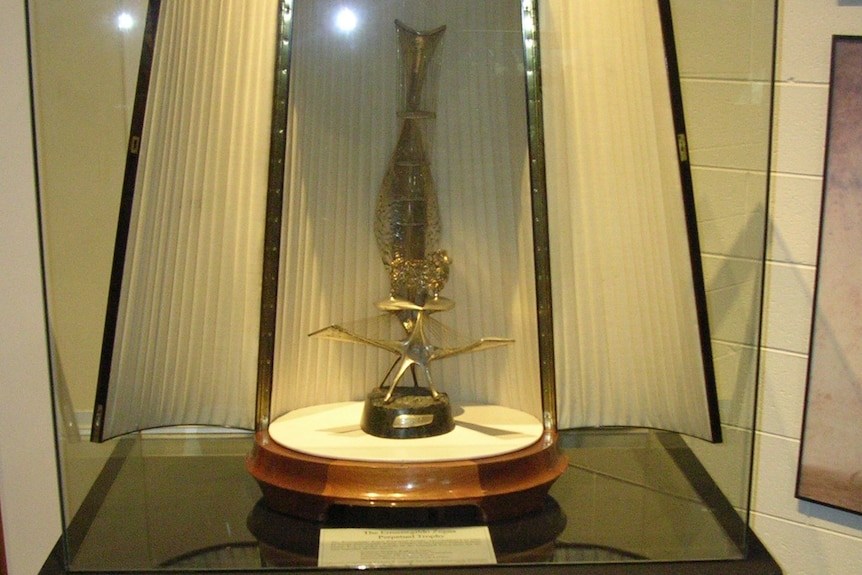 Zegna · Gold sheep trophyAdvertised rewardA$15,000Validity unconfirmed
 Valais · Chalet theftUp to€1,000,000Validity unconfirmed
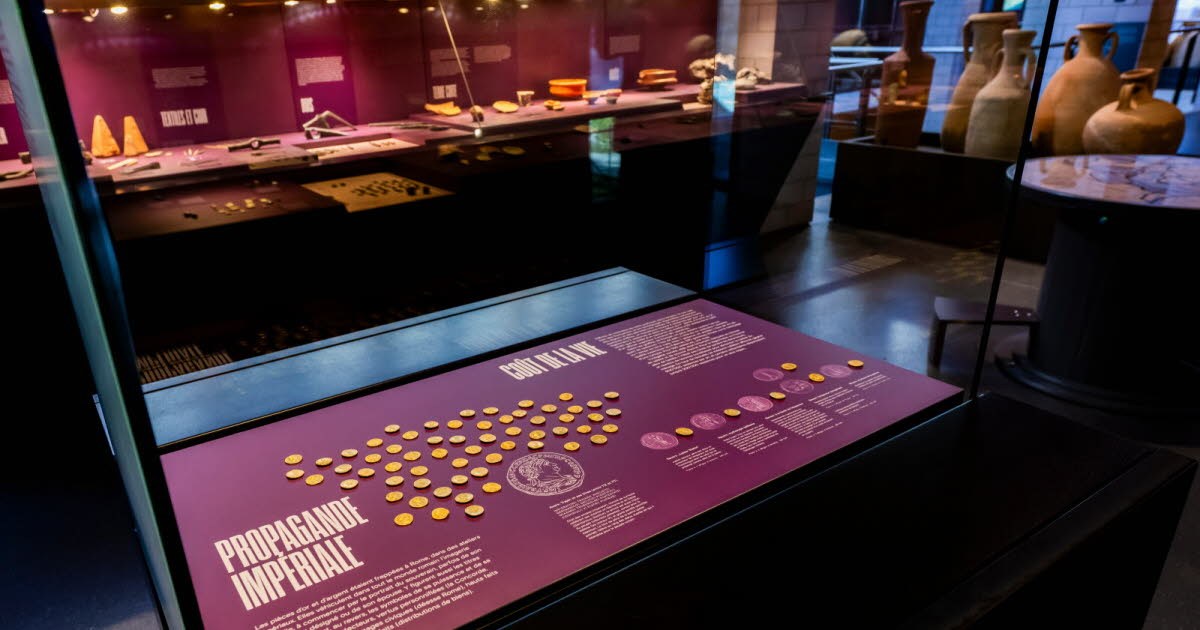 Lausanne · Gold coinsUp to€200,000Validity unconfirmed
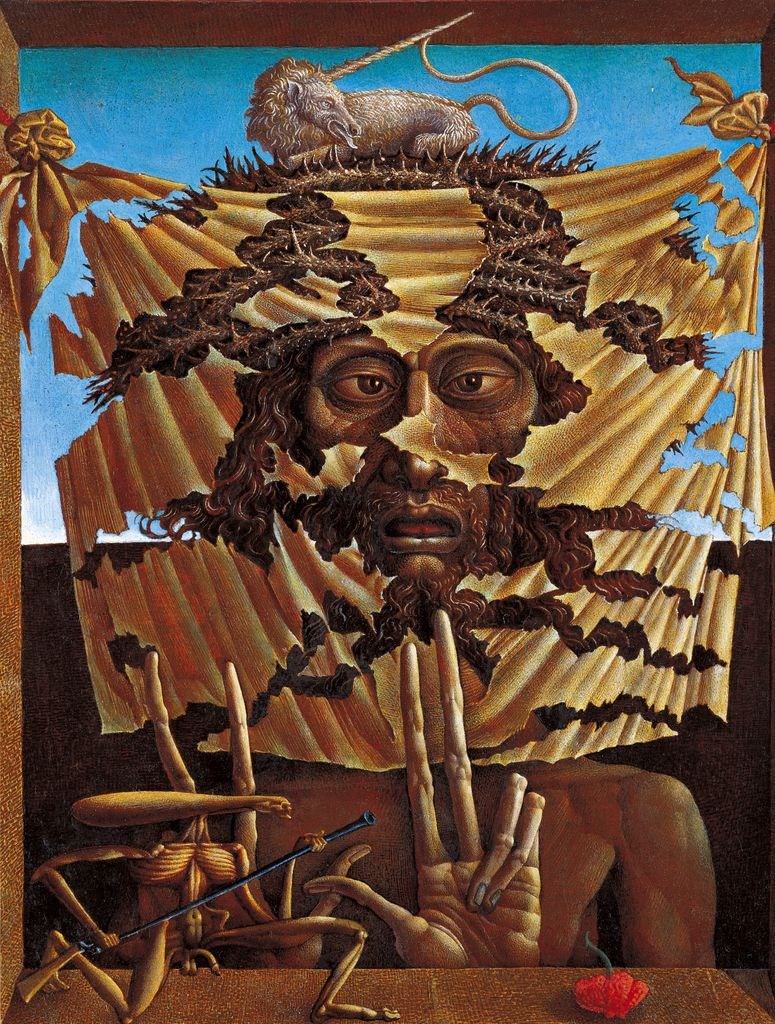 Ernst Fuchs · ViennaAdvertised reward€30,000Validity unconfirmed
 Harawene · RotoruaAdvertised rewardNZ$5,000Validity unconfirmed
 Henry · LondonAdvertised reward£1,000Validity unconfirmed
10 of 18 entries · see the full list for the rest.
Historical reward offers; reported returns, recoveries or destruction.
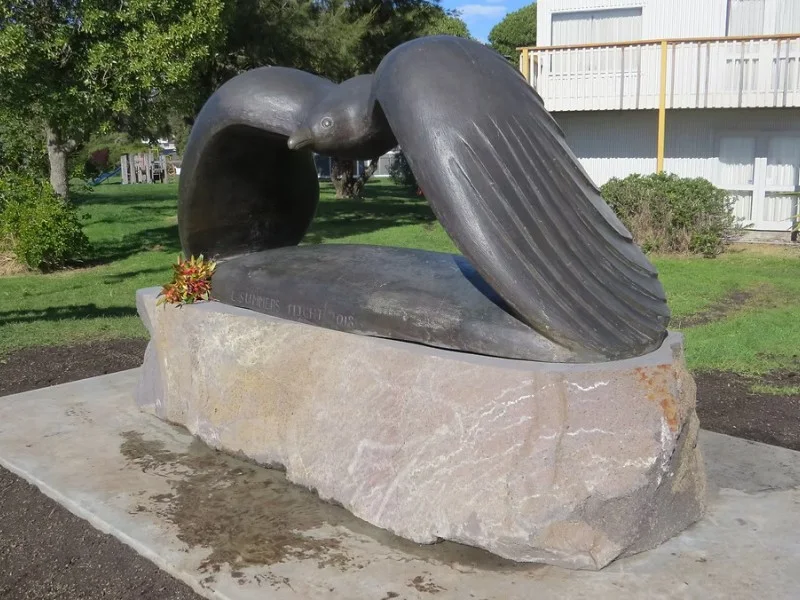 Llew Summers · FlightAdvertised rewardNZ$4,000Archive · see outcome
 Amelia Earhart · ReturnedAdvertised rewardCA$25,000Archive · see outcome
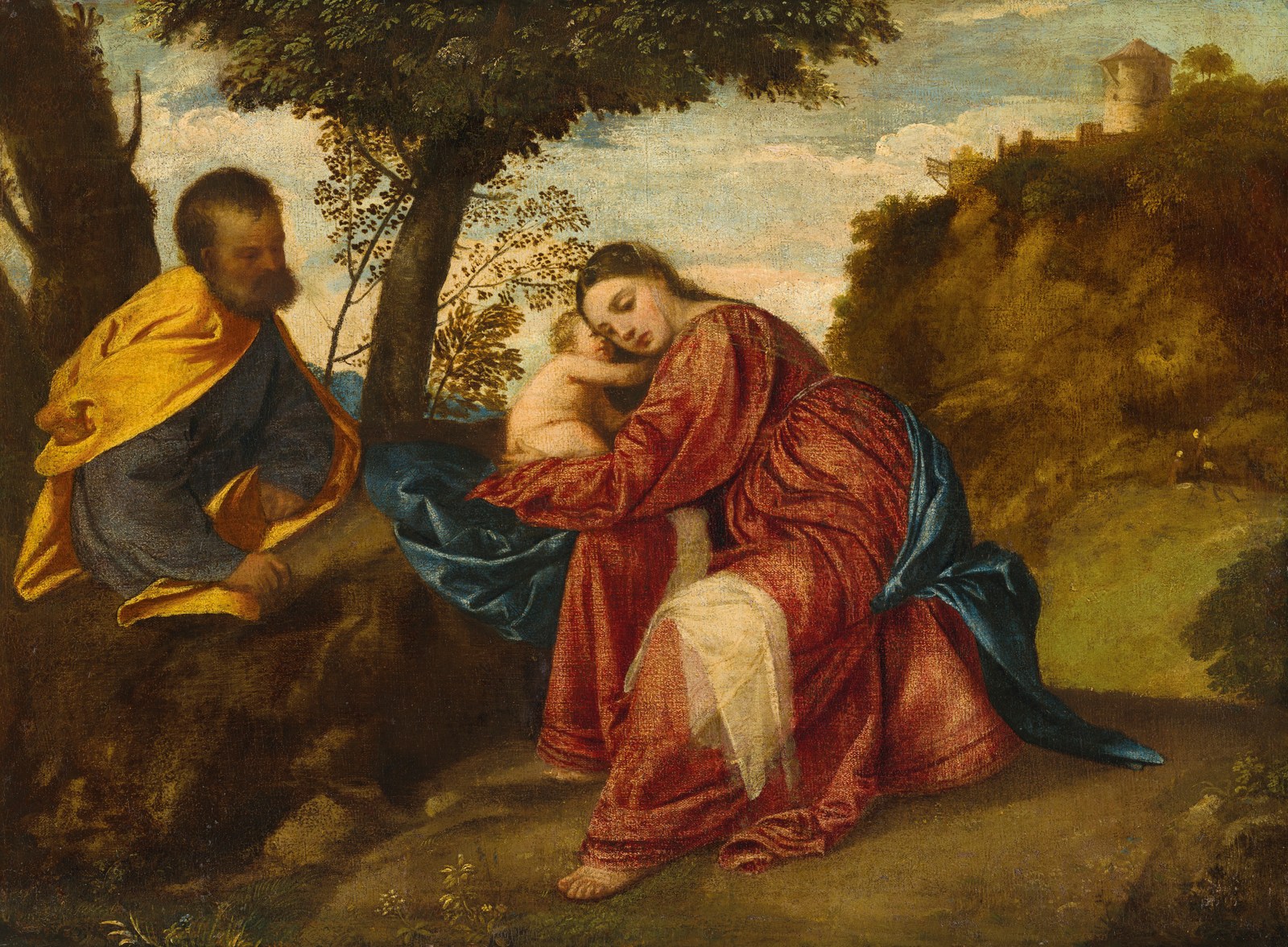 Titian · RecoveredAdvertised reward£100,000Archive · see outcome
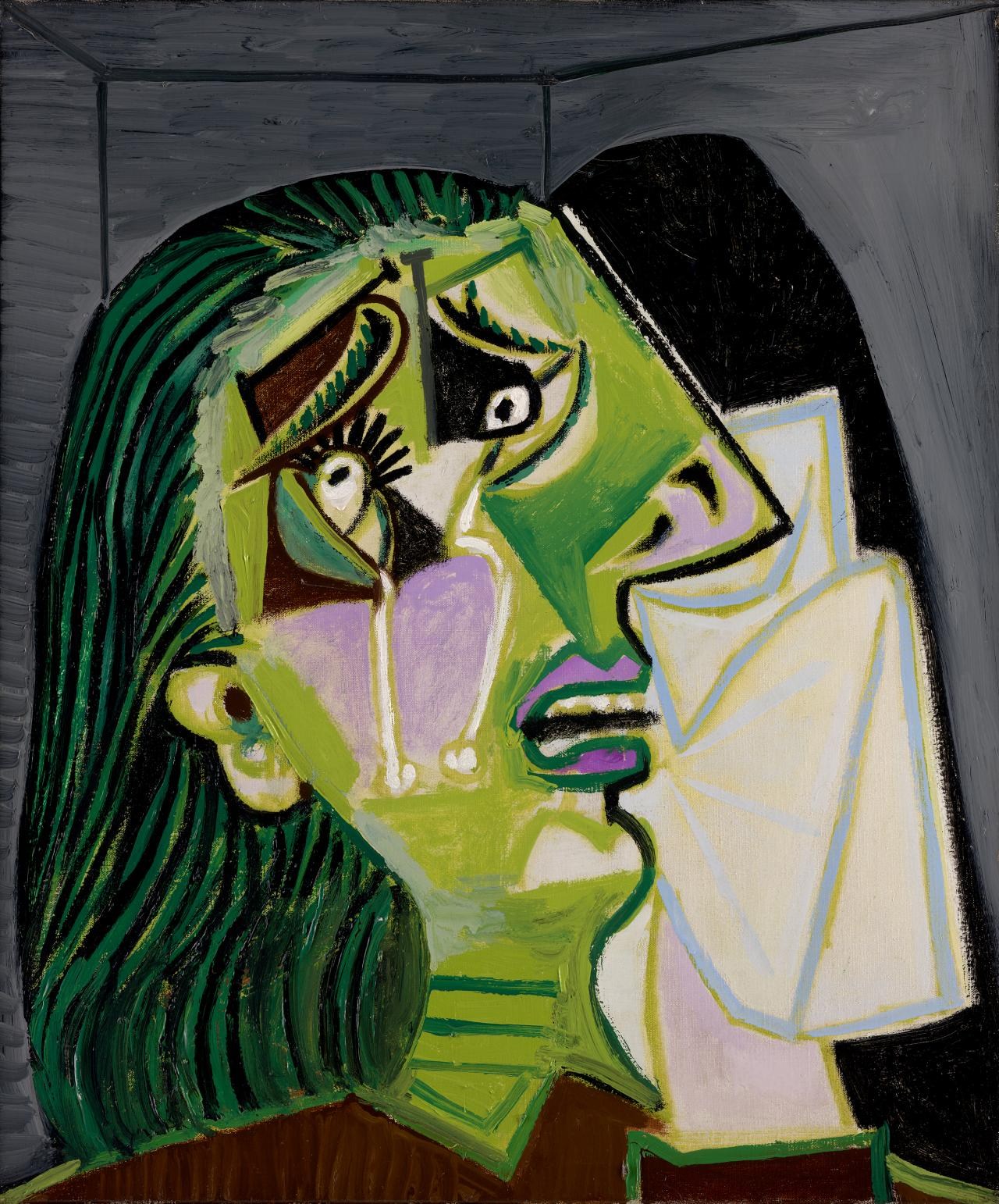 Picasso · RecoveredAdvertised rewardA$50,000Archive · see outcome
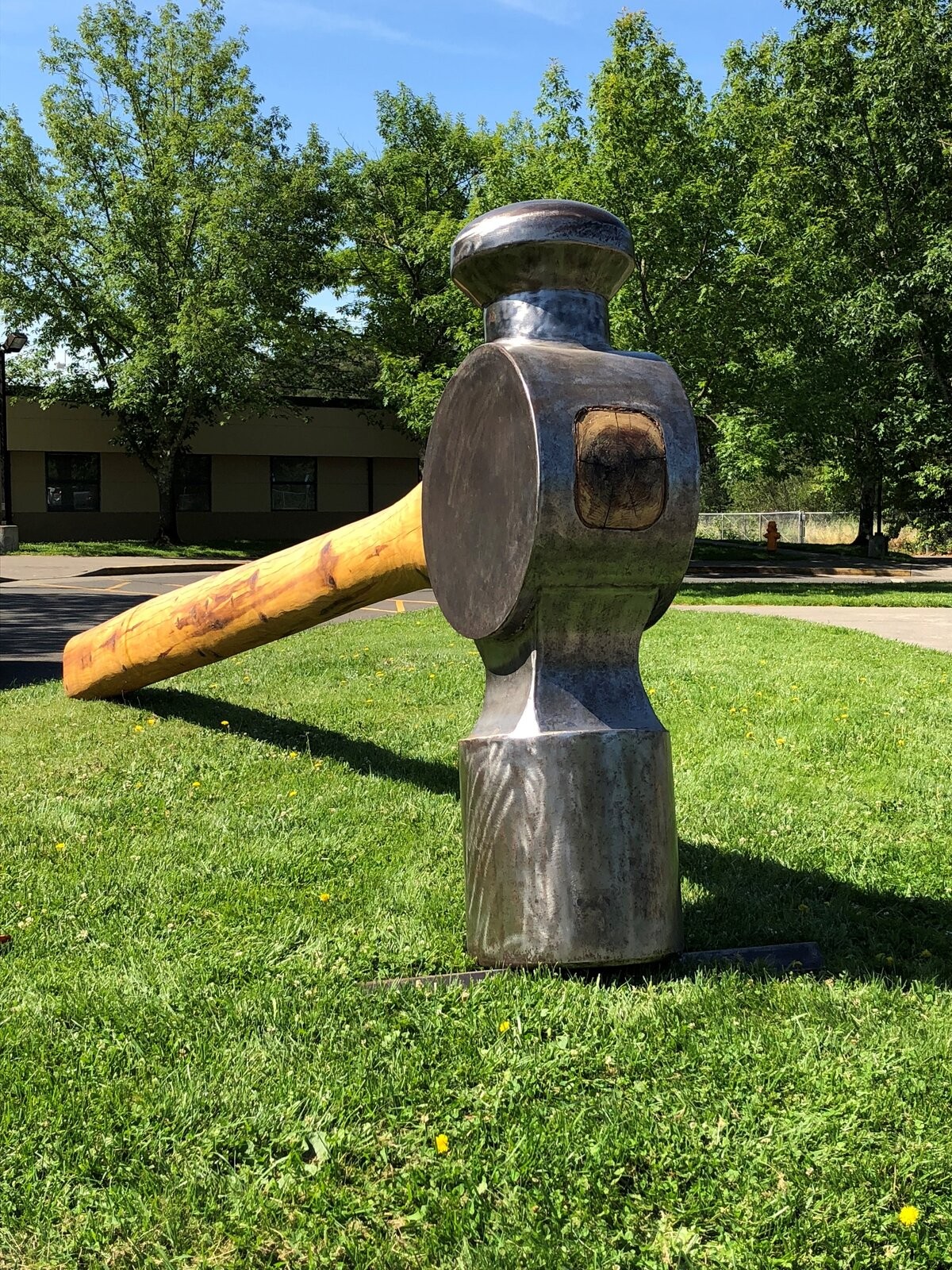 Unkrey · The HammerAdvertised reward$1,000Archive · see outcome
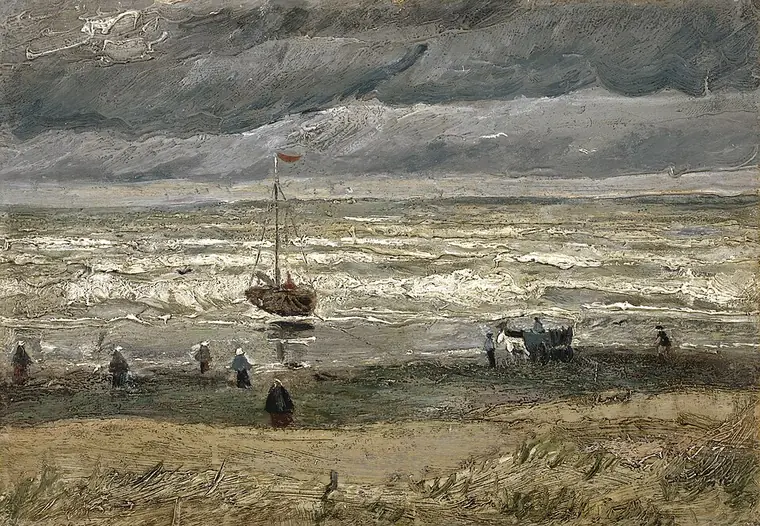 Van Gogh · Two paintingsAdvertised reward€100,000Archive · see outcome
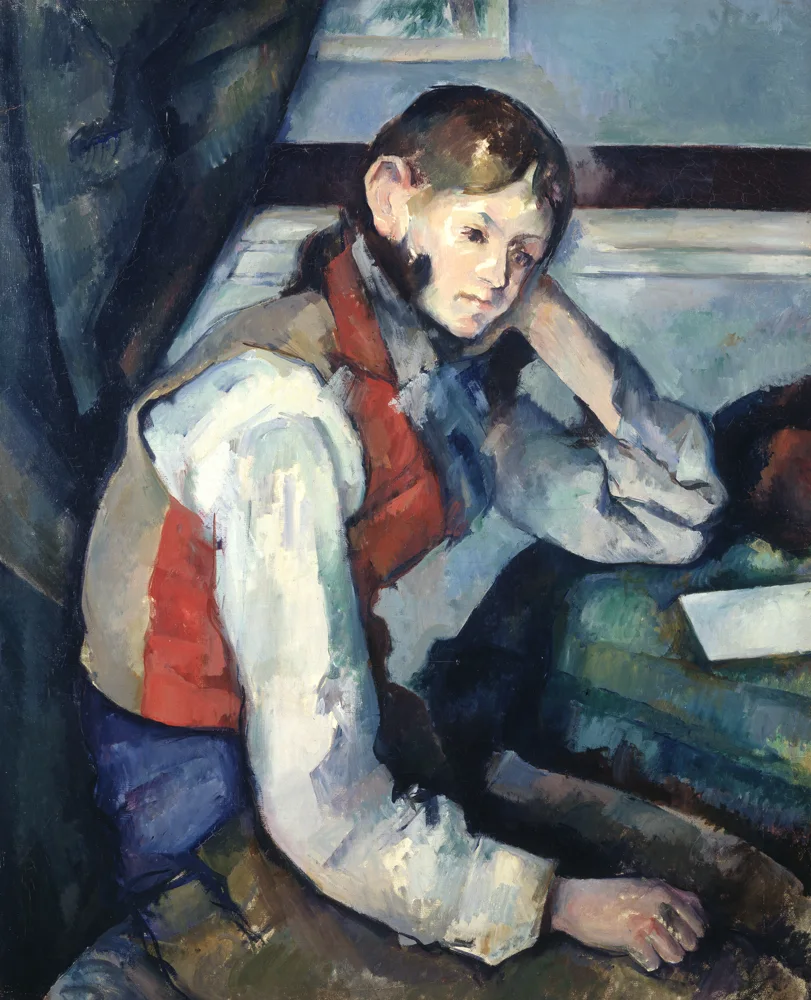 Bührle · RecoveredAdvertised rewardCHF 100,000Archive · see outcome
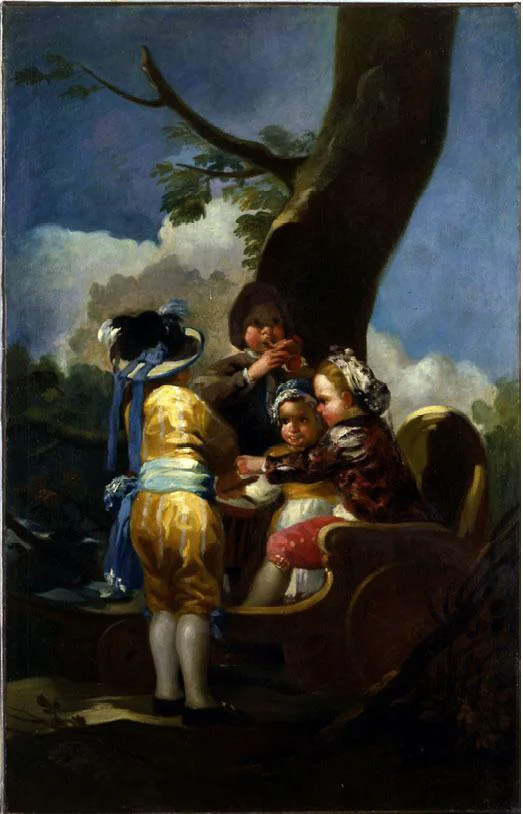 Goya · Children with a CartUp to$50,000Archive · see outcome
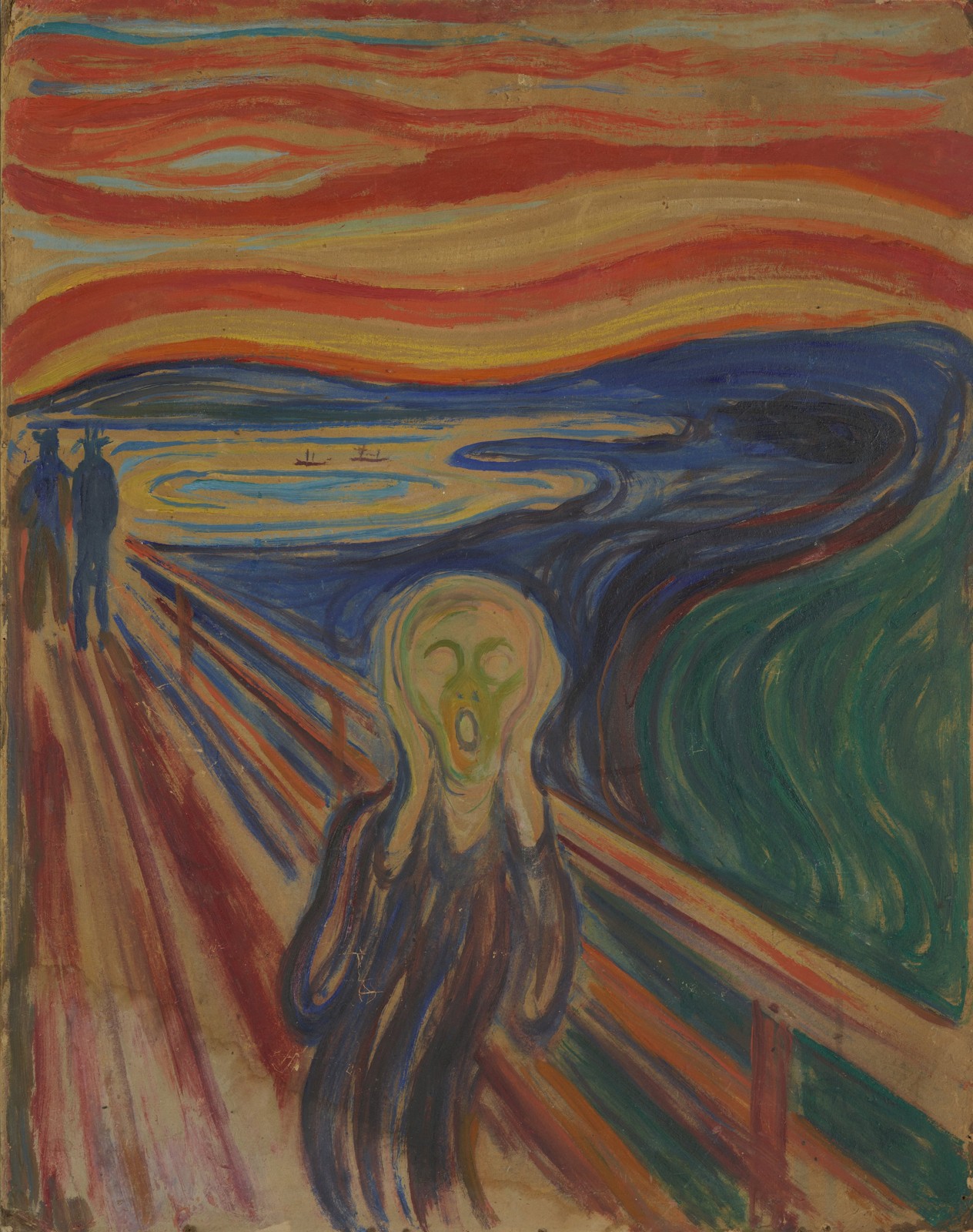 Munch · Two paintingsUp toNOK 2,000,000Archive · see outcome
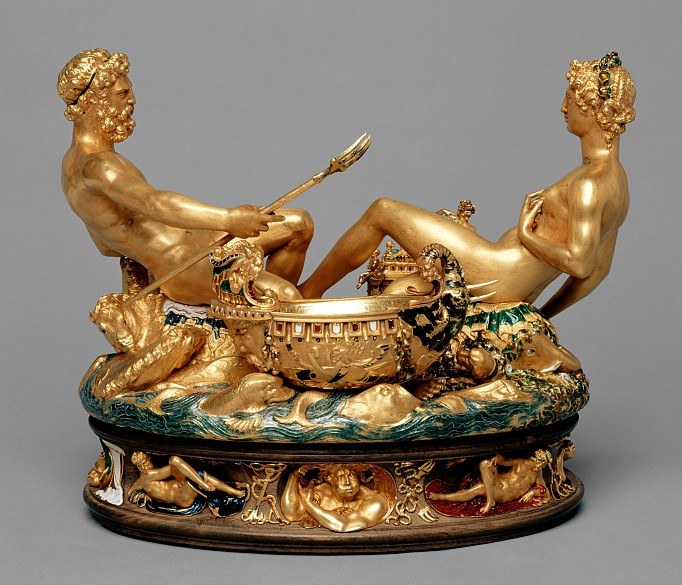 Cellini · SalieraAdvertised reward€70,000Archive · see outcome
1345–1365 of 1426 reports
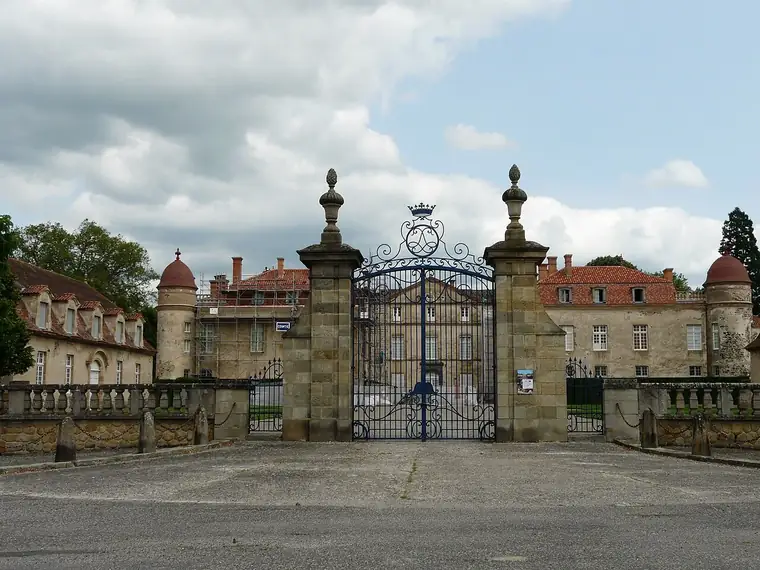
Père Igor / Wikimedia Commons · Resized for display Image source ↗ · CC BY-SA 4.0
France’s protected-object registry records the theft of chairs, cabriolet armchairs and a console from the château in Parentignat in 1983. The eighteenth-century château furniture remains marked as stolen in the current Palissy notice.
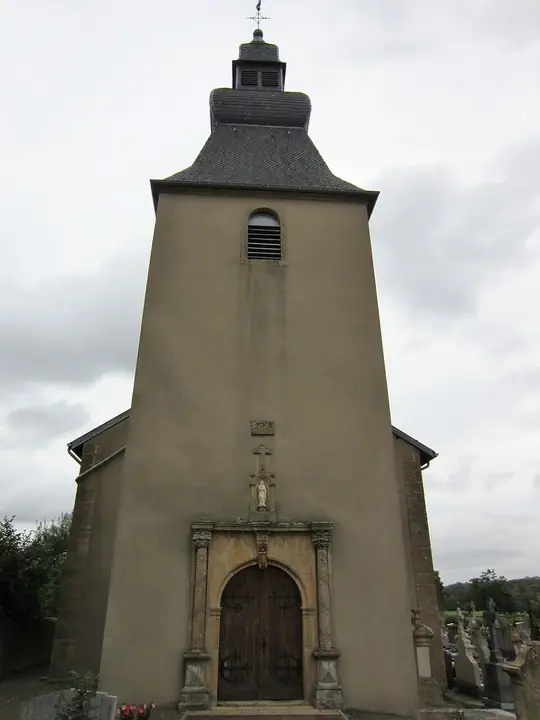
Context photograph of Saint-Rémi church in Bertrange, Moselle · Aimelaime / Wikimedia Commons; resized · Resized for display Image source ↗ · Public domain / Domaine public
An eighteenth-century statuette of Saint Donatus of Münstereifel was stolen in January 1983 from Saint-Rémi parish church. The regional inventory explicitly records the theft in the work’s history; the source does not establish a subsequent recovery.
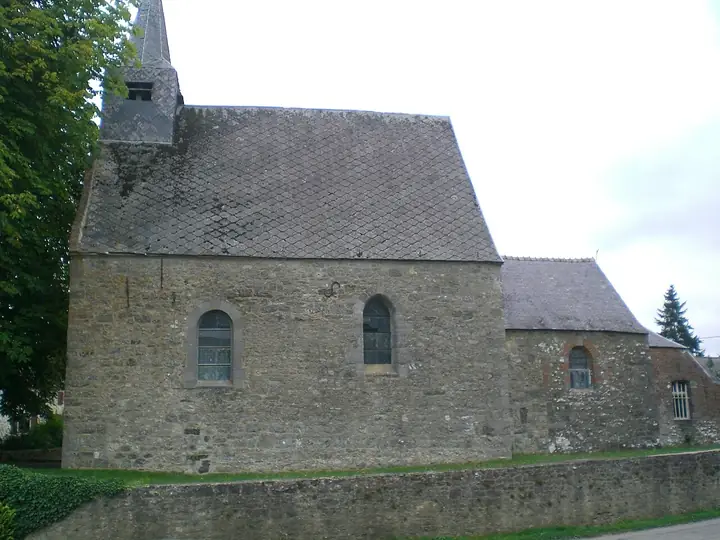
Context photograph of the historic site in Floursies associated with the theft report; the stolen object is not pictured. · Chatsam / Wikimedia Commons · Resized for display Image source ↗ · CC BY-SA 4.0
The official French heritage inventory documents the 1983 theft of an eighteenth-century statue of Saint Eloi from the parish church in Floursies. Its current dossier continues to record the loss.
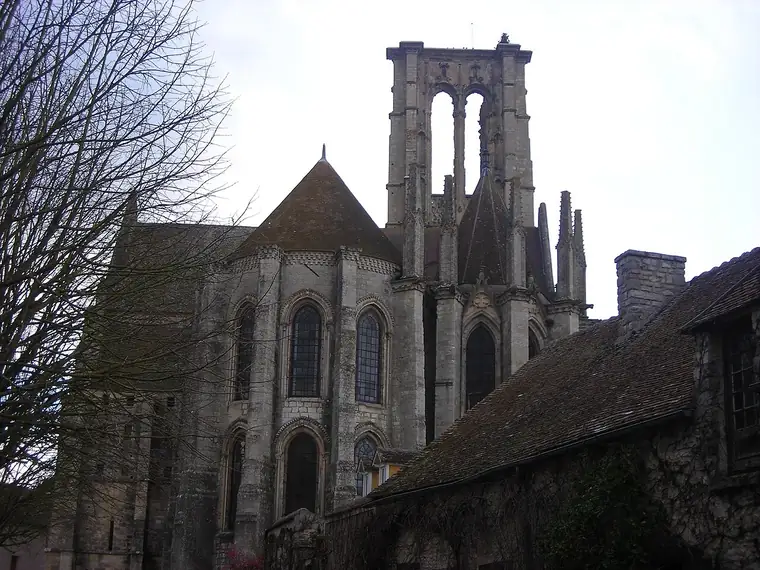
Dorian Bianco / Wikimedia Commons · Resized for display Image source ↗ · CC BY-SA 4.0
France’s protected-object registry records the theft of a Pietà and statues of Saint Vincent and Saint Nicholas from the parish church in Larchant in 1982. The fifteenth-century religious sculptures remains marked as stolen in the current Palissy notice.
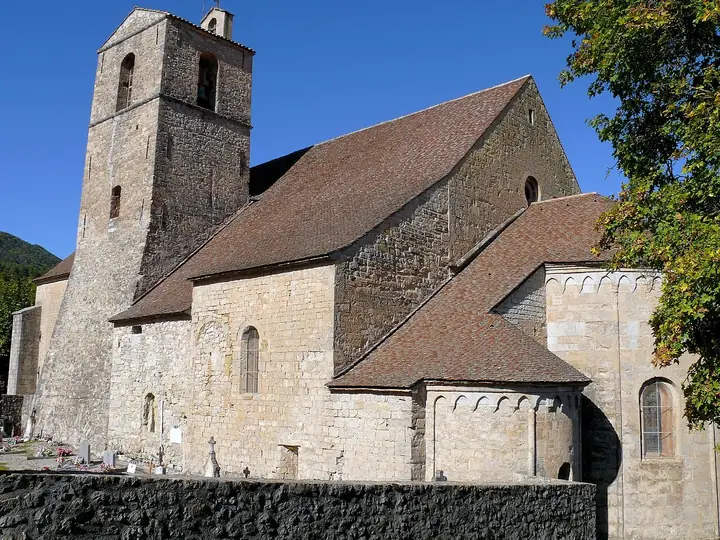
Context photograph of the historic site in Senez associated with the theft report; the stolen object is not pictured. · MOSSOT / Wikimedia Commons · Resized for display Image source ↗ · CC BY 3.0
The former cathedral lost two Flemish verdure tapestries and four biblical hangings in August 1982. The Ministry of Culture records 8 August for the biblical scenes of Elijah and the Coronation of Esther, while the verdure notice gives only the month. These official notices document one same-site, same-month theft group; the works remain recorded as stolen.
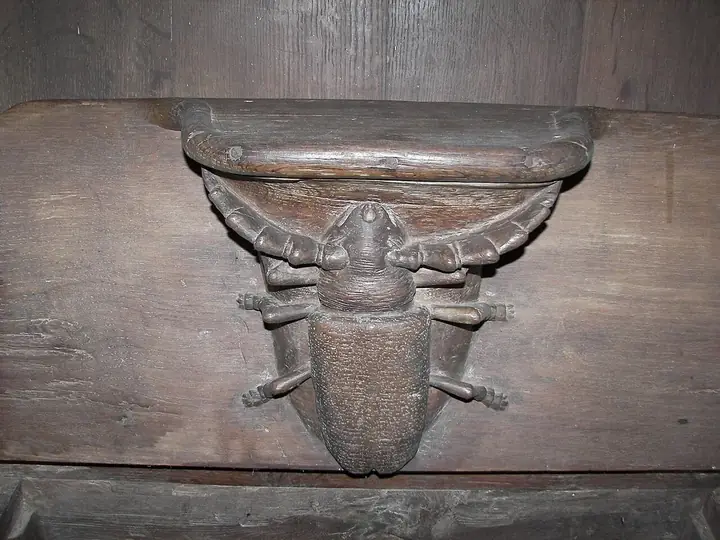
Context detail: a carved misericord in Saint-Denis church, Coulanges; the stolen Saint Elizabeth statuette is not shown · Jacques CHAZARD / Wikimedia Commons; resized · Resized for display Image source ↗ · CC BY-SA 4.0
A sixteenth-century wooden statuette of Saint Elizabeth of Hungary was stolen in August 1982 from Saint-Denis church. France’s heritage inventory documents the event month and continues to identify the protected sculpture as stolen.
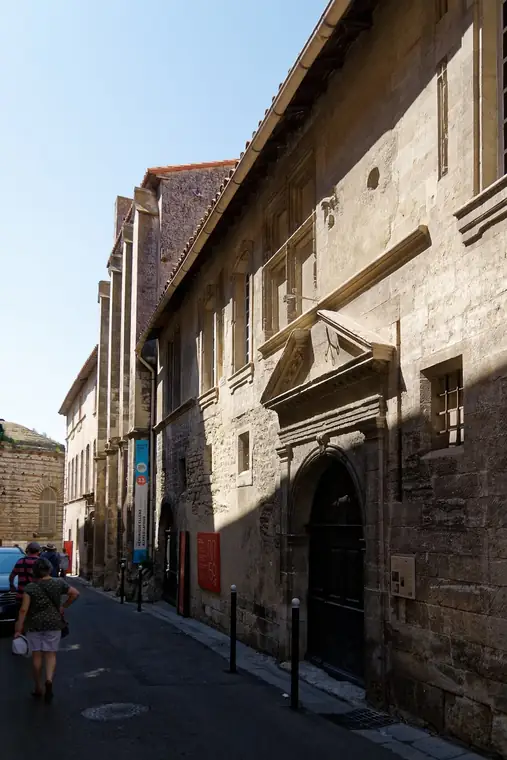
Bjs / Wikimedia Commons · Resized for display Image source ↗ · CC BY-SA 4.0
Five sixteenth-century tapestries from the Seven Wonders of the Ancient World series were stolen from Arles’s Musée Réattu on 26 April 1982. Four were eventually recovered. The official inventory continues to identify the Hanging Gardens of Babylon tapestry as missing, so the recovery remains incomplete.
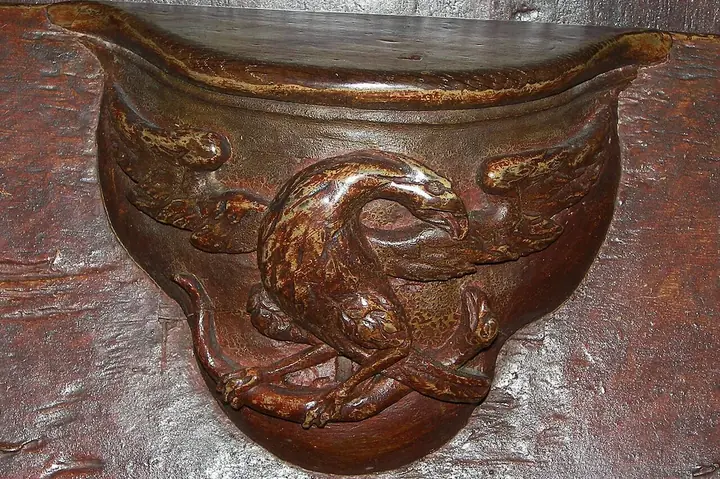
Context detail: carved choir-stall decoration in the church of Le Neubourg; the stolen altar statuettes are not shown · Jacques CHAZARD / Wikimedia Commons; resized · Resized for display Image source ↗ · CC BY-SA 3.0
Three small sculptures were stolen in March 1982 from the high-altar retable and tabernacle. The ensemble, made from gilded carved wood and marble in the mid-seventeenth century, remains recorded as partially stolen in the national heritage inventory.
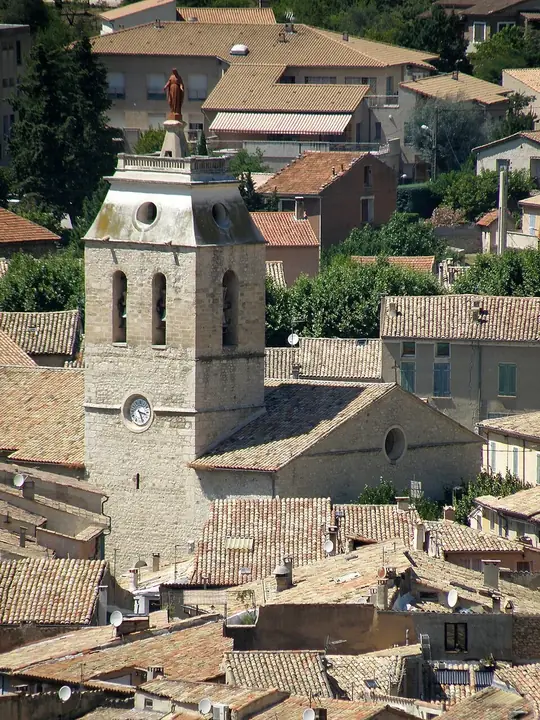
Context photograph of Notre-Dame de Nazareth church in Buis-les-Baronnies · Torsade de Pointes / Wikimedia Commons; resized · Resized for display Image source ↗ · CC0 1.0
An eighteenth-century canvas depicting Saint Thomas Aquinas was stolen from the church in February 1982. The national inventory records the painting and its carved wooden frame together, and continues to flag the painting as stolen.
GO69 / Wikimedia Commons · Resized for display Image source ↗ · CC BY-SA 4.0
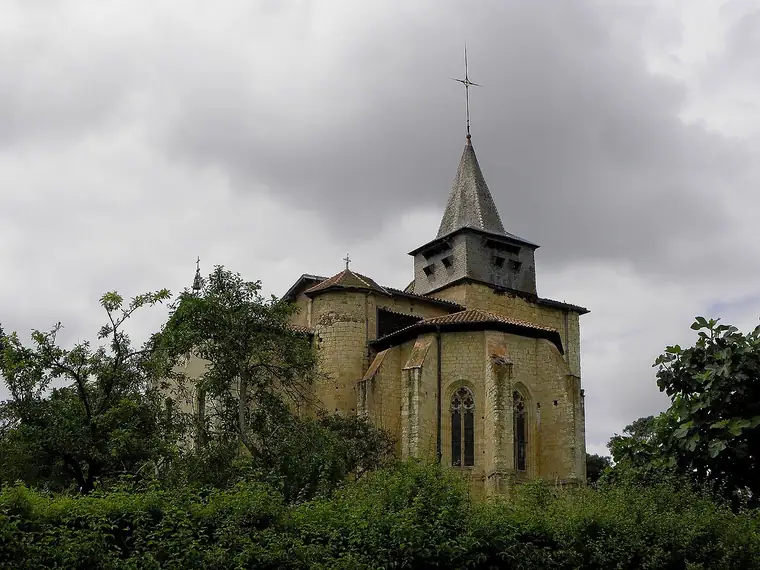
France’s protected-object registry records a February 1982 report of the theft of a Mary Magdalene painting from the parish church in Pessan. The eighteenth-century religious painting remains marked as stolen in the current Palissy notice.
Context photograph of the church in Saint-Hilaire; the stolen artwork is not shown · Cantepien / Wikimedia Commons; resized · Resized for display Image source ↗ · CC BY 4.0
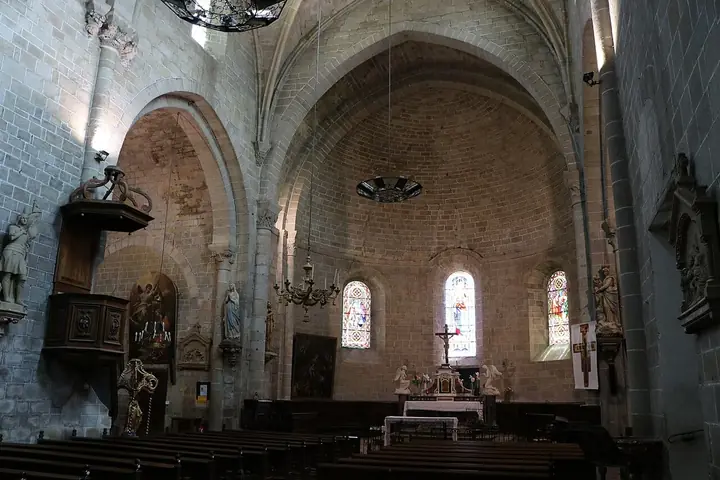
Four of a six-piece set of seventeenth-century bronze candlesticks were stolen in 1982. The 1983 inventory check documented the loss; the national heritage record continues to flag the ensemble as partially stolen.
Context photograph of the church in Jours-en-Vaux (Val-Mont); the stolen artwork is not shown · Bildoj / Wikimedia Commons; resized · Resized for display Image source ↗ · CC BY-SA 3.0
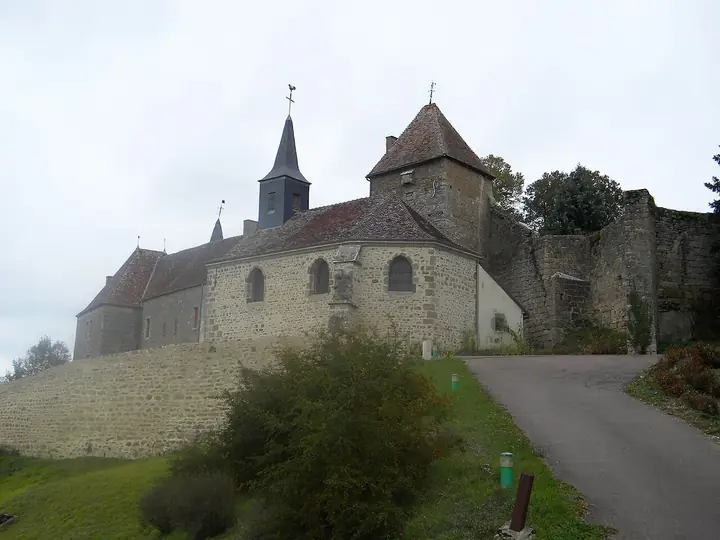
A painted wooden Saint Roch was stolen in 1982 from the church of the Assumption at Jours-en-Vaux, now part of Val-Mont. The inventory dates the protected figure to the sixteenth or seventeenth century and still lists it as stolen.
Context photograph of the church in Faux-la-Montagne; the stolen artwork is not shown · Aubussonais / Wikimedia Commons; resized · Resized for display Image source ↗ · CC BY-SA 3.0
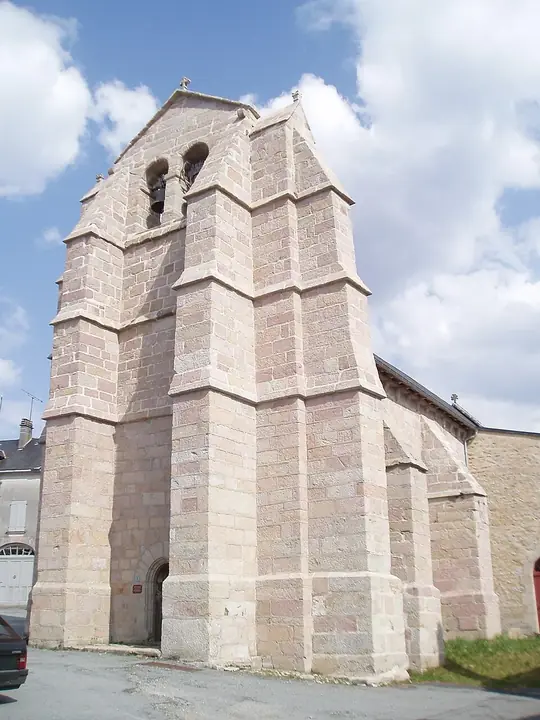
A small carved Saint Roch disappeared between 1981 and 1982 from the seventeenth-century altar ensemble. This is the earlier theft identified in the inventory, distinct from the removal of other figures and altar ornaments in August 1992.
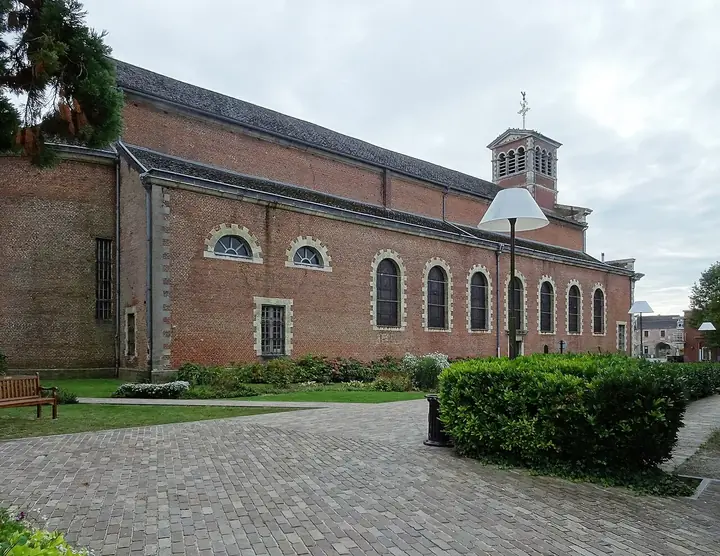
Context photograph of the church in Le Quesnoy; the stolen artwork is not shown · Pierre André Leclercq / Wikimedia Commons; resized · Resized for display Image source ↗ · CC BY-SA 4.0
A painted stone Christ in Bonds, dated to the transition from the fifteenth to sixteenth century, was stolen in 1982 from Notre-Dame church. The Ministry of Culture’s record continues to identify the protected sculpture as stolen.
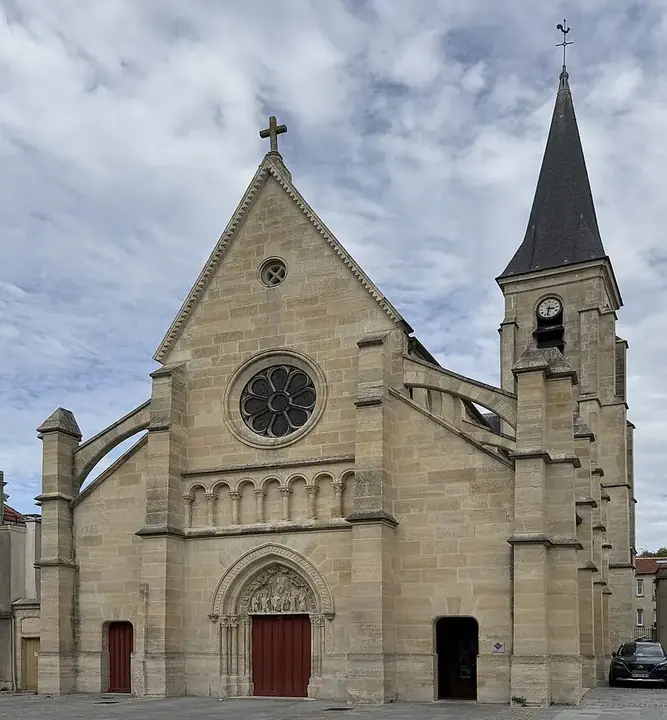
Saint-Hermeland church in Bagneux, Hauts-de-Seine · Chabe01 · Resized for display Image source ↗ · CC BY-SA 4.0
The head of a seventeenth- or eighteenth-century stone Saint Barbara was stolen in 1982. The statue had formerly occupied a niche on the old farm of Notre-Dame de Paris’s chapter; the record flags the surviving work as partially stolen.
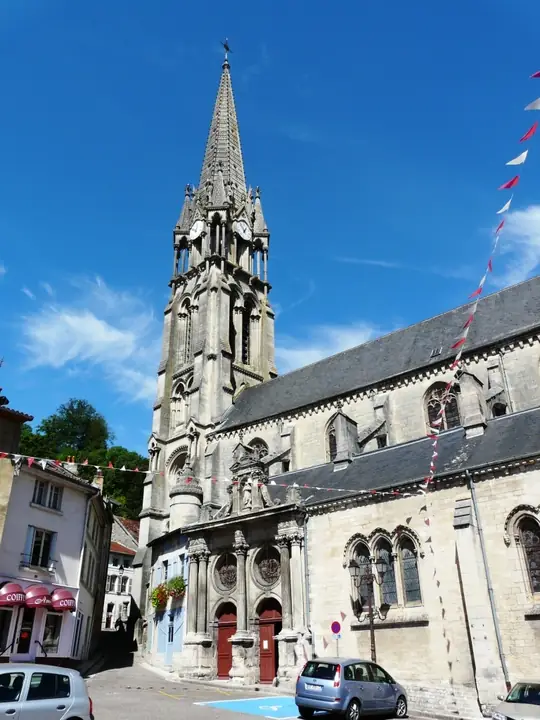
Context photograph of the historic site in Joinville associated with the theft report; the stolen object is not pictured. · Urbanisme.joinville / Wikimedia Commons · Resized for display Image source ↗ · CC BY-SA 3.0
The official French heritage inventory documents the 1981 theft of five fifteenth-century high reliefs depicting Christ’s Passion and Resurrection from the parish church in Joinville. Its current dossier continues to record the loss.
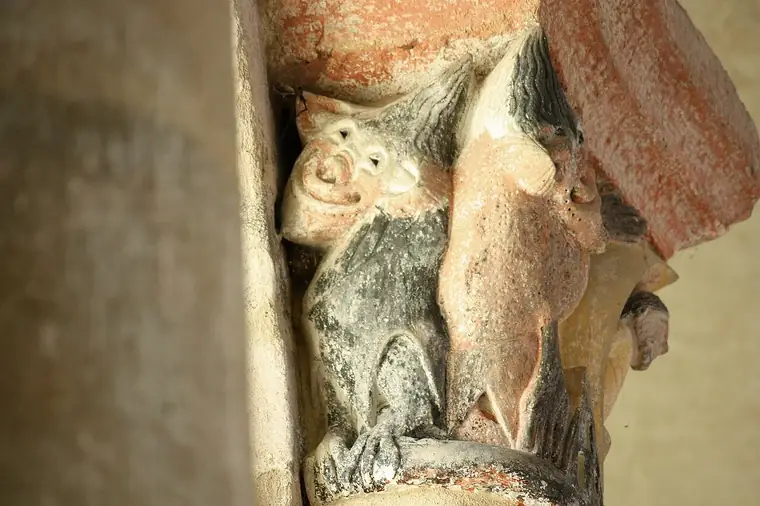
Antoine Garnier / Wikimedia Commons · Resized for display Image source ↗ · CC BY-SA 4.0
France’s protected-object registry records the theft of a medieval reliquary from the parish church in Vigeois in 1981. The thirteenth-century object in Saint-Pierre-ès-Liens church remains marked as stolen in the current Palissy notice.
Pierre André Leclercq / Wikimedia Commons · Resized for display Image source ↗ · CC BY-SA 4.0
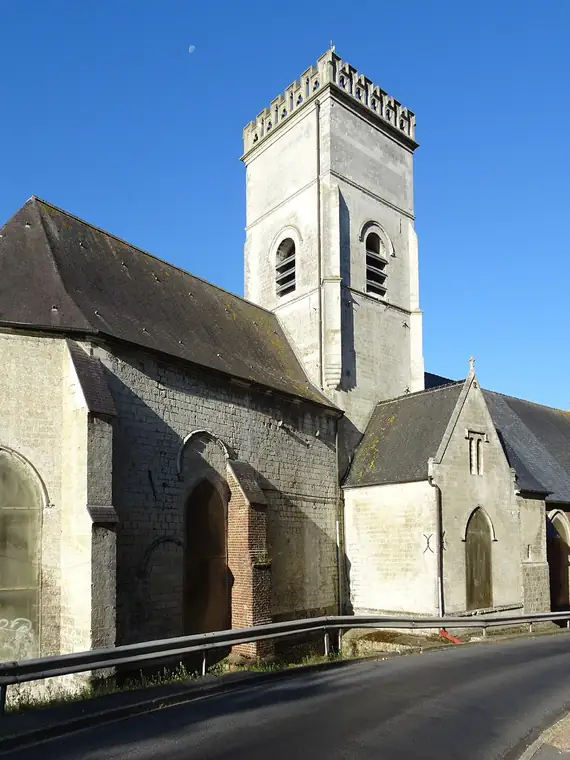
France’s protected-object registry records the theft of a triptych depicting the Vision of Saint Hubert and two figures from the parish church in Houdain in 1981. The late seventeenth-century painted triptych remains marked as stolen in the current Palissy notice.
Context photograph of the historic site in Estrée-Wamin associated with the theft report; the stolen object is not pictured. · isamiga76 / Wikimedia Commons · Resized for display Image source ↗ · CC BY 2.0
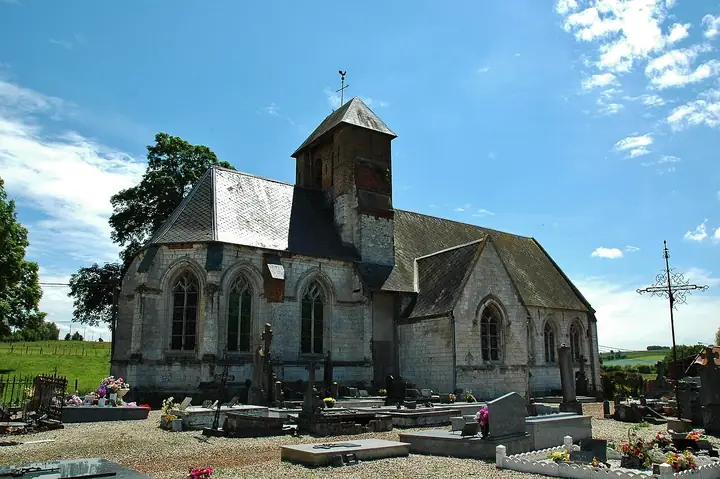
The official French heritage inventory documents the 1981 theft of a probably nineteenth-century sculpture of Saint Vaast with his bear from the parish church in Estrée-Wamin. Its current dossier continues to record the loss.
Context photograph of the church in Lézignan-Corbières; the stolen artwork is not shown · Tylwyth Eldar / Wikimedia Commons; resized · Resized for display Image source ↗ · CC BY-SA 4.0
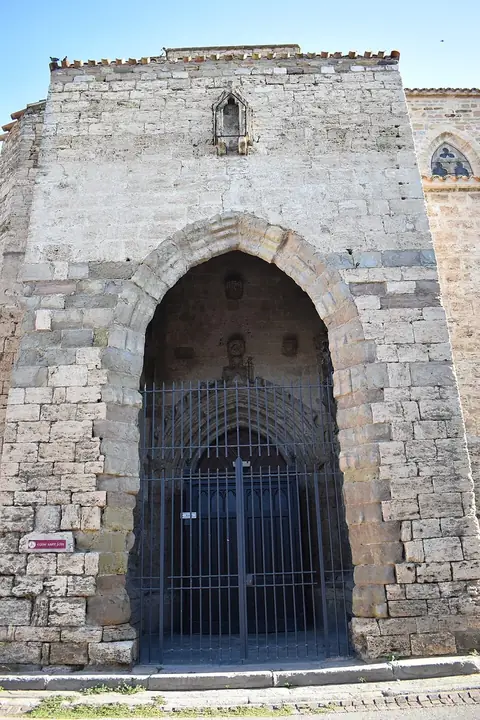
A fifteenth-century Nativity panel was stolen on the night of 21–22 May 1981. The official record documents its recovery and return in 2025, followed by a five-year deposit at Narbonne’s Palais-Musée des Archevêques beginning on 4 September 2026.
Père Igor / Wikimedia Commons · Resized for display Image source ↗ · CC BY-SA 4.0
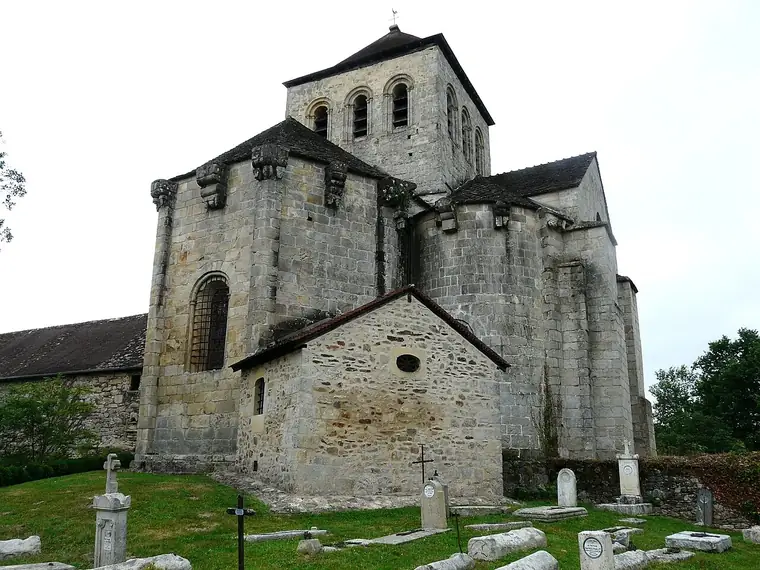
Saint Geoffroy’s thirteenth-century enamelled reliquary was stolen from Le Chalard in May 1981. Its wooden core was found in water; four of five stolen enamel plaques were recovered in 1984. The Palissy notice still records the Christ plaque as missing, distinguishing the partial recovery from full restitution.

The week’s key developments in art theft, forgery, recovery, restitution and the courts. Every Monday.
Subscribe →