The masterpieces beside the public toilet
A tube, an anonymous call and an extraordinary claim: the thieves said they were exposing a museum’s weaknesses.
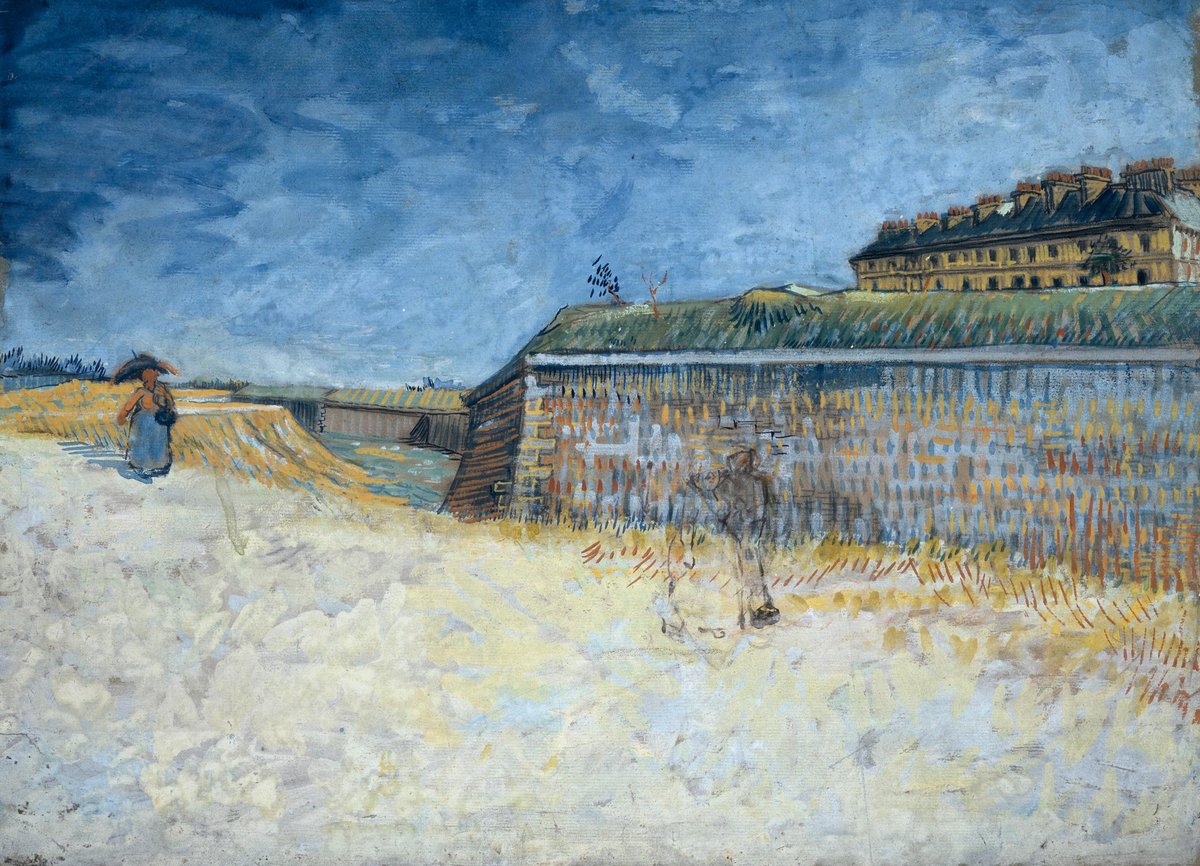
A museum wall becomes an absence
In April 2003, three works by Van Gogh, Gauguin and Picasso disappeared from Manchester’s Whitworth Art Gallery. Their names promised a familiar kind of art-crime story: a major collection, valuable pictures and a secret destination. The destination, however, was close enough to make that expectation absurd. The works would be found beside a disused public lavatory near the gallery, rather than in a dealer’s back room or an overseas warehouse. [1][4]
The telephone call
An anonymous tip brought police to a cardboard tube containing the missing works. Contemporary ABC reporting described a note attached to them. It claimed that the theft had been intended to expose inadequate museum security. That is the statement of whoever left the note, not an established explanation of the crime. Police described a planned theft. Returning an object does not erase the act of taking it, and a written justification cannot prove the writer’s motives. [1]
Paper in the rain
The recovered objects were not invulnerable trophies. They were works on paper, removed from their frames and rolled up. ABC’s follow-up confirmed damage to all three, including a tear in Van Gogh’s The Fortifications of Paris with Houses. The May account of their return to display records treatment by the gallery’s paper conservator, Nicola Walker. The story’s crucial reversal is therefore not simply “stolen, then safe”: the objects had been found, but conservation still had work to do. [2][3]
Back on the wall, questions left outside
By May 2003 the works were back on show, remounted and reframed. Two decades later The Art Newspaper revisited the episode, identifying the companion works as Gauguin’s Tahitian Landscape and Picasso’s Poverty and reporting that no one had been charged over the theft. The note had made a bold claim; it had not identified an accountable author. The works returned to a public life. The people who moved them from a museum wall to a wet tube remained a separate, unresolved story. [3][4]
Recovered; returned to display
All three works were recovered and returned to display in 2003. The Van Gogh required conservation. The Art Newspaper’s November 2023 retrospective reported that no one had been charged over the theft.
Sources checked 10 November 2026.Artwork Details & DocumentationIdentification, ownership history and supporting records
Individual artwork identification details have not yet been documented in this record. Missing specifications are not inferred from the photograph or report headline.
Not documented in this record: object type · materials & technique · measurements · inscriptions & markings · distinguishing features · artwork title · maker / attribution · creation date / period · subject.
Record sources
Identification details follow the Object ID categories where documented. Ownership history is recorded separately; this documentation is not an authentication or a certificate of ownership.
Sources & further reading
- ABC · Recovery report, 29 April 2003 ↗
- ABC · Damage assessment, 30 April 2003 ↗
- CLAD · Return to display, 30 May 2003 ↗
- The Art Newspaper · Twenty-year retrospective, 2023 ↗
An original narrative synthesis of the sources above. Images depict the artworks; they are not reconstructions of the thefts.