← All countries
THE ARCHIVE BY COUNTRY
Bulgaria
Published reports from our archive, newest first.
A country may refer to the theft, recovery, return or legal proceedings. A case can be linked to more than one country.
9 reports

Bachkovo, Bulgaria; Tallinn, Estonia
Bulgaria’s Culture Ministry announced on 16 November that a 17th-century reliquary stolen from Bachkovo Monastery in 1999 had been returned to a Bulgarian delegation in Tallinn on 11 November. A tip about an Estonian auction prompted action under a European Investigation Order. The operation involved Bulgarian prosecutors, Eurojust and Estonian authorities. Photo: Bulgarian Ministry of Culture.
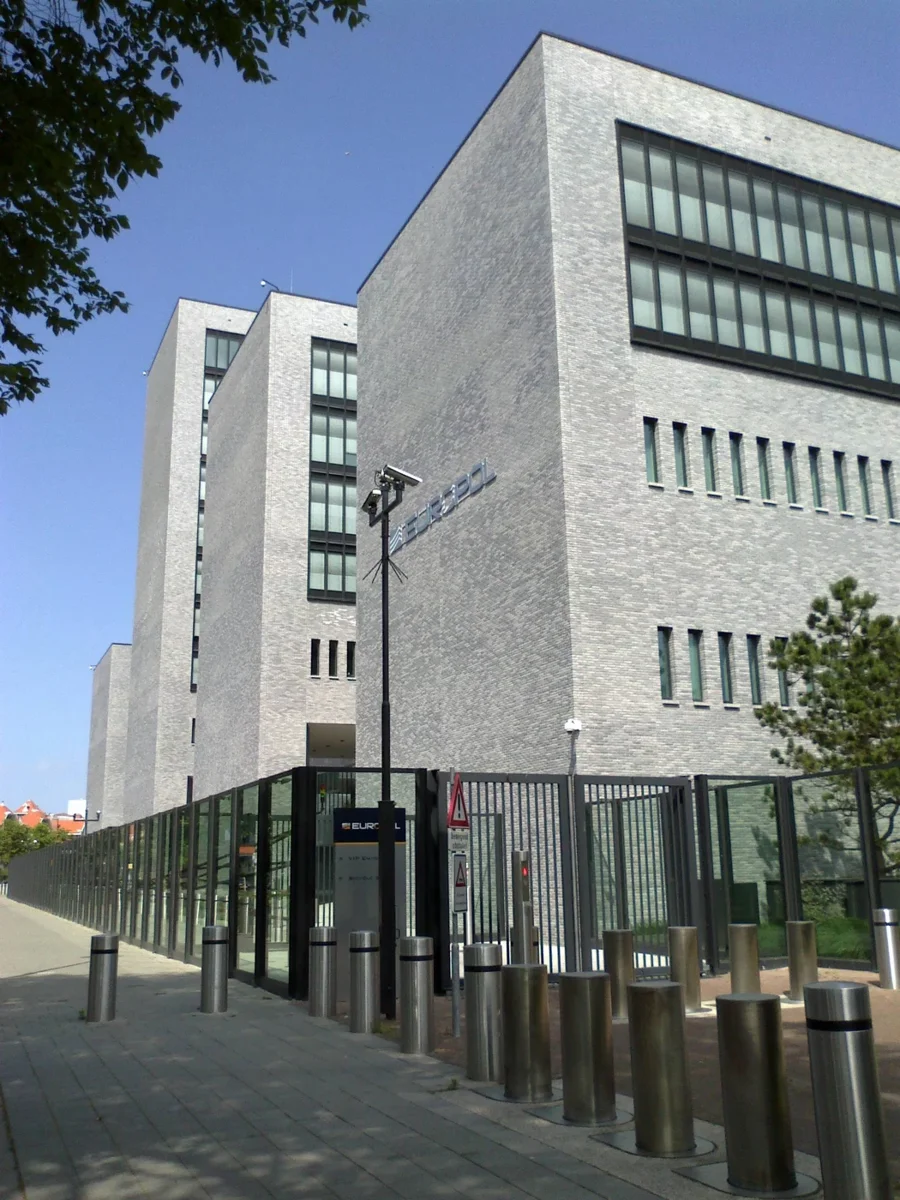
Photo: OSeveno. Image source ↗
Spain and Bulgaria
Spanish and Bulgarian authorities searched 17 properties and arrested 13 suspects in Operation Sardica. The seized items included authentic and counterfeit coins and other archaeological objects. Investigators traced sales of suspected fakes to online auctions.
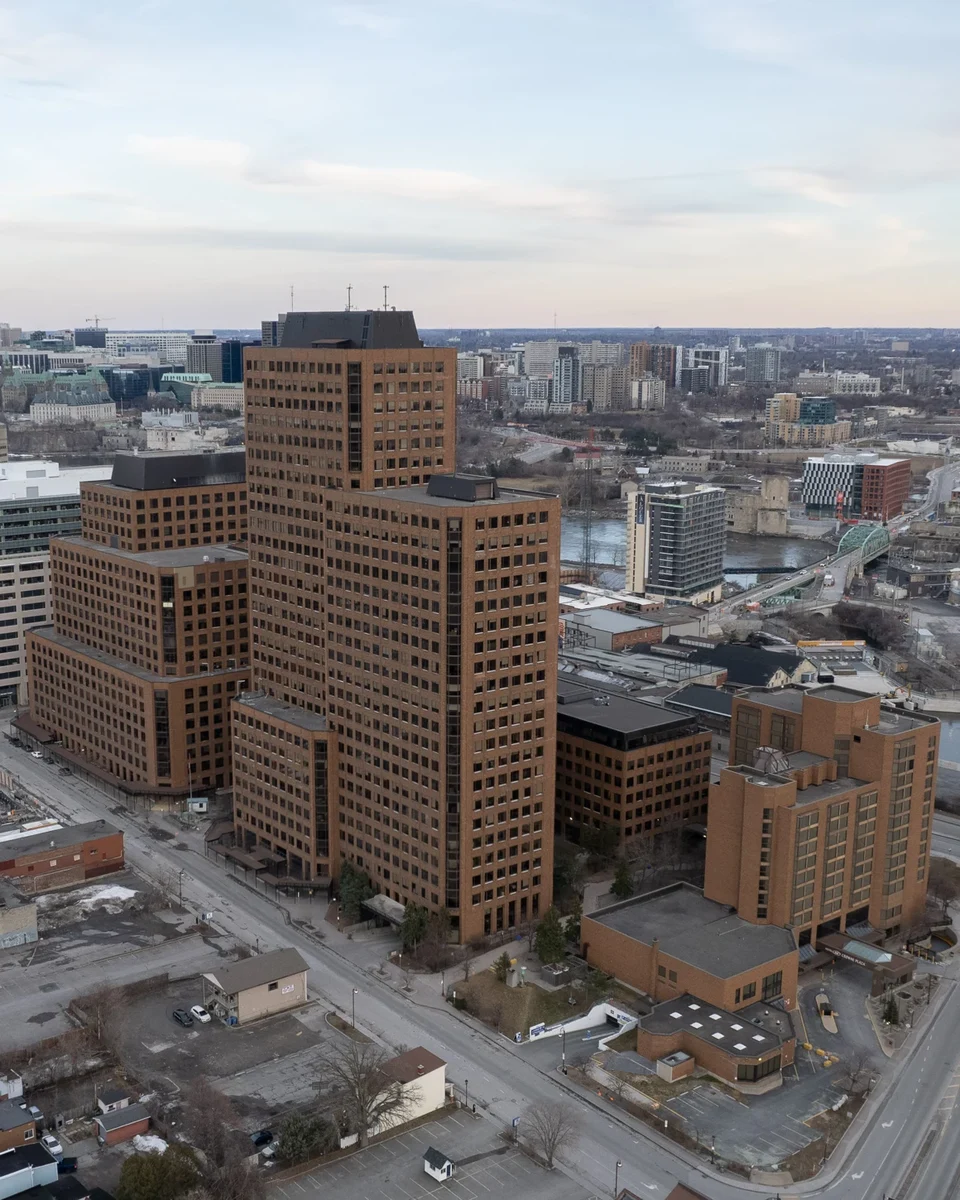
Harleyd613 Image source ↗
Ottawa, Canada / Bulgaria
Canada returned a nineteenth-century curved yatagan with unusual markings and a Cretan-style dagger to Bulgaria. Customs officials had intercepted both pieces, and a Federal Court found that the cultural property had been imported illegally. The handover took place at the Canadian Conservation Institute in Ottawa.
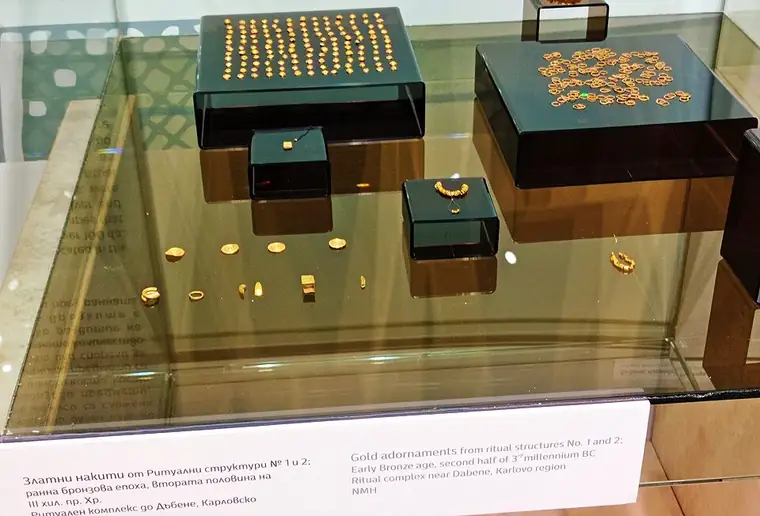
Ivano Giambattista · Resized for display Image source ↗
Dabene, Karlovo, Bulgaria
The first gold finds at Dabene in 2004 led to investigation of low ritual mounds in Bulgaria’s Karlovo valley. Thousands of finely made Bronze Age ornaments were subsequently recovered. The finds raised questions about specialised goldworking and ritual deposition in the third millennium BC.
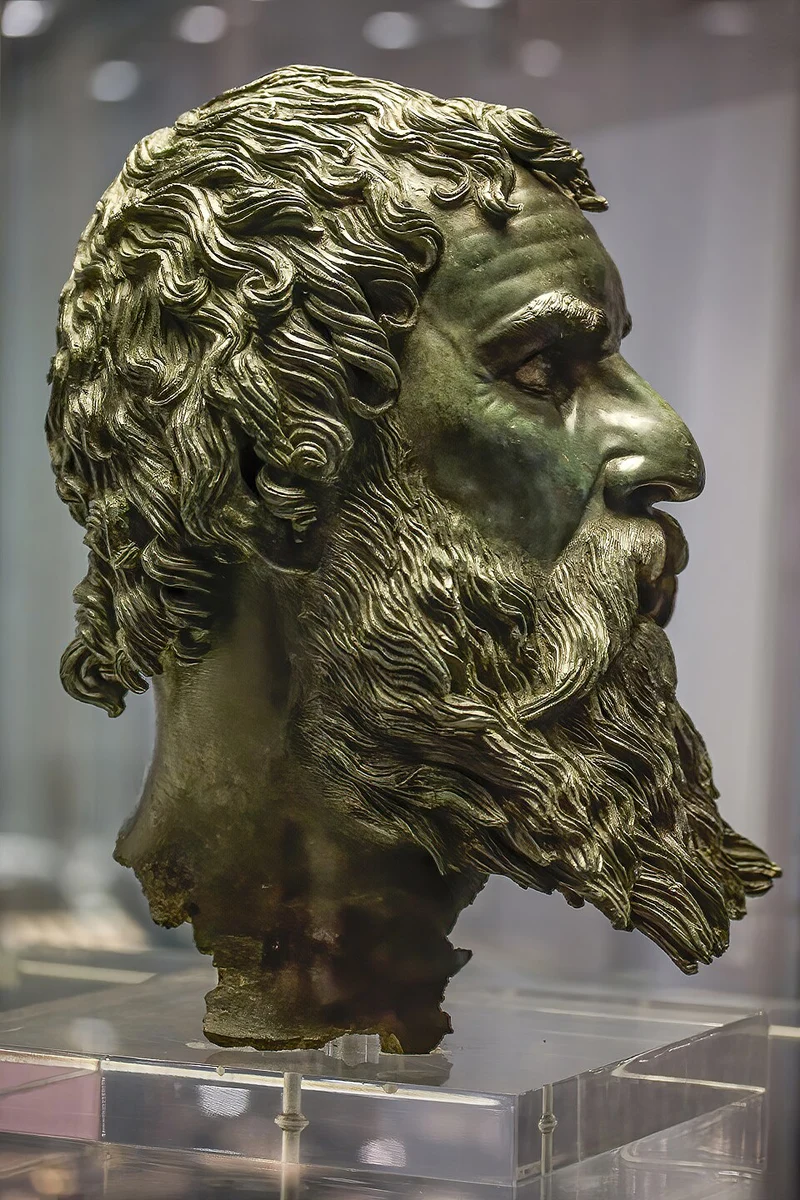
Ann Wuyts Image source ↗
Shipka, Bulgaria
Excavation of the Golyama Kosmatka mound near Shipka yielded a bronze portrait head. The Bulgarian National Archaeological Institute identifies it as a portrait of Seuthes III.
Vislupus Image source ↗
Starosel, Bulgaria
Archaeological work revealed the complex at the Chetinyova mound near Starosel in 2000. The group of monumental sites includes several temples built beneath mounds and royal burials.
Thracian silver vessels from the Rogozen treasure · Институт по балканистика с център по тракология / Wikimedia Commons; resized · Resized for display Image source ↗
Rogozen, Bulgaria
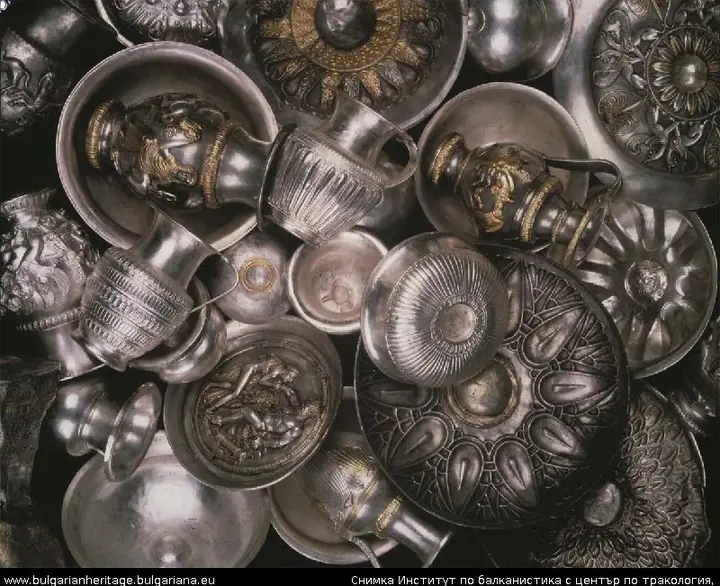
The discovery of 65 vessels in a village garden in late 1985 led to a second archaeological recovery in January 1986. Together the groups formed a hoard of 165 Thracian silver and silver-gilt vessels, many ornamented with mythological scenes; the two recoveries belong to the same discovery case.
Entrance to the original Thracian tomb at Sveshtari · Interact-Bulgaria / Wikimedia Commons; resized · Resized for display Image source ↗
Sveshtari, Bulgaria
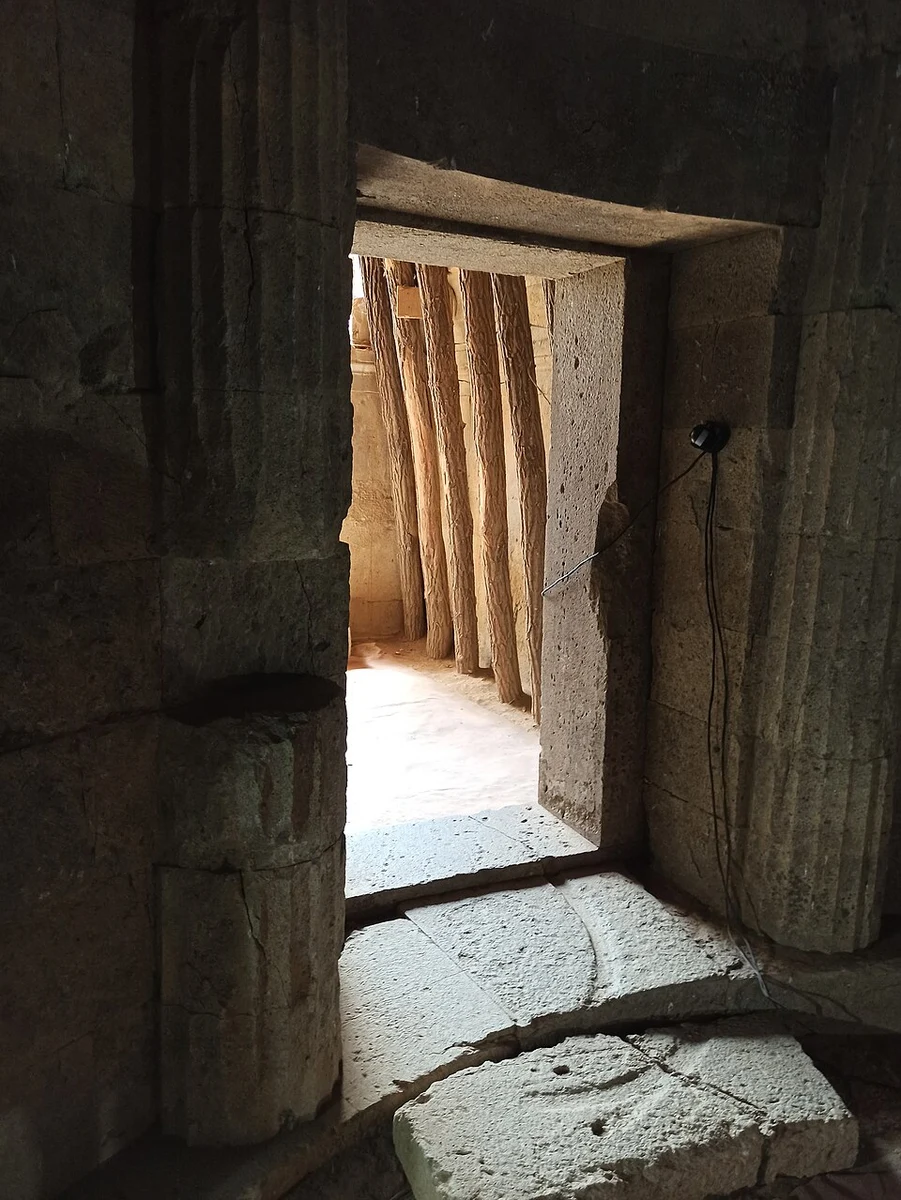
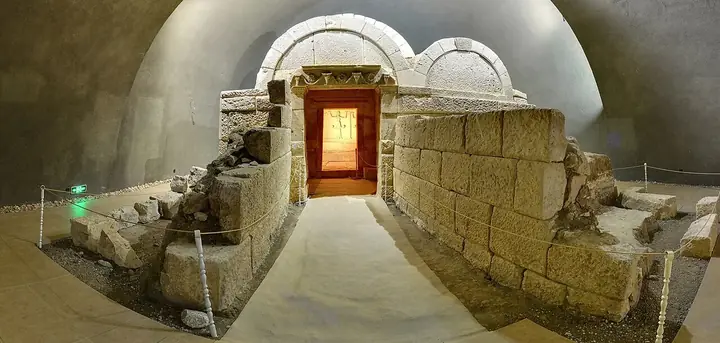
A Thracian tomb discovered in 1982 preserved an exceptional combination of sculptural and painted decoration. Ten partly human, partly plant-like caryatids line its central chamber; UNESCO recognizes the third-century-BC monument as an unusually well-preserved expression of Getic funerary art.
A gold pendant from the Preslav treasure · Faqscl / Wikimedia Commons; resized · Resized for display Image source ↗
Castana, near Veliki Preslav, Bulgaria
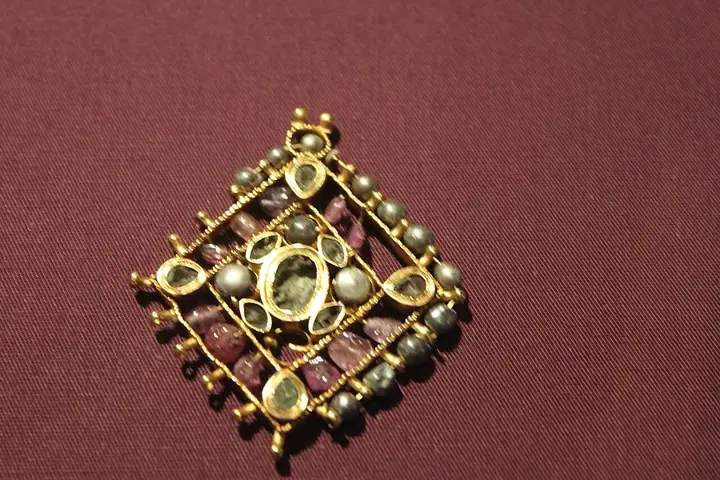
A 1978 agricultural discovery at Castana was followed by rescue excavation that recovered more than 170 gold, silver and bronze objects. Cloisonné enamel, precious stones and pearls adorn the jewellery, largely of the tenth century; the Veliki Preslav museum documents the mixed ages and craftsmanship of the hoard.