01 HISTORICAL DOSSIERS
Still Missing
The artworks still sought. The families still searching.
Explore the cases
Reports on works that resurfaced after years out of view or were identified in collections.
Clocks show the time now. Below each clock: the latest documented case in that country from our archive.
Red mark: source-reported theft time. An arc shows a reported time window on the outer 24-hour scale. Only shown where timing is documented.
“Published” is the report date, not the theft date. Cases may cover thefts, recoveries or returns. Click a clock for the case details and source.
These are the six leading countries in an INTERPOL register snapshot published by a Cornell Data Journal team on 16 December 2023. Counts refer to objects registered as stolen, not theft incidents. This historical snapshot is not a current, comprehensive worldwide ranking.
Published analysis ↗Underlying data table ↗About the INTERPOL register ↗
Explore reported theft locations in the archive.
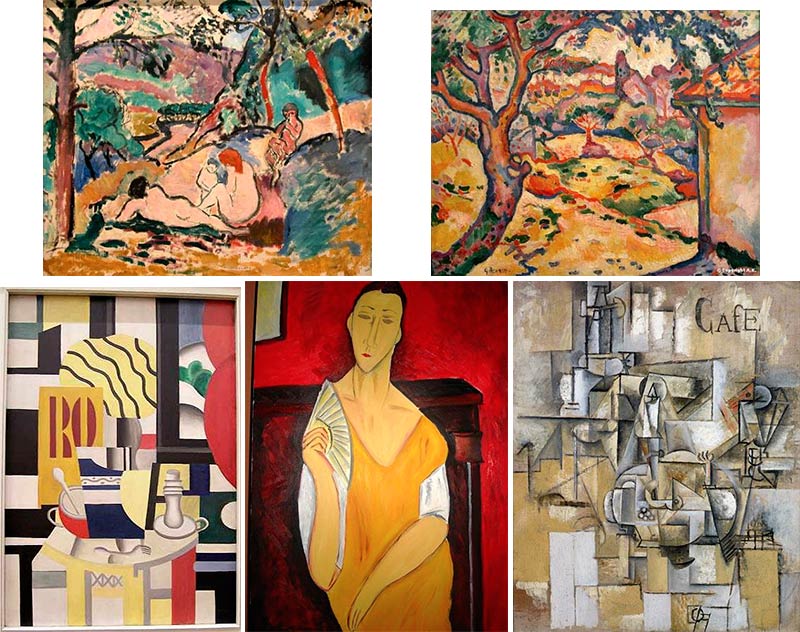 2010
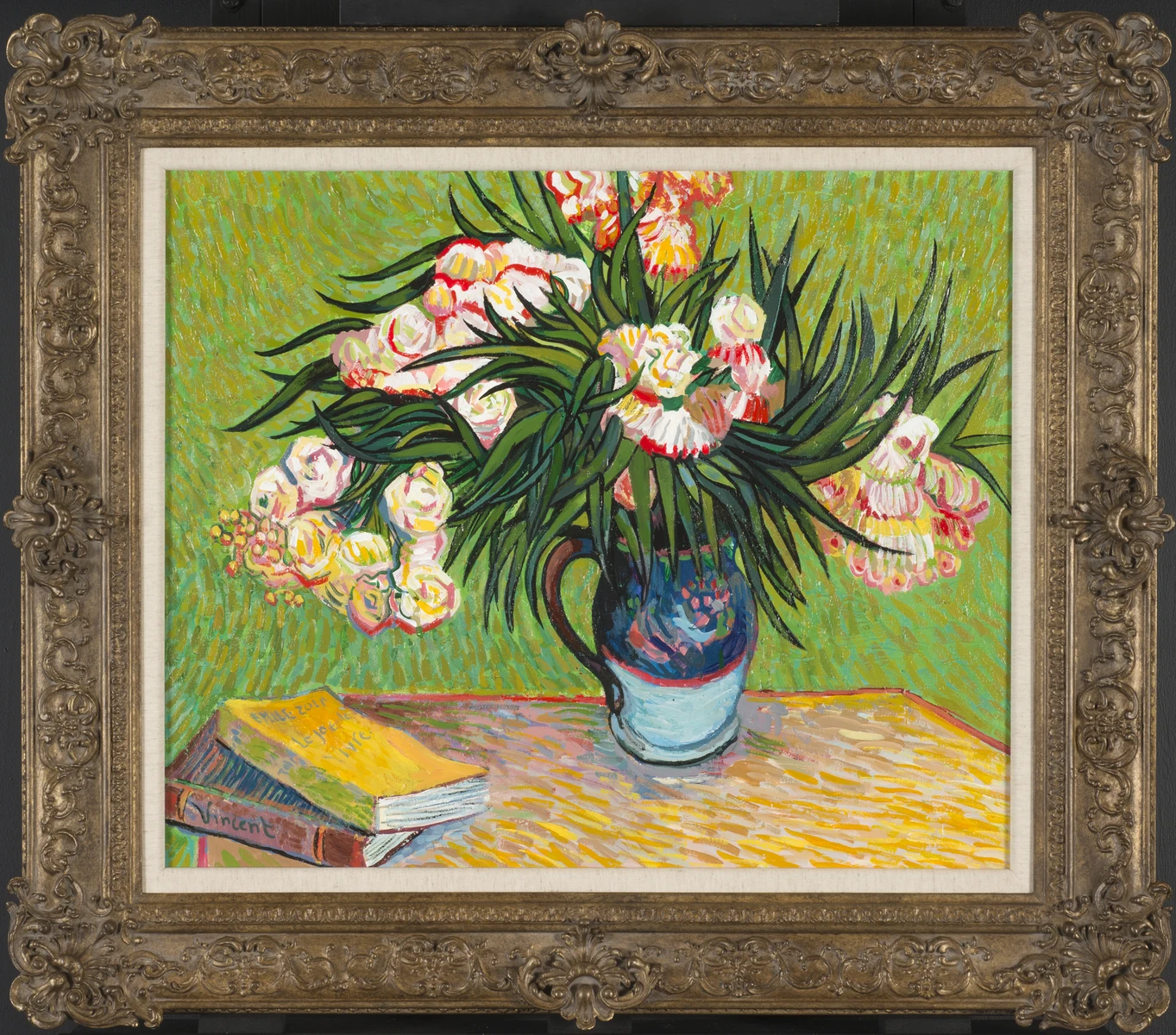
Paris caught the thief called “Spiderman”. Finding the paintings proved another matter entirely.
Read the story 3 min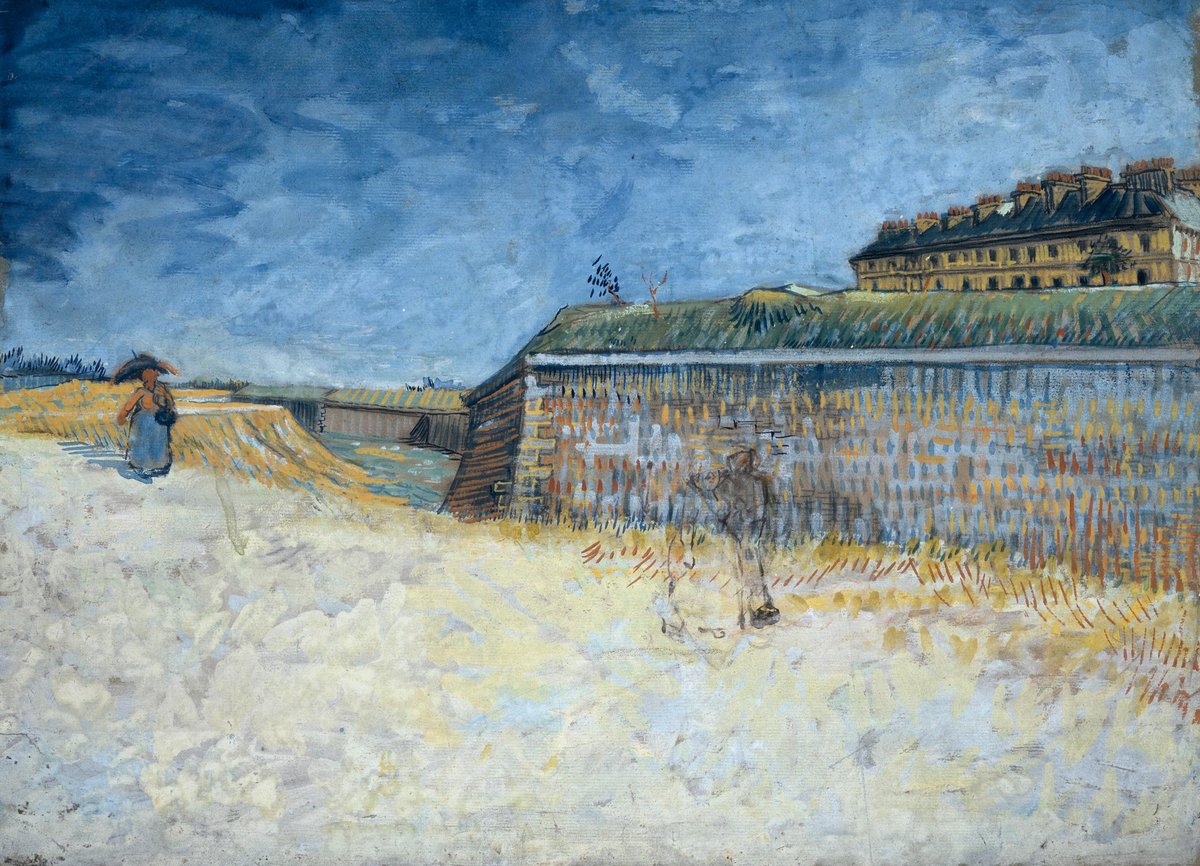 2003
A tube, an anonymous call and an extraordinary claim: the thieves said they were exposing a museum’s weaknesses.
Read the story 3 min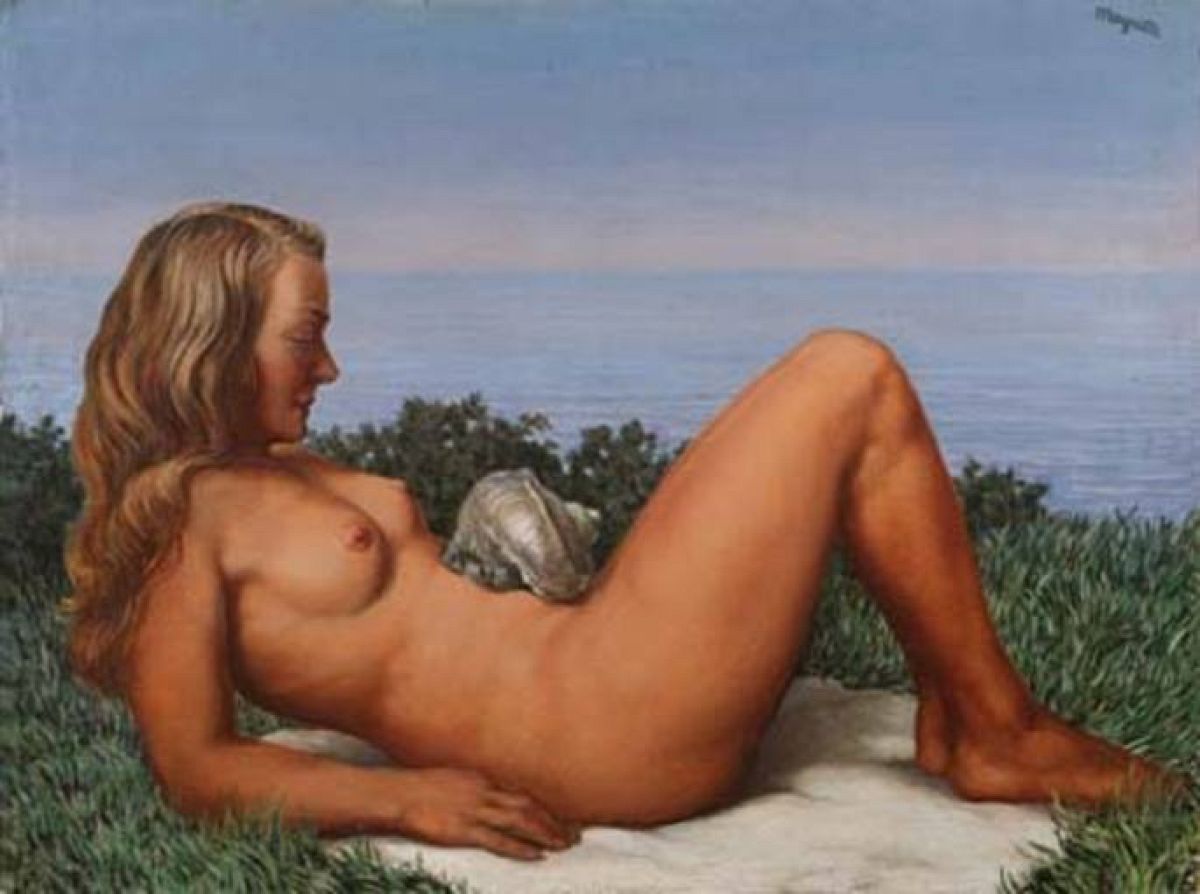 2009
Two armed men took Olympia from the artist’s former home. Its recognisability may have become its best defence.
Read the story 3 min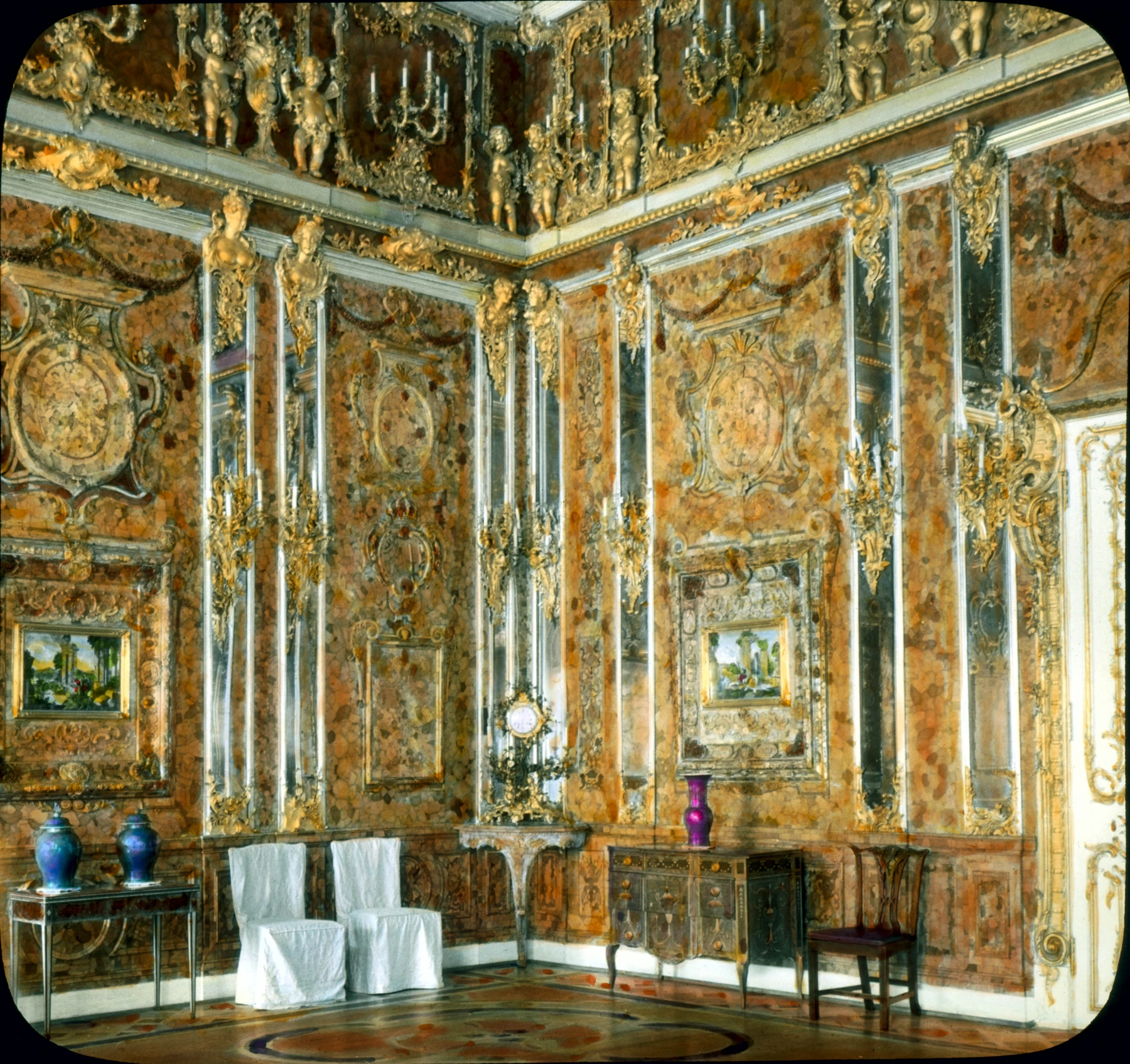
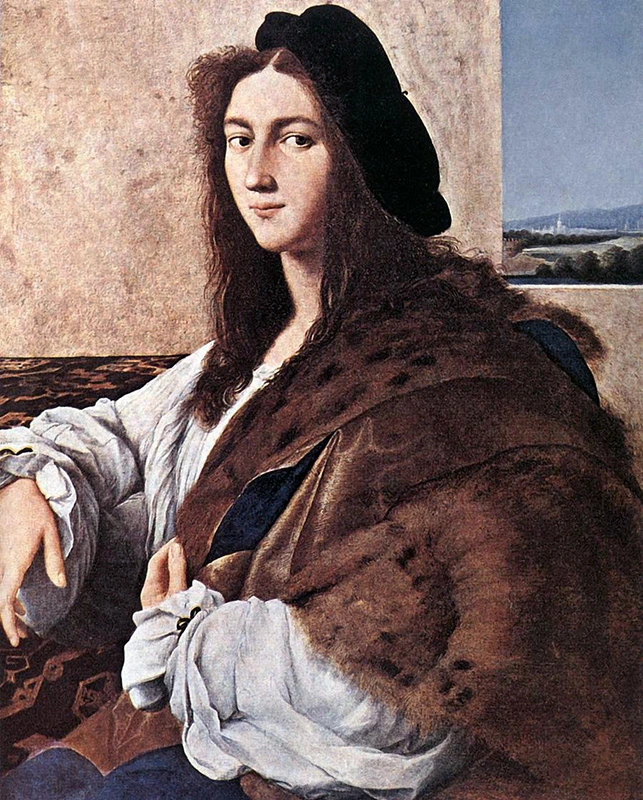
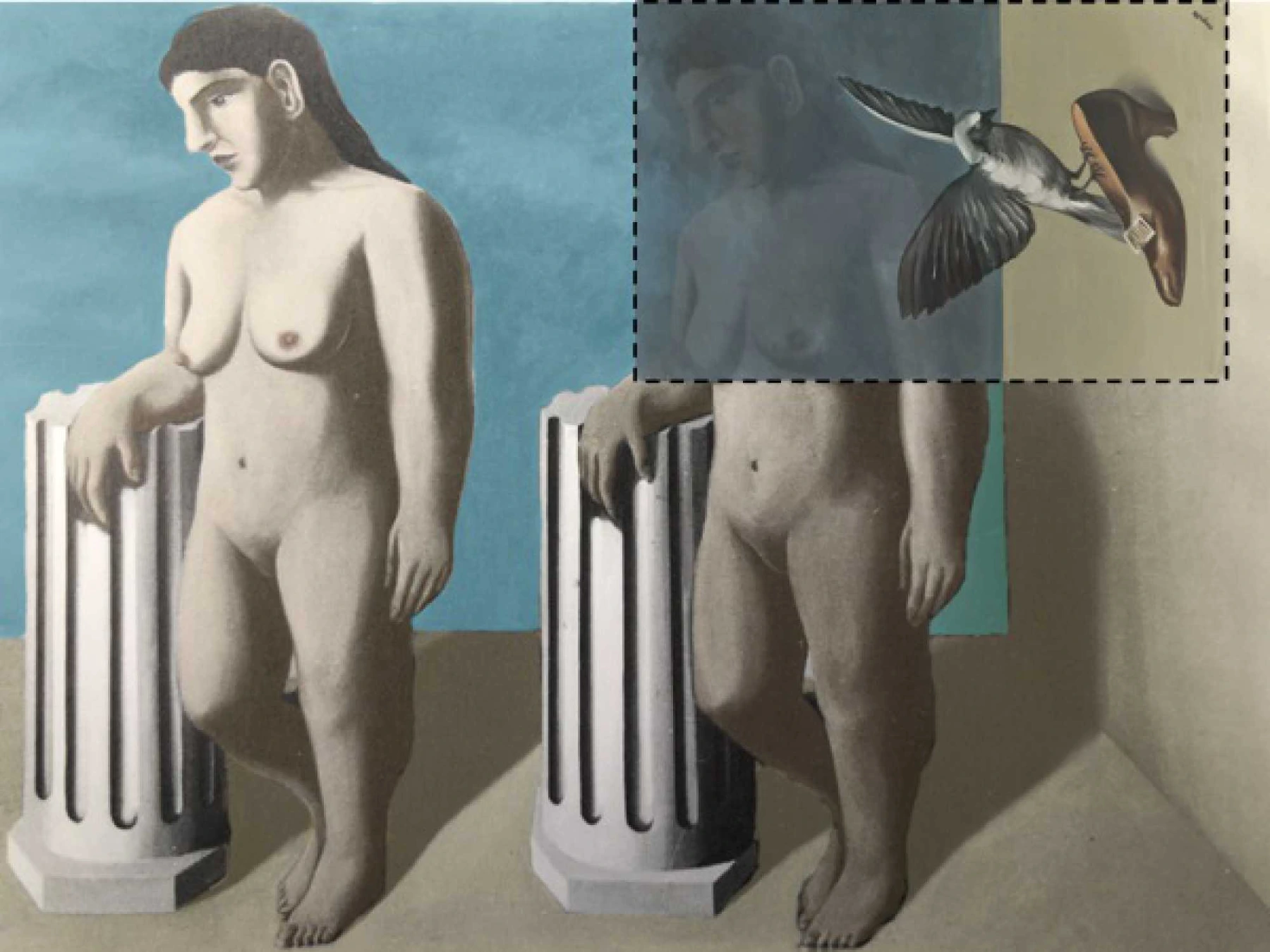
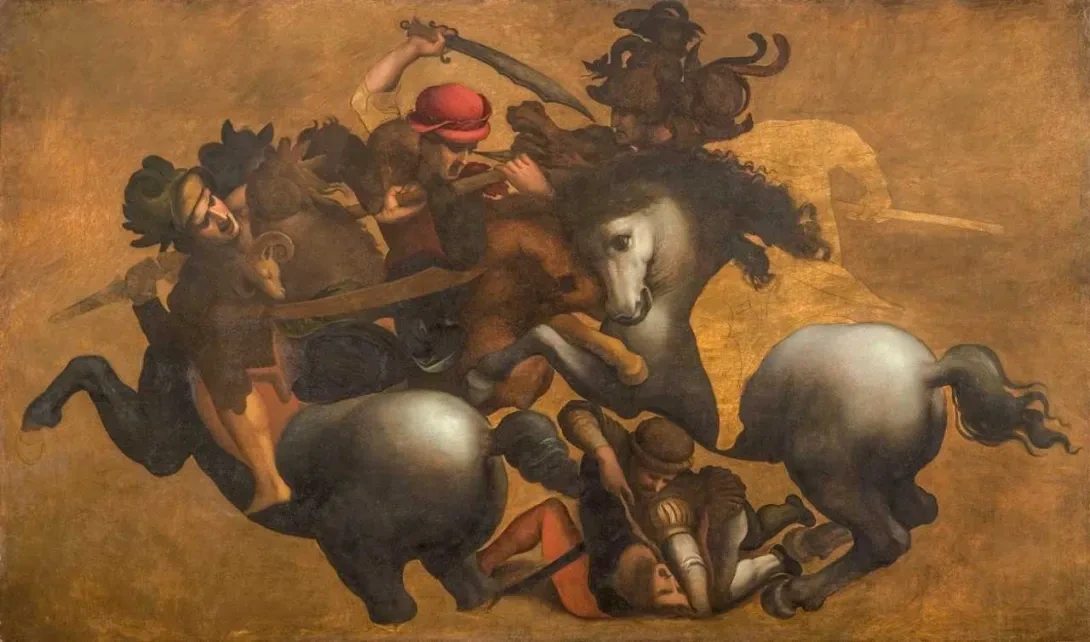
The artworks still sought. The families still searching.
Explore the cases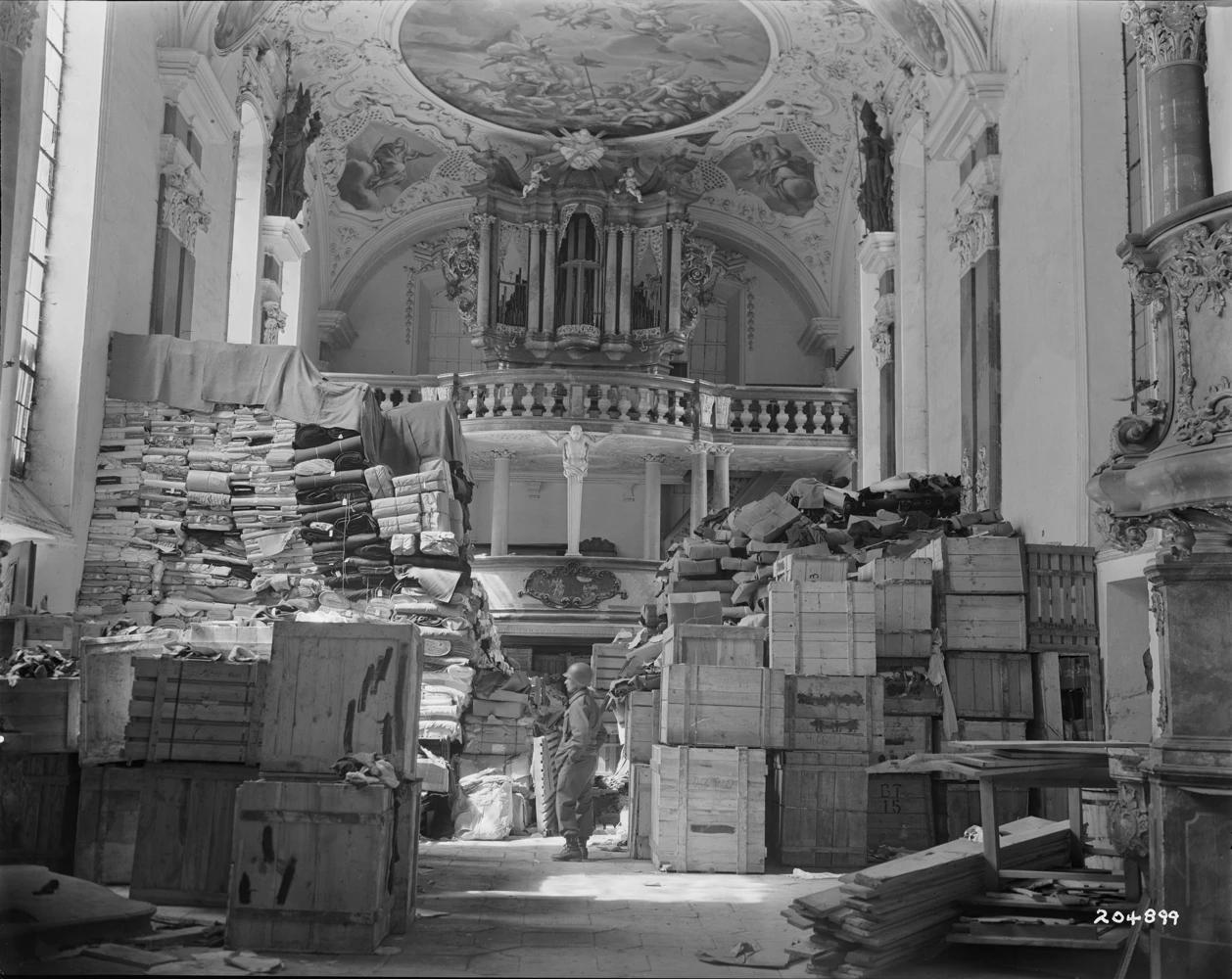

Dispossession, long battles and the paths to restitution.
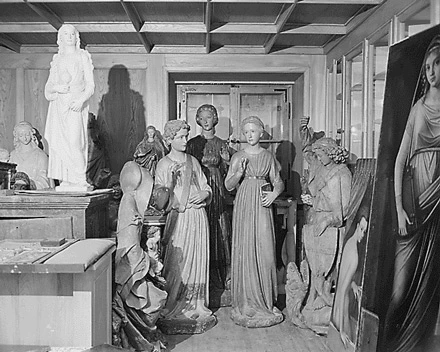
Explore the casesThe upper strip shows details of the featured artworks; the lower strip uses World War II archive photographs as historical context.
87 entries · 88 documented offers · terms apply
Newest additions first · up to ten entries in each group.
Official sources checked; terms apply.
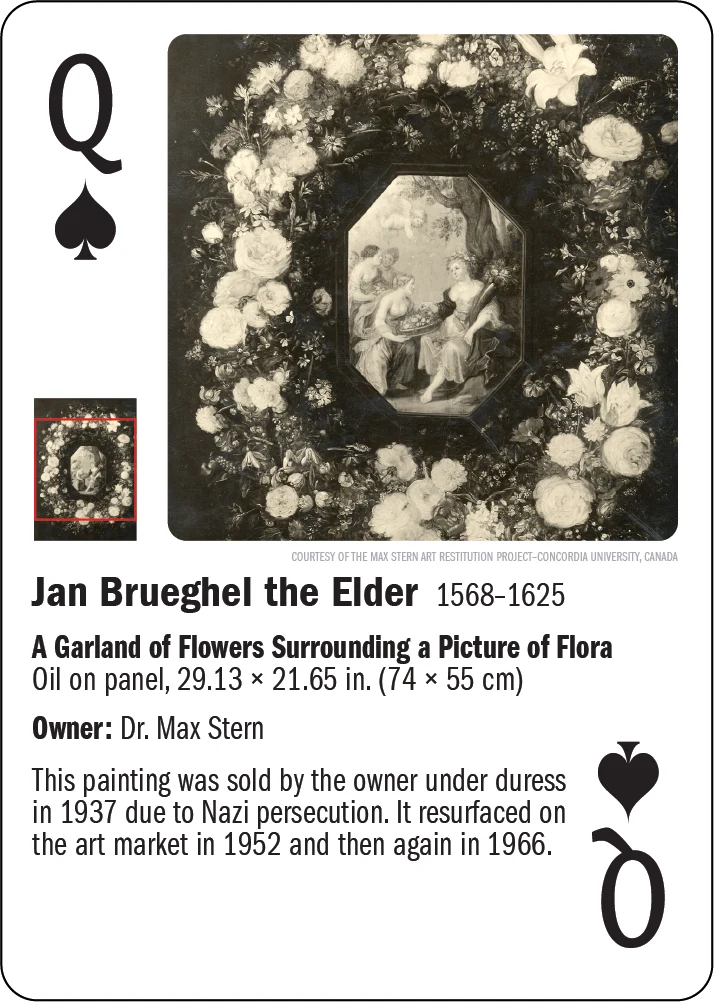 Jan Brueghel the Elder · A Garland of Flowers Surrounding a Picture of FloraUp to$15,000Monuments Men and Women FoundationEnds: 2026-12-31
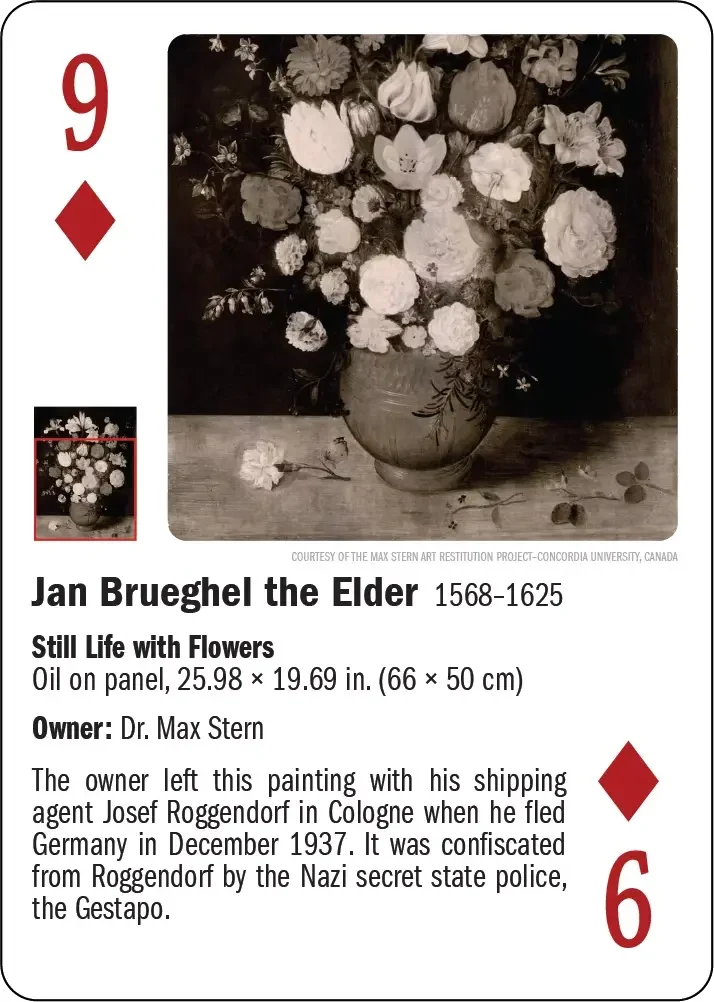 Jan Brueghel the Elder · Still Life with FlowersUp to$7,500Monuments Men and Women FoundationEnds: 2026-12-31
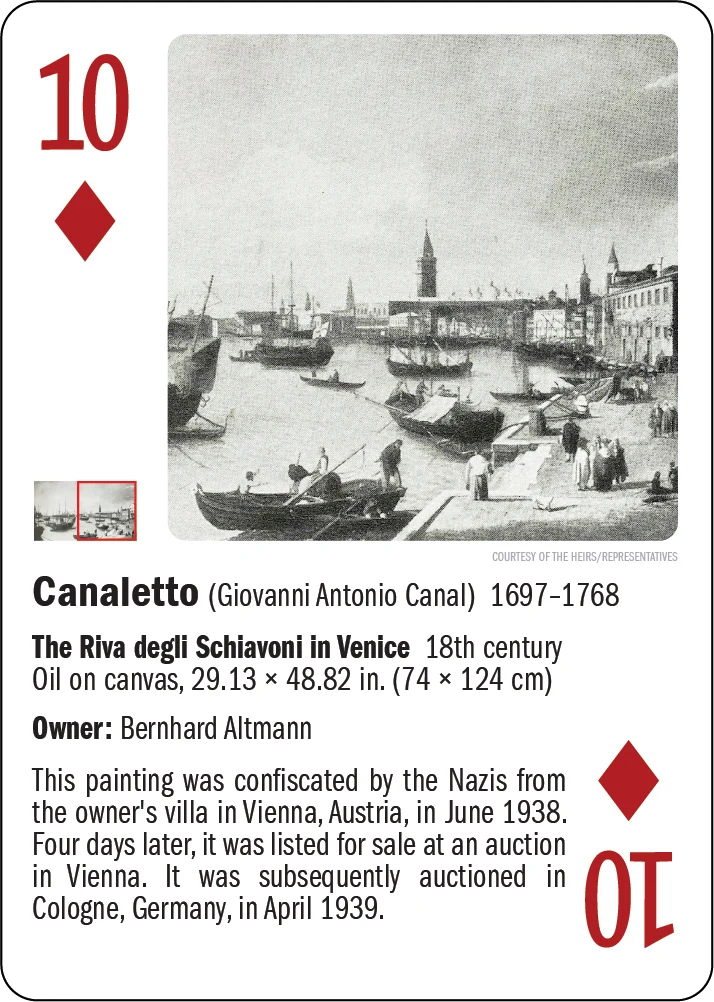 Canaletto · The Riva degli Schiavoni in VeniceUp to$7,500Monuments Men and Women FoundationEnds: 2026-12-31
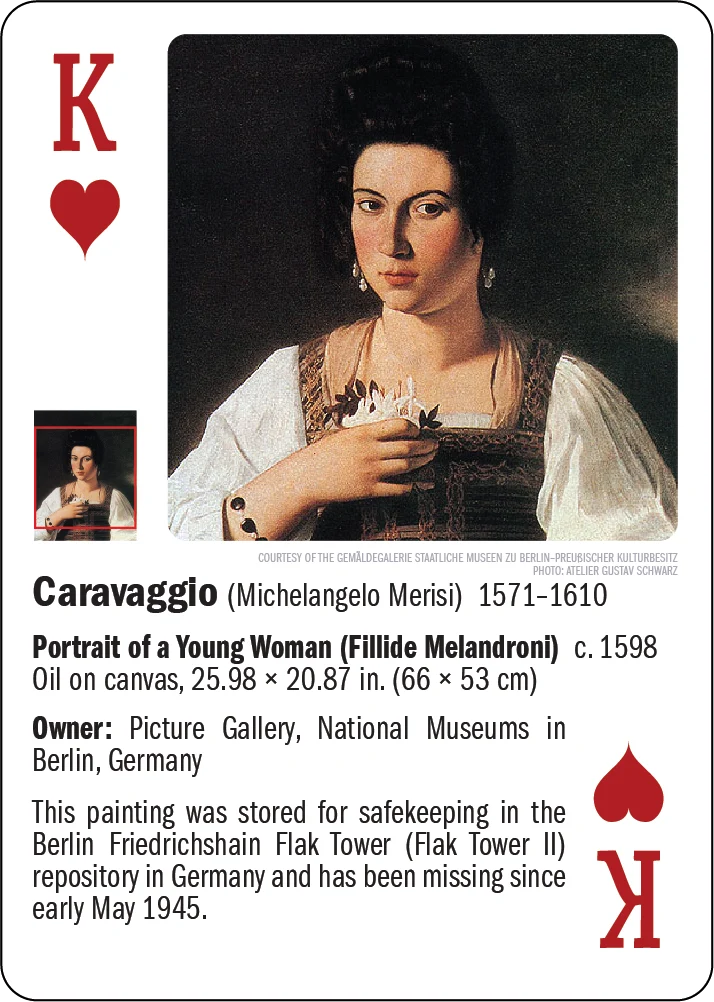 Caravaggio · Portrait of a Young Woman (Fillide Melandroni)Up to$20,000Monuments Men and Women FoundationEnds: 2026-12-31
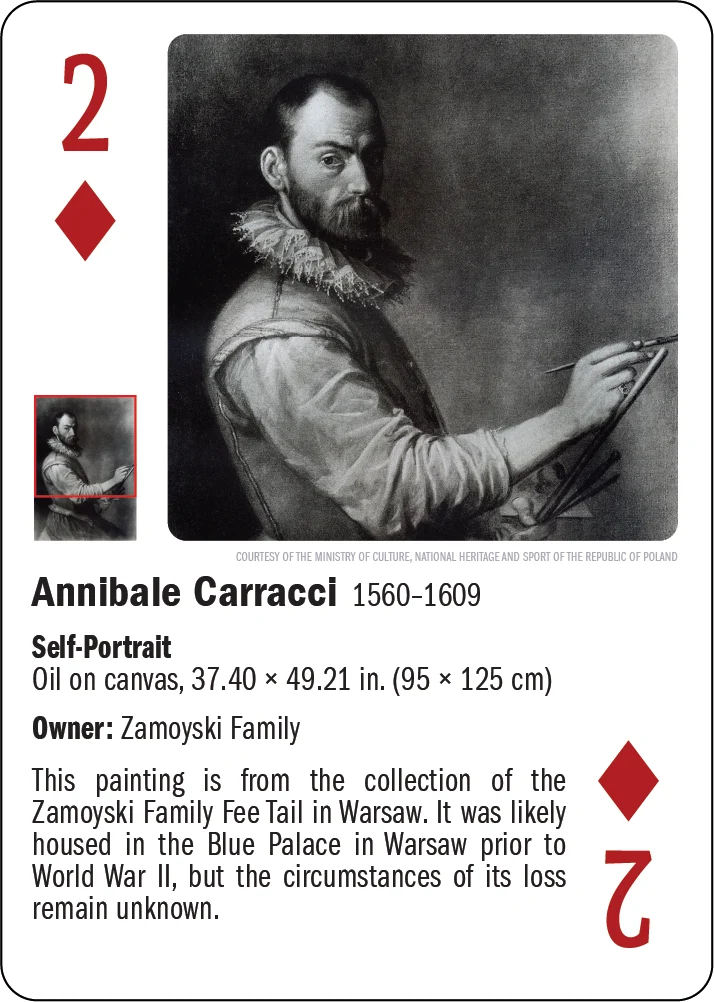 Annibale Carracci · Self-PortraitUp to$2,500Monuments Men and Women FoundationEnds: 2026-12-31
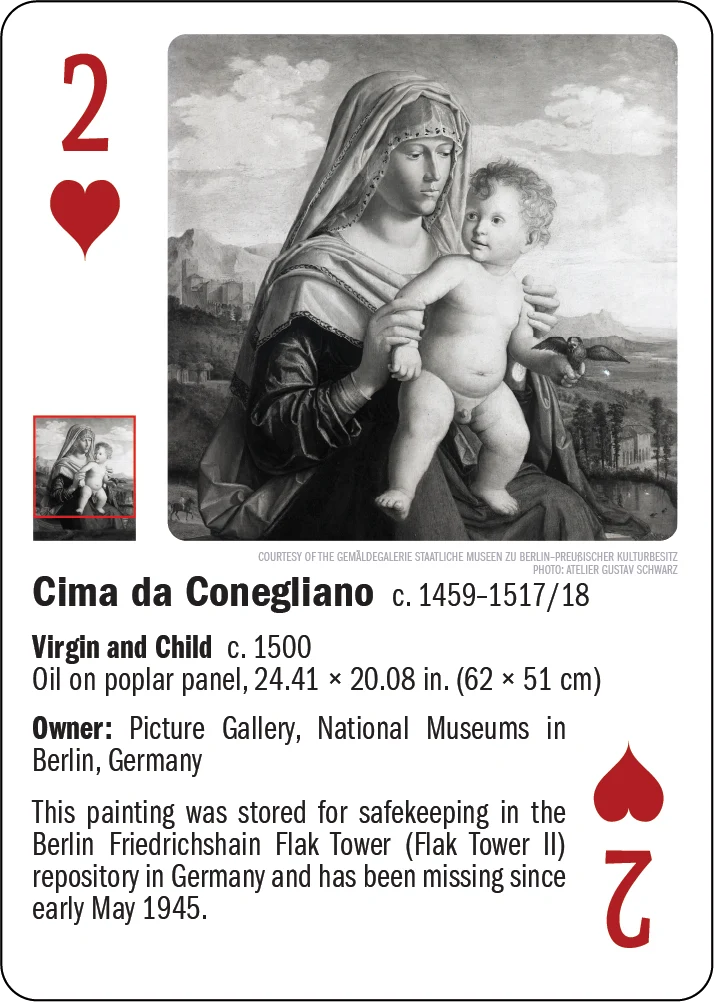 Cima da Conegliano · Virgin and ChildUp to$2,500Monuments Men and Women FoundationEnds: 2026-12-31
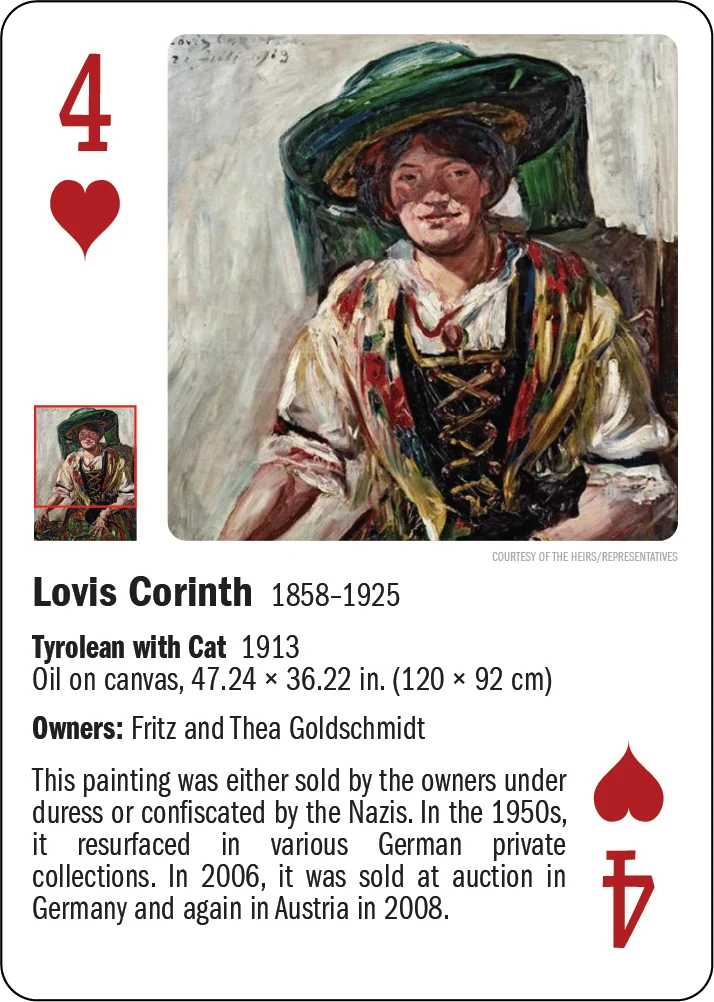 Lovis Corinth · Tyrolean with CatUp to$2,500Monuments Men and Women FoundationEnds: 2026-12-31
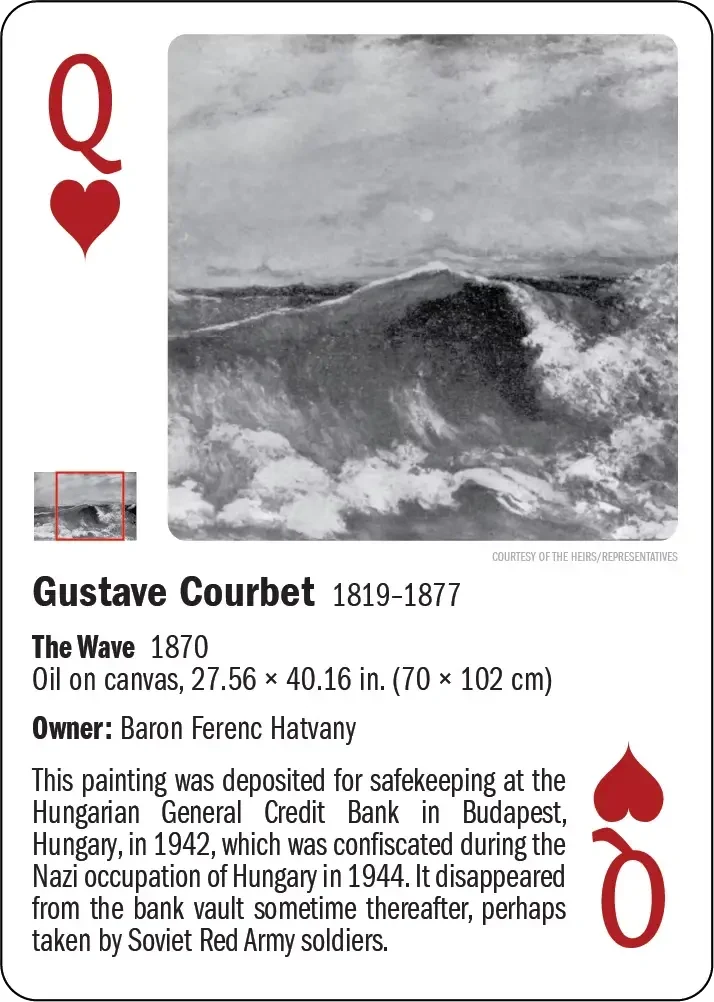 Gustave Courbet · The WaveUp to$15,000Monuments Men and Women FoundationEnds: 2026-12-31
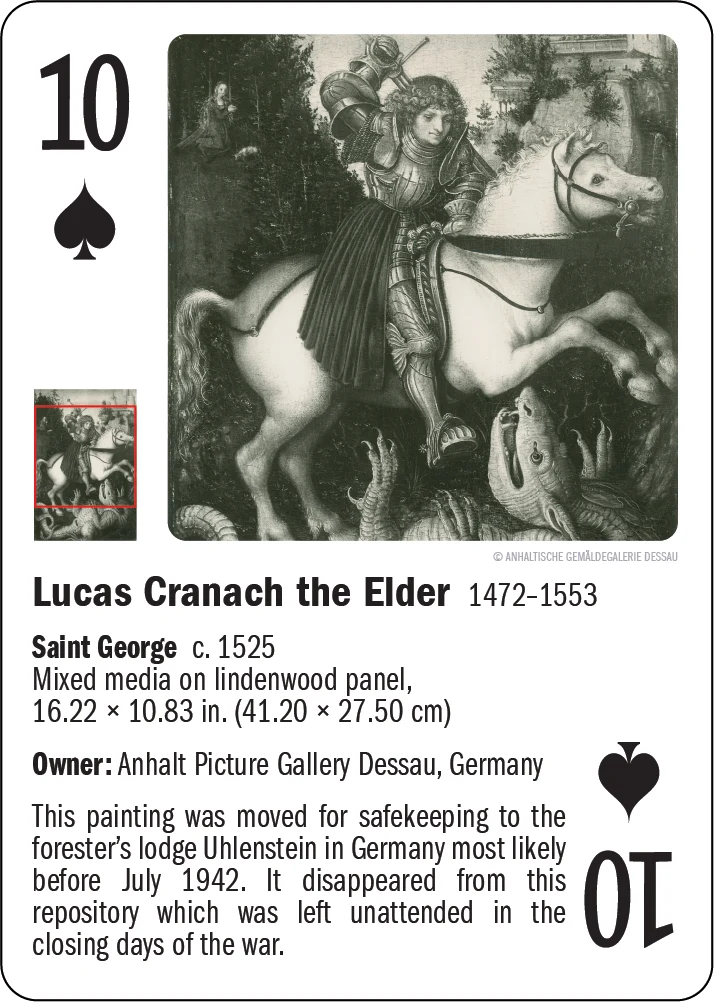 Lucas Cranach the Elder · Saint GeorgeUp to$7,500Monuments Men and Women FoundationEnds: 2026-12-31
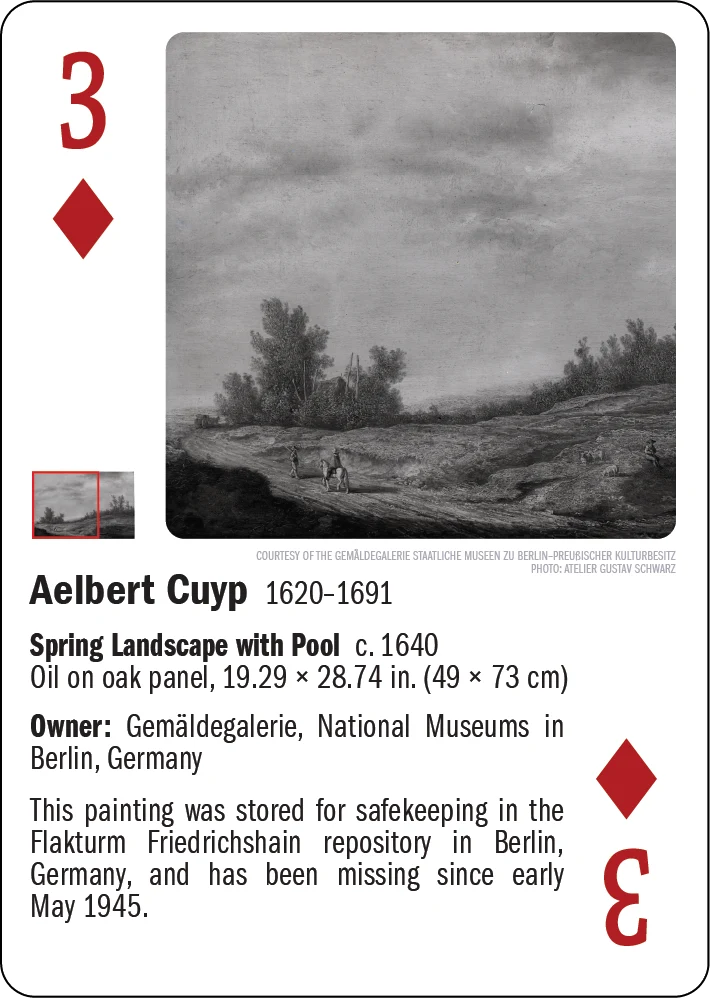 Aelbert Cuyp · Spring Landscape with PoolUp to$2,500Monuments Men and Women FoundationEnds: 2026-12-31
10 of 59 entries · see the full list for the rest.
Amounts reported by the cited sources, without confirmation that the offers remain valid.
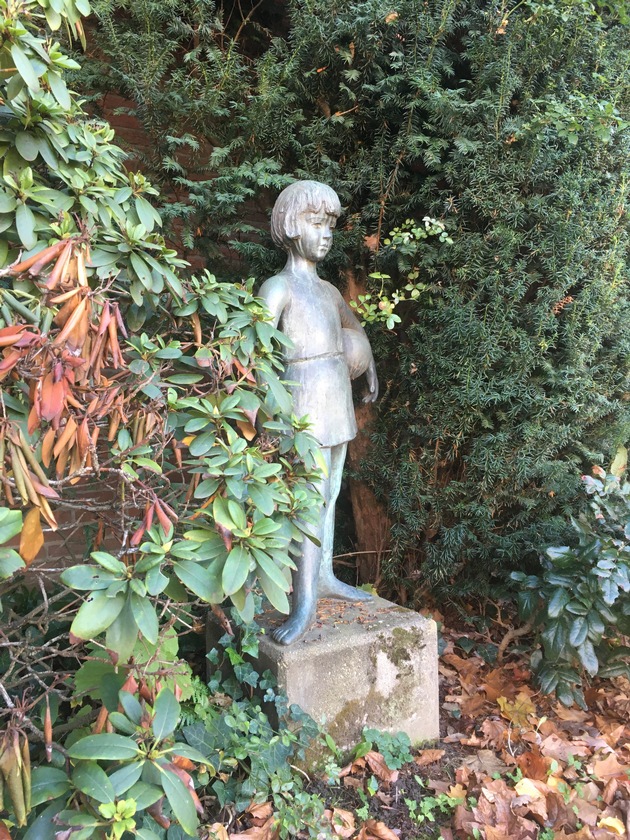 Heinrich Martens’s bronze girl with a ballUp to€5,000Validity unconfirmed
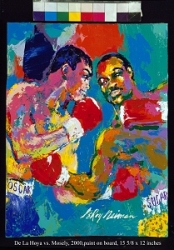 LeRoy Neiman — Oscar de la Hoya – Shane MosleyAdvertised reward$5,000Centaur Art GalleriesValidity unconfirmed
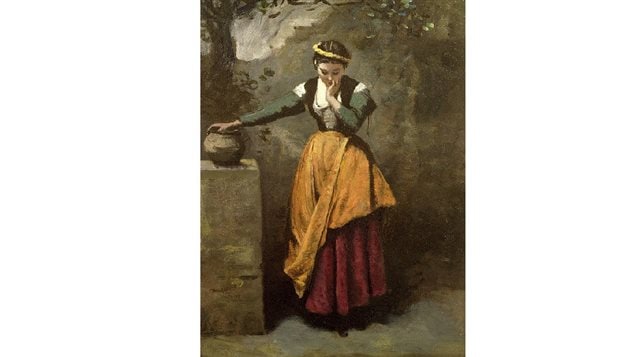 Montreal Museum of Fine Arts — 1972 theftAdvertised rewardAmount not publishedInsurers, according to Radio Canada InternationalValidity unconfirmed
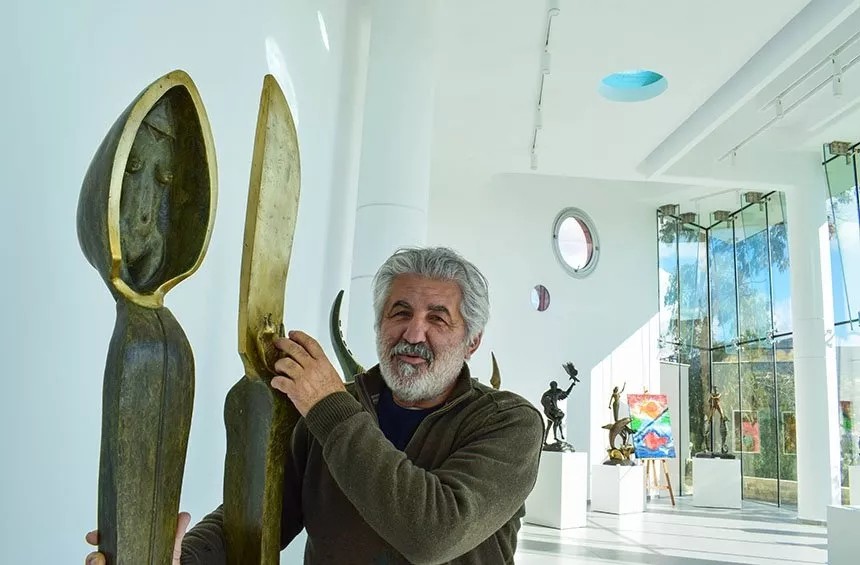 Giapanis · BalanceAdvertised reward€5,000Validity unconfirmed
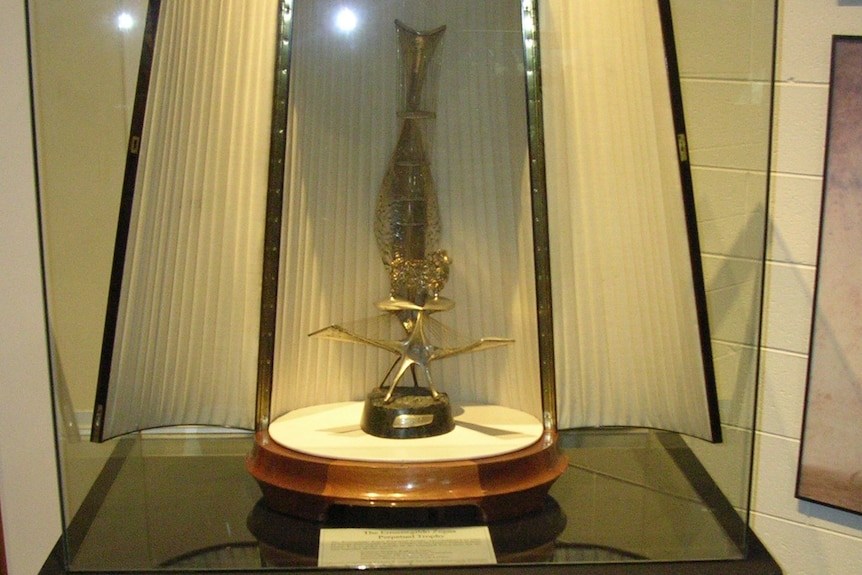 Zegna · Gold sheep trophyAdvertised rewardA$15,000Validity unconfirmed
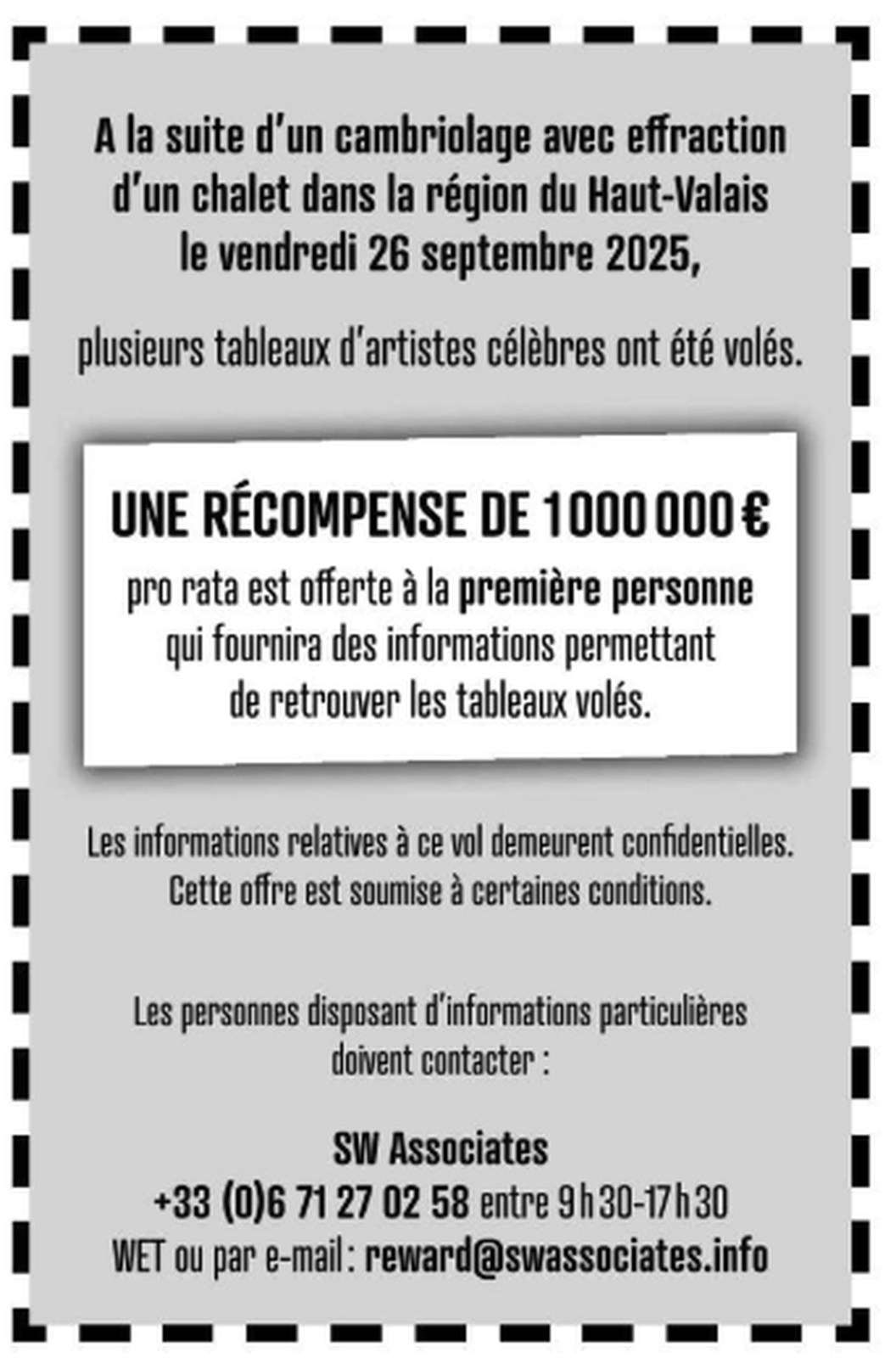 Valais · Chalet theftUp to€1,000,000Validity unconfirmed
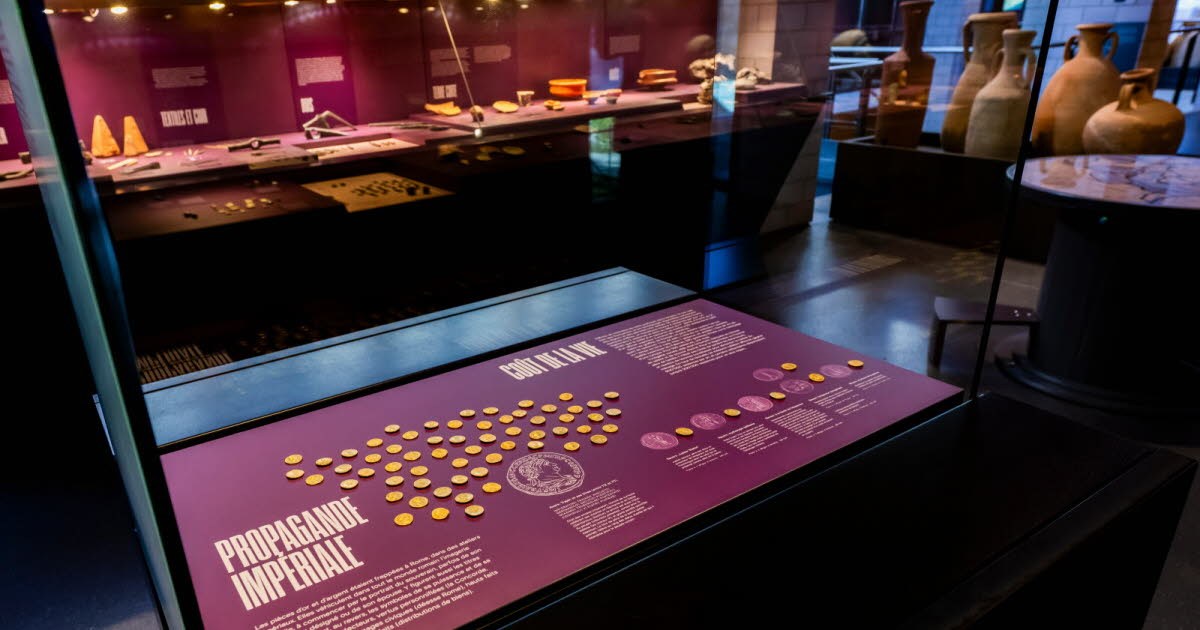 Lausanne · Gold coinsUp to€200,000Validity unconfirmed
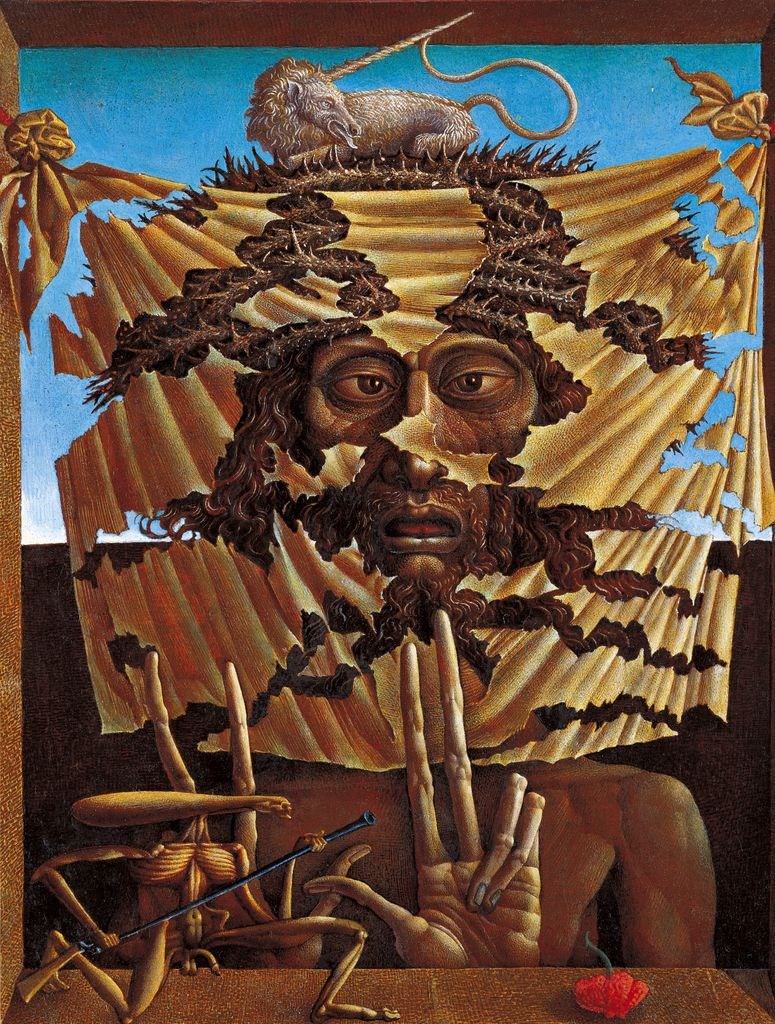 Ernst Fuchs · ViennaAdvertised reward€30,000Validity unconfirmed
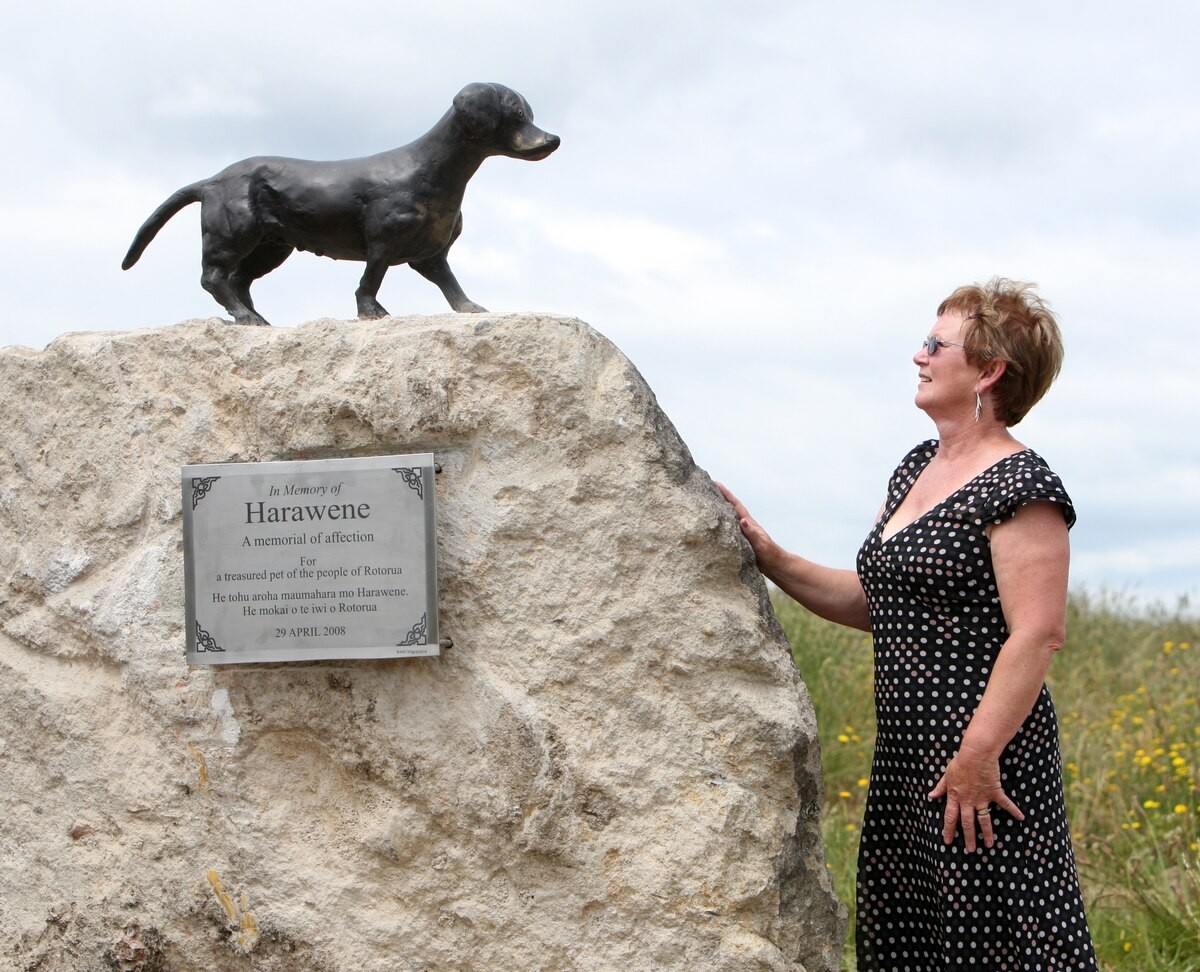 Harawene · RotoruaAdvertised rewardNZ$5,000Validity unconfirmed
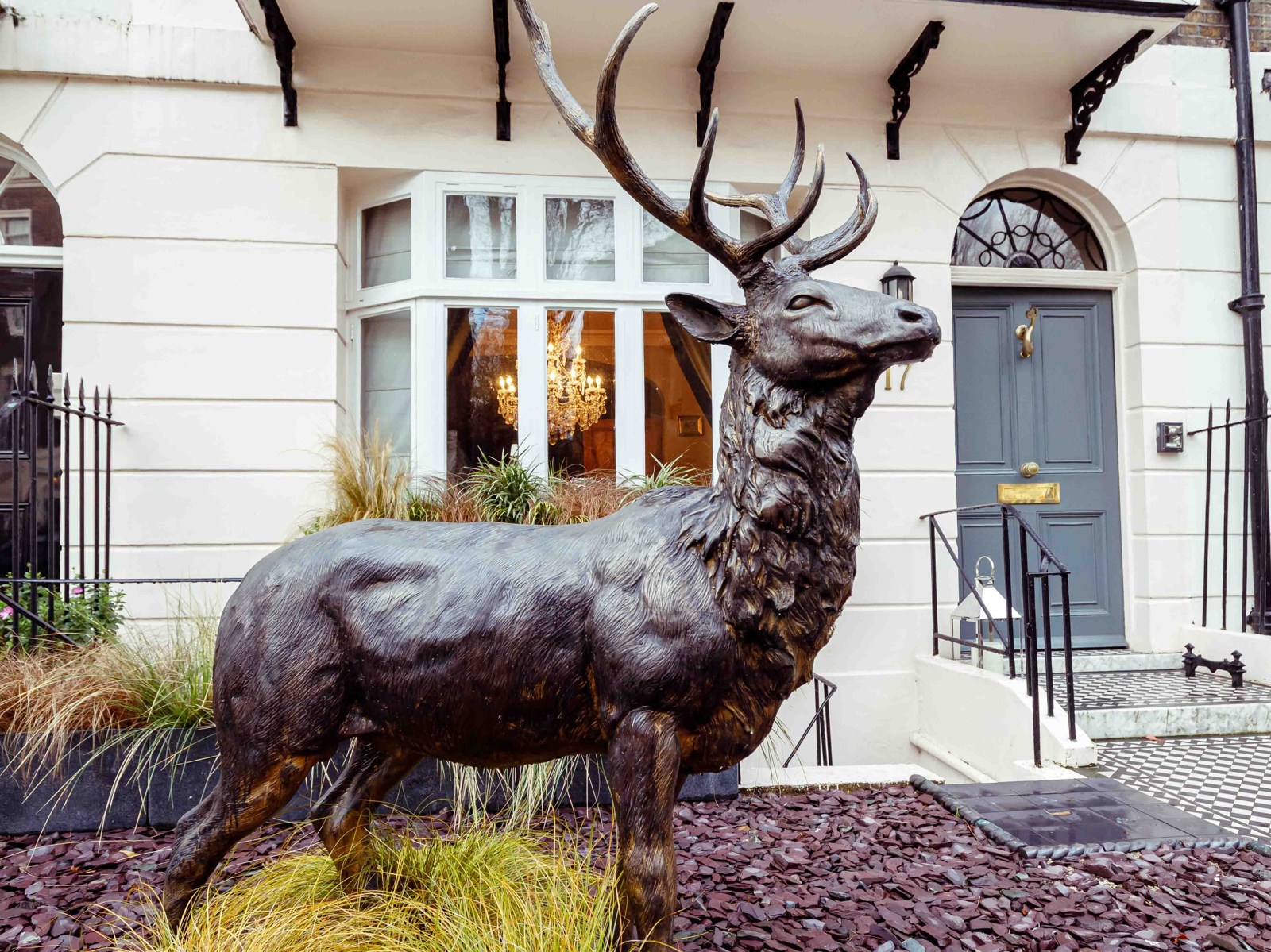 Henry · LondonAdvertised reward£1,000Validity unconfirmed
10 of 18 entries · see the full list for the rest.
Historical reward offers; reported returns, recoveries or destruction.
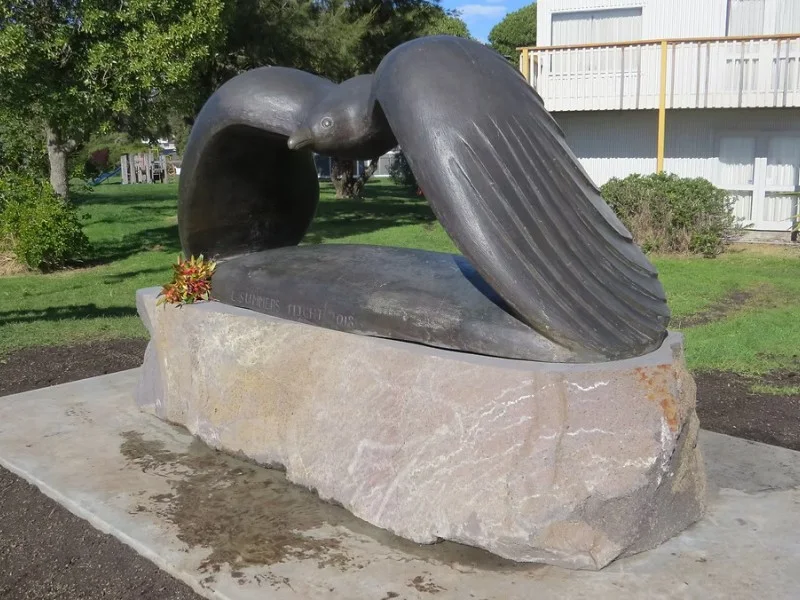 Llew Summers · FlightAdvertised rewardNZ$4,000Archive · see outcome
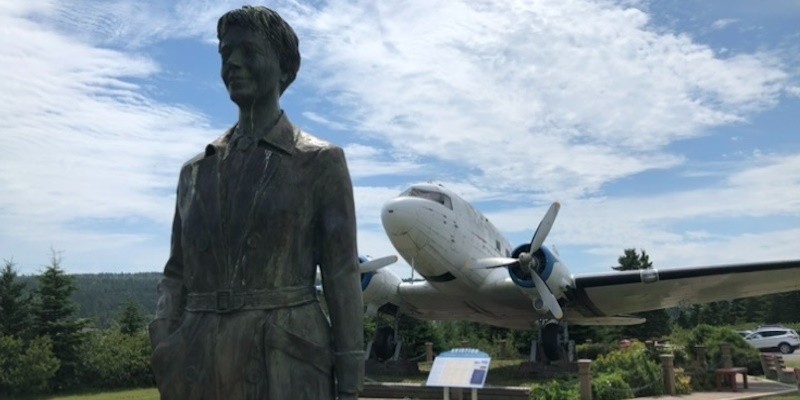 Amelia Earhart · ReturnedAdvertised rewardCA$25,000Archive · see outcome
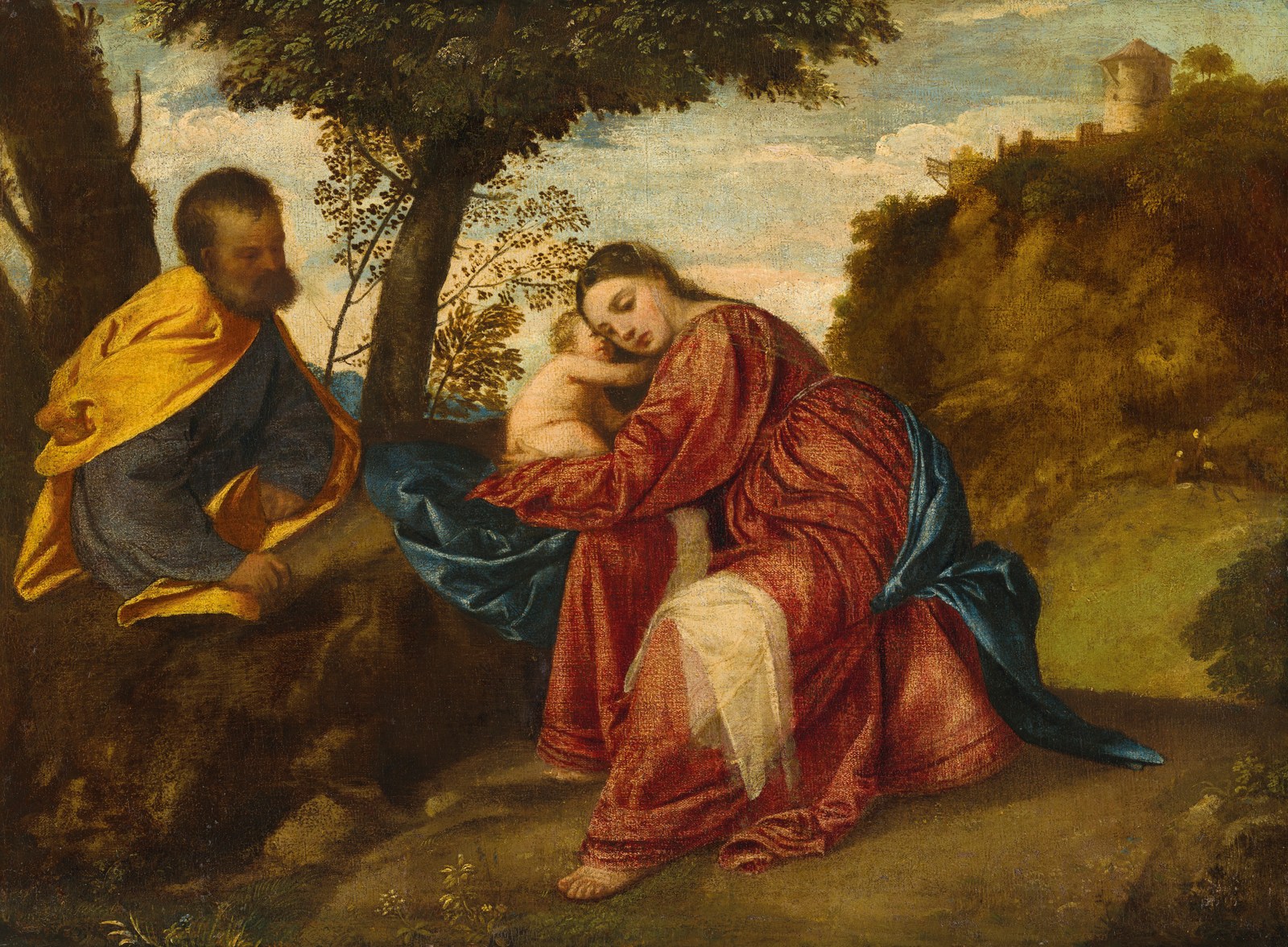 Titian · RecoveredAdvertised reward£100,000Archive · see outcome
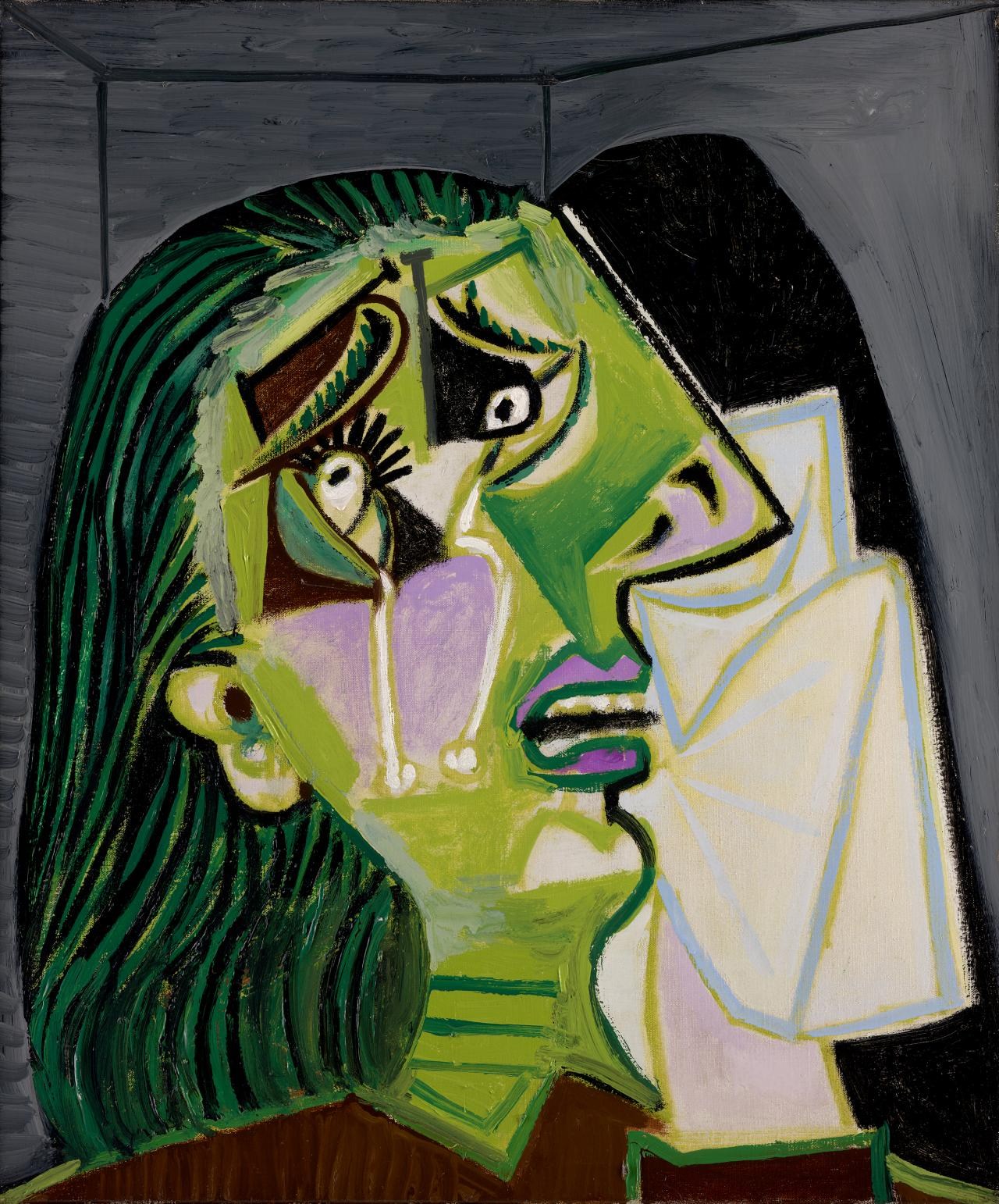 Picasso · RecoveredAdvertised rewardA$50,000Archive · see outcome
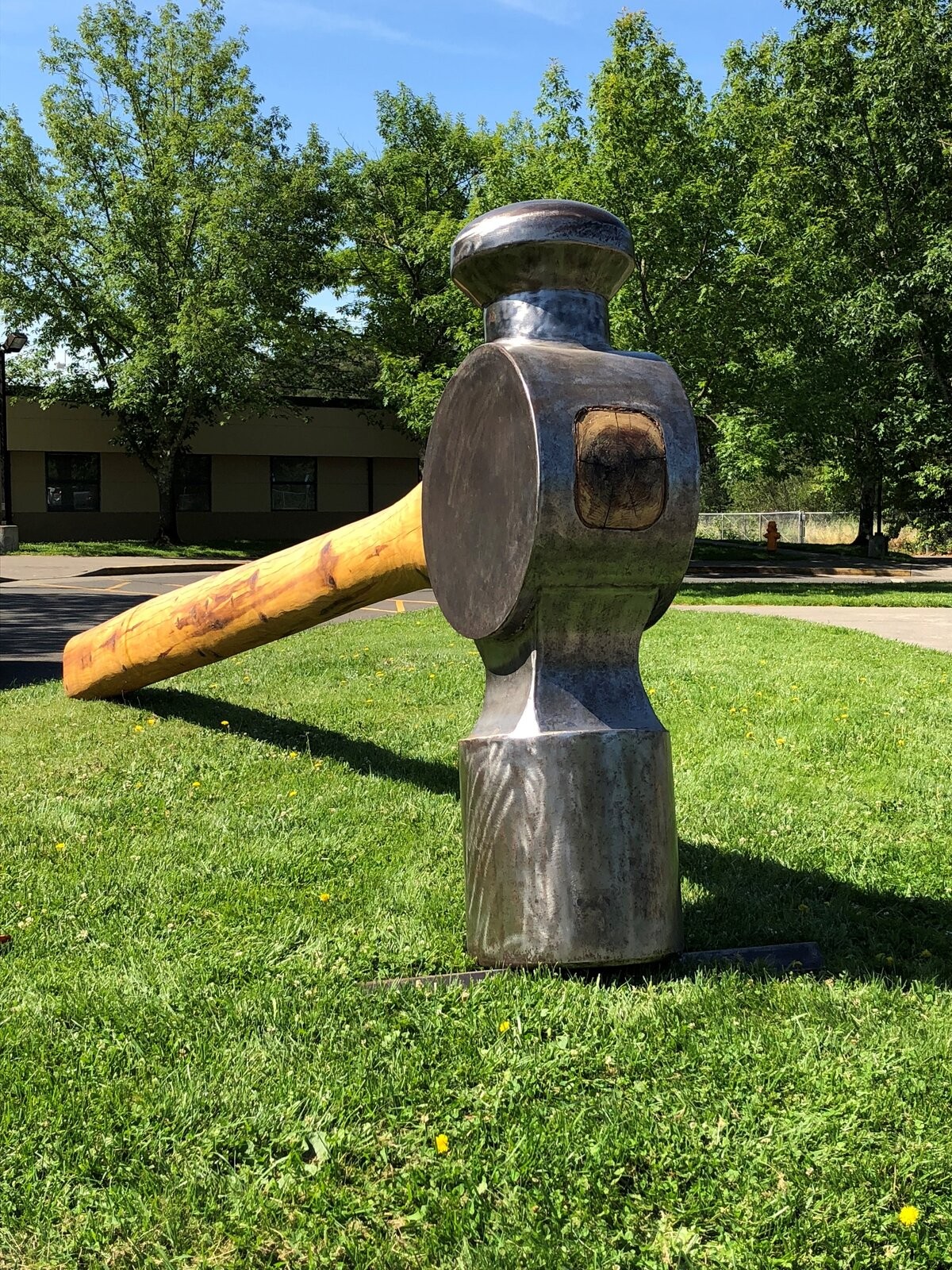 Unkrey · The HammerAdvertised reward$1,000Archive · see outcome
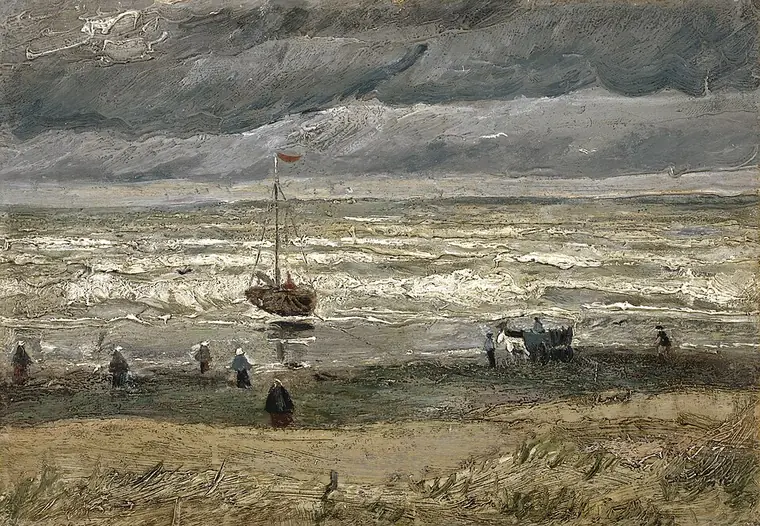 Van Gogh · Two paintingsAdvertised reward€100,000Archive · see outcome
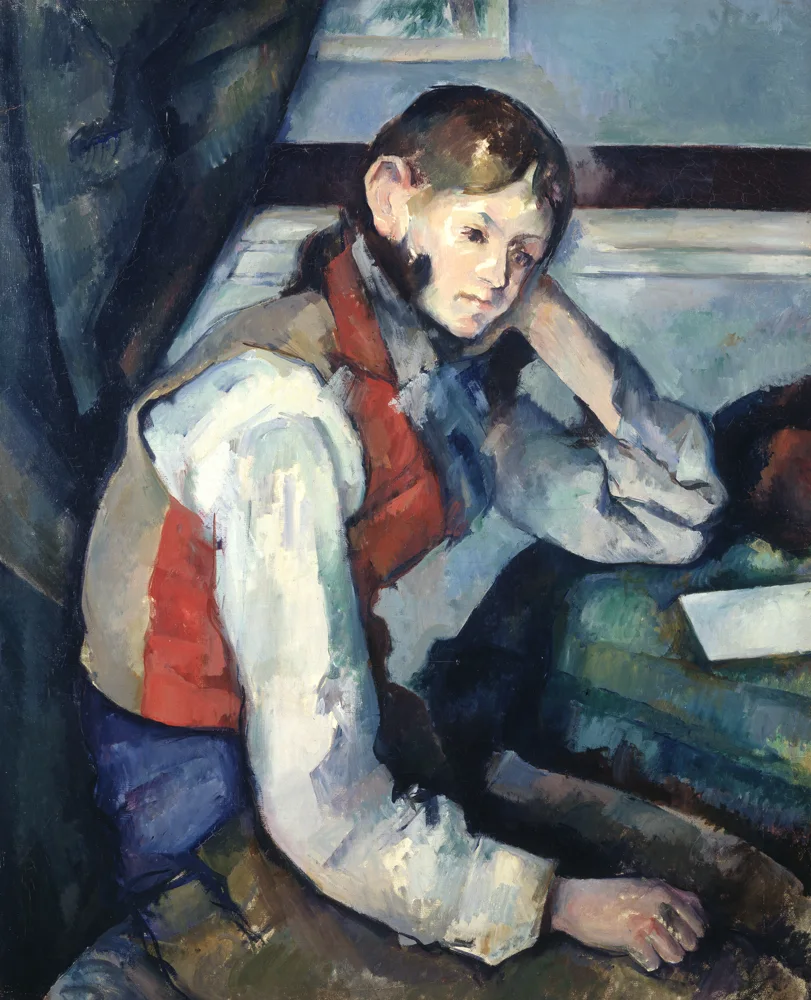 Bührle · RecoveredAdvertised rewardCHF 100,000Archive · see outcome
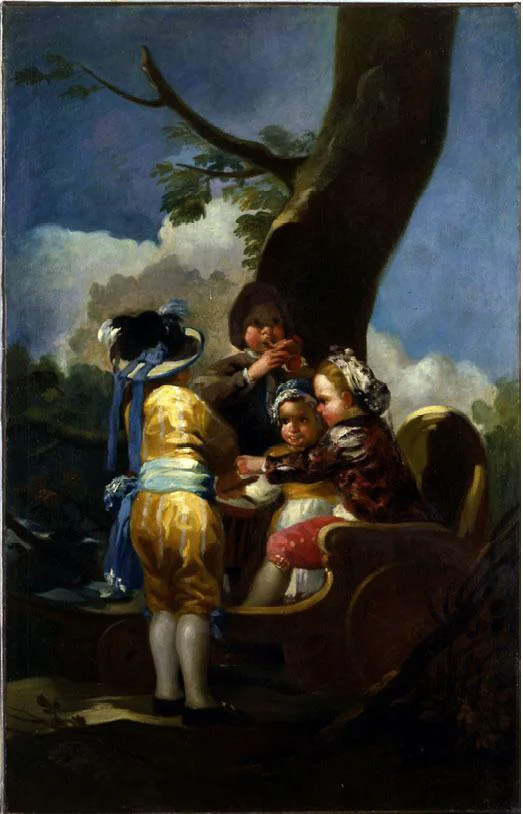 Goya · Children with a CartUp to$50,000Archive · see outcome
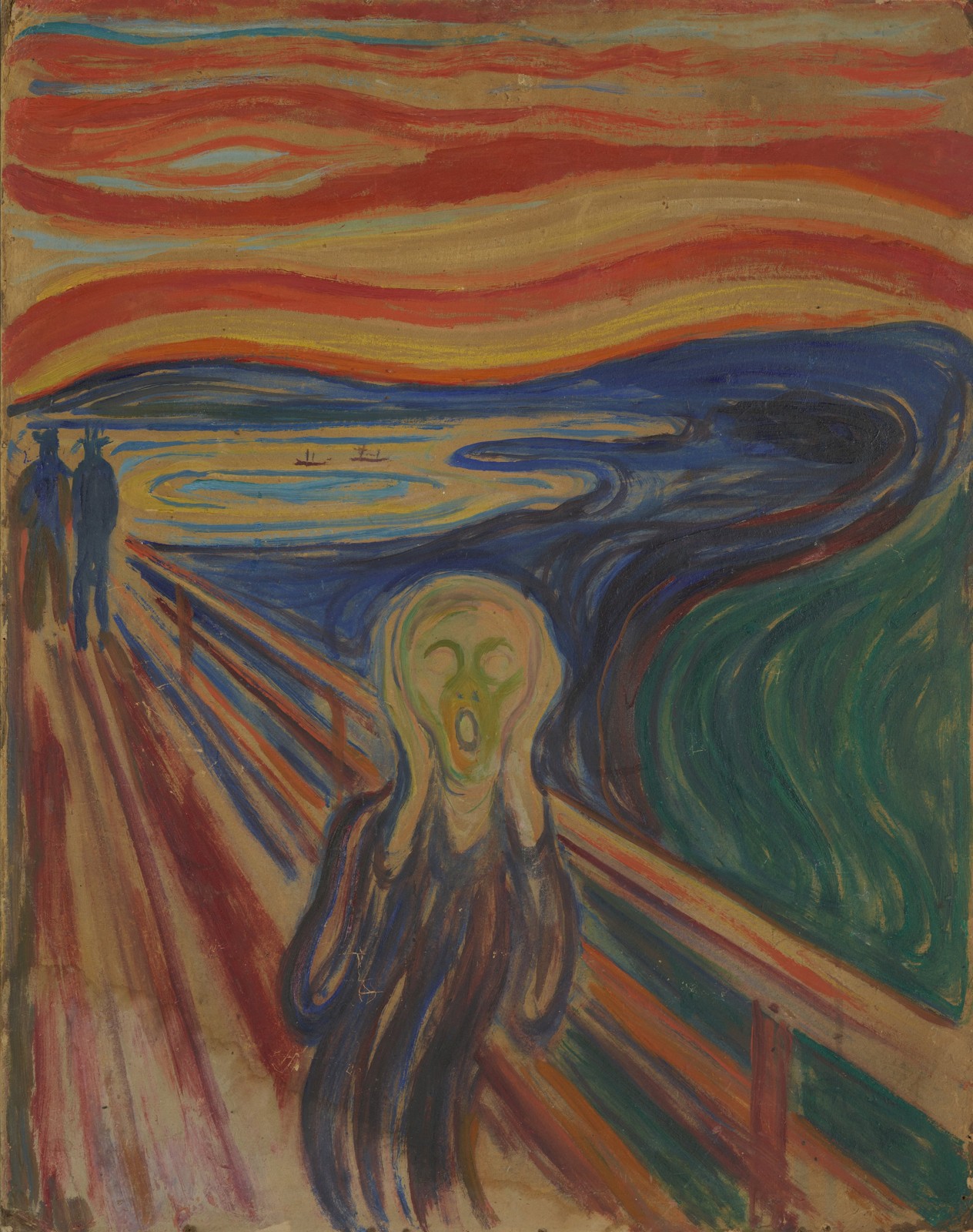 Munch · Two paintingsUp toNOK 2,000,000Archive · see outcome
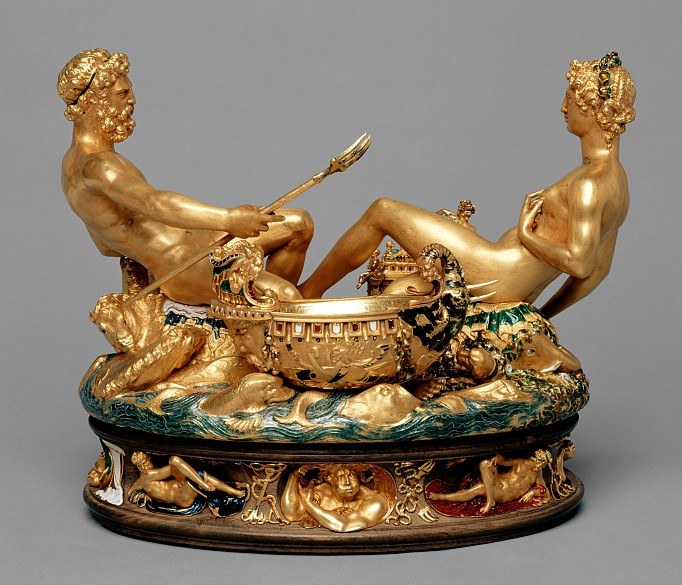 Cellini · SalieraAdvertised reward€70,000Archive · see outcome
169–183 of 183 reports
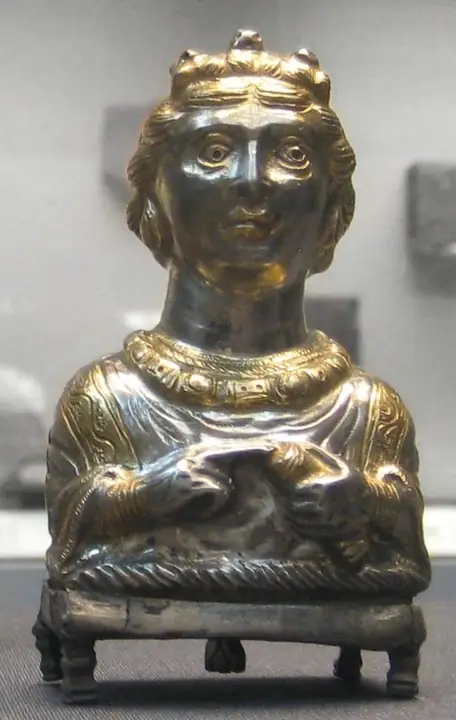
The silver-and-gold Empress Pepper Pot from the Hoxne Hoard, displayed at the British Museum. · BabelStone (Andrew West) / Wikimedia Commons · Resized for display Image source ↗ · CC0 1.0
Eric Lawes found the Hoxne treasure on 16 November 1992 and promptly reported it, enabling controlled excavation the next day. Coins, jewellery and elaborate silver tableware were recovered together. The assemblage was declared Treasure Trove in 1993 and acquired for the British Museum in 1994.
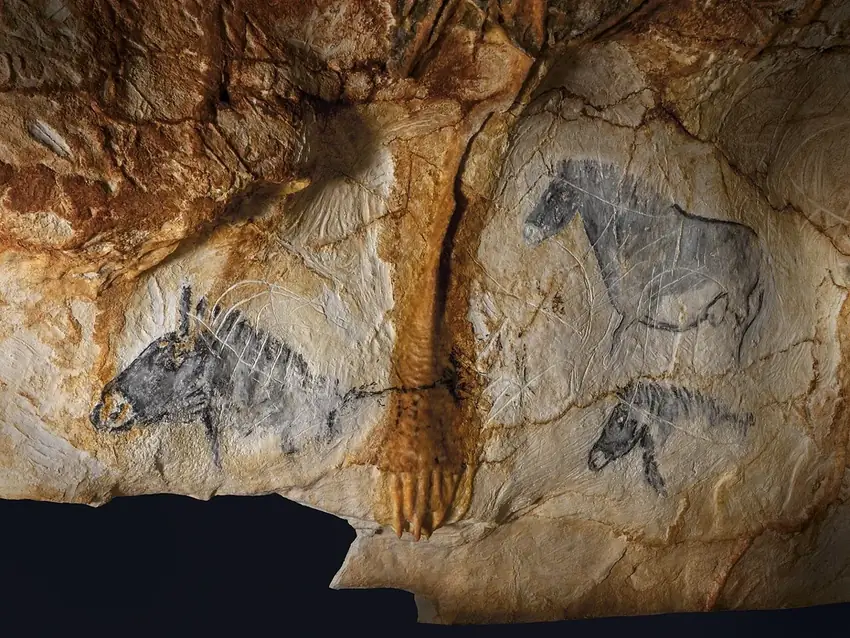
Kleber Rossillon & Région Provence-Alpes-Côte d’Azur / Sources 3D MC Image source ↗ · CC BY-SA 4.0
Henri Cosquer reported the cave to French authorities in September 1991. A survey authenticated the paintings and engravings, including animals and hand stencils. The original cave is protected and its art can be seen in a replica in Marseille.
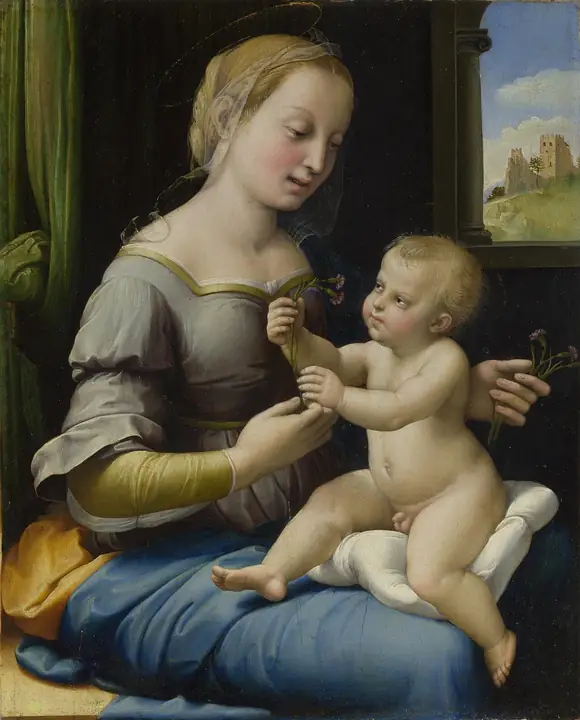
Raphael’s Madonna of the Pinks, showing the Virgin and Child holding carnations; the painting now held by the National Gallery, London. · Raphael / National Gallery, London (public domain) · Resized for display Image source ↗ · Public domain / Domaine public
Nicholas Penny’s May 1991 visit to Alnwick Castle prompted renewed examination of a small Madonna long dismissed as a copy. Infrared imaging revealed an original underdrawing with changes in the figures and setting, while pigments supported an early-sixteenth-century date. The National Gallery now holds the painting as Raphael’s original.
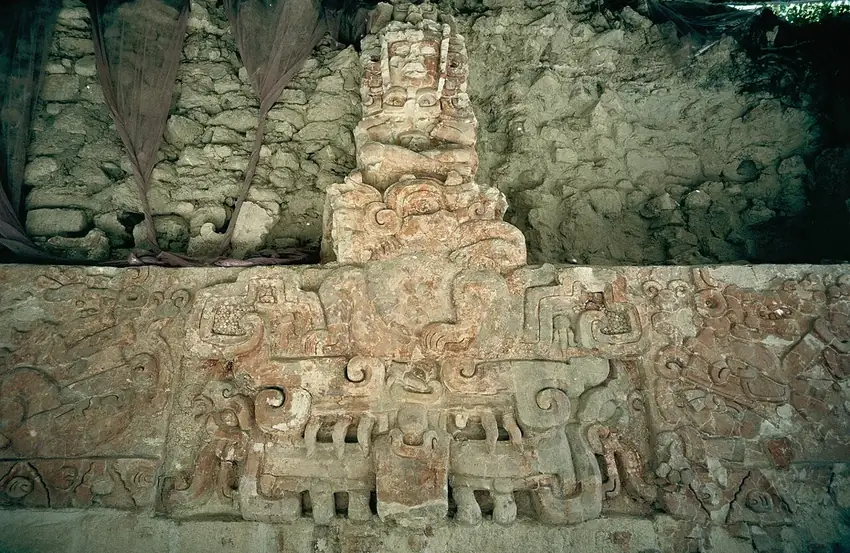
HJPD Image source ↗ · CC BY-SA 4.0
INAH archaeologists investigated looting in 1990 and documented a Maya site with an exceptional modelled stucco frieze. The sculpted façade, which retains painted decoration, was excavated and conserved at Balamkú.
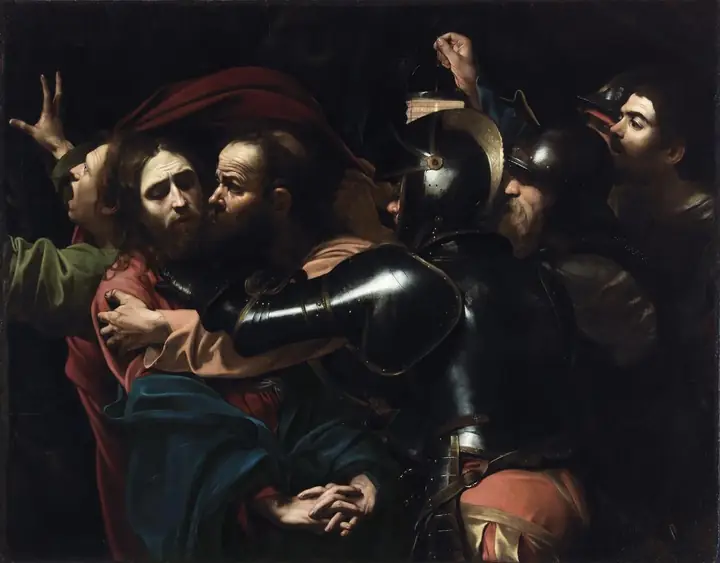
Caravaggio’s The Taking of Christ, the restored Dublin painting in the National Gallery of Ireland; not the Odesa version. · Caravaggio / National Gallery of Ireland (public domain) · Resized for display Image source ↗ · Public domain / Domaine public
Conservator Sergio Benedetti recognised the missing Caravaggio while examining pictures in a Jesuit house on Leeson Street in August 1990. Cleaning and archival research followed before the 1993 public unveiling. The painting remains on indefinite loan to the National Gallery of Ireland from the Jesuit community.
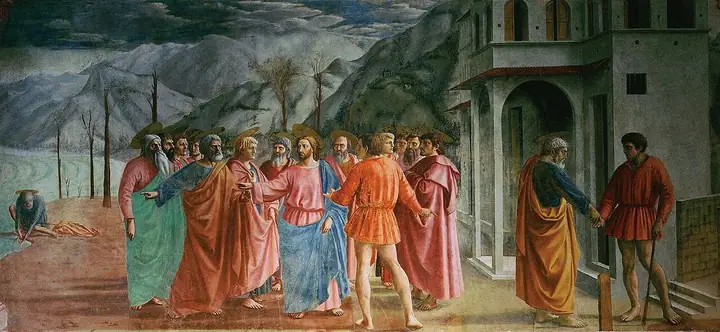
Masaccio’s The Tribute Money fresco in the Brancacci Chapel, part of the cycle examined during restoration. · Masaccio (public domain) · Resized for display Image source ↗ · Public domain / Domaine public
Florence’s civic museum history dates a full Brancacci Chapel restoration to 1981–1990. Removal of the Baroque altar surround accompanied recovery and detachment of preparatory sinopie for two lost lunettes by Masolino and Masaccio. The chapel’s 1990 reopening followed this conservation programme, rather than a new discovery of the entire fresco cycle.
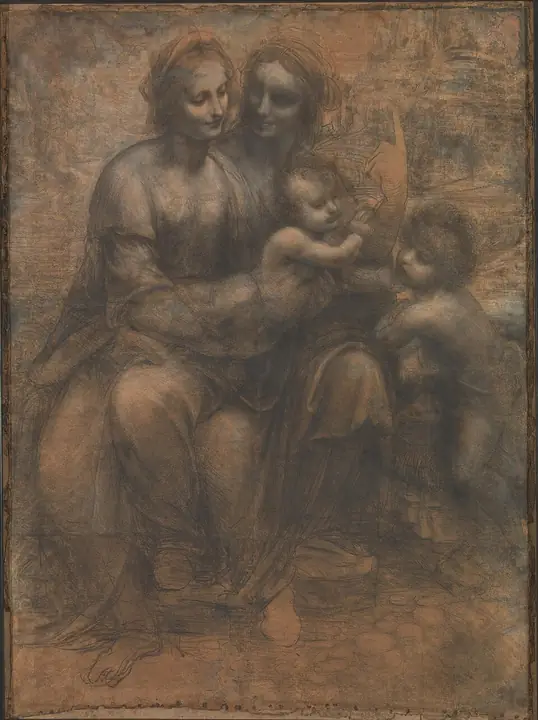
Leonardo da Vinci, The Virgin and Child with Saint Anne and Saint John the Baptist, the Burlington House Cartoon. · Leonardo da Vinci / Wikimedia Commons · Public domain · Resized for display Image source ↗ · Public domain / Domaine public
The National Gallery’s 1989 technical account documented repair of the Burlington House Cartoon after a shotgun damaged it in 1987. Conservators recovered and reattached fragments, flattened the paper and provided a new support. The research distinguished original materials from the consequences of the attack and earlier repairs, preserving the large drawing for display.
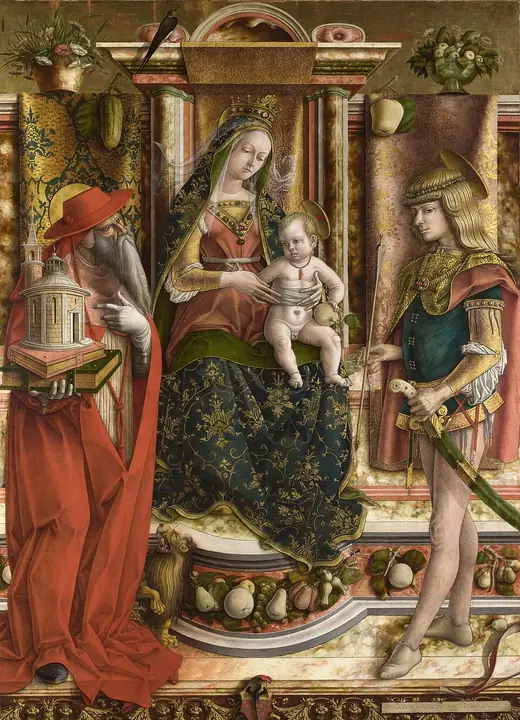
Carlo Crivelli’s La Madonna della Rondine (Madonna of the Swallow), National Gallery NG 724.1; full principal painted panel without its external frame. · Carlo Crivelli / National Gallery, London (public domain) · Resized for display Image source ↗ · Public domain / Domaine public
Examination of the Madonna della Rondine and its structure led conservators to remove nineteenth-century gilding from the predella and expose surviving original gold. They also stabilised and realigned a wood crack and treated the principal panel. The 1989 report documents recovery of original material, rather than discovery of a previously unknown altarpiece.
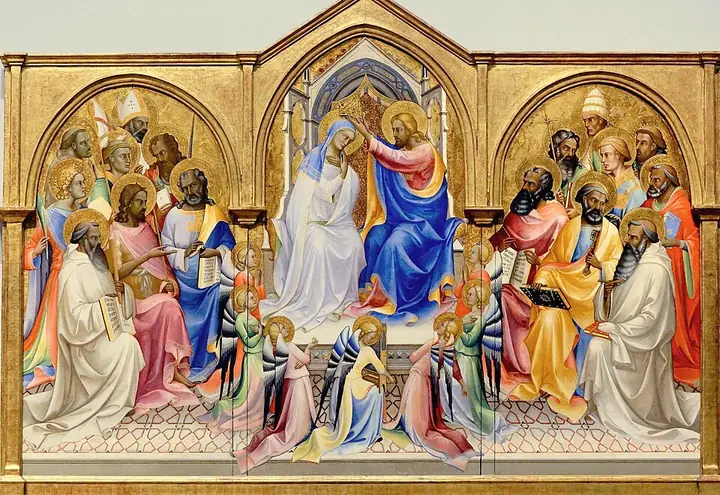
Lorenzo Monaco, Coronation of the Virgin, National Gallery; the Virgin’s robe is now faded. · Lorenzo Monaco / Wikimedia Commons · Public domain · Resized for display Image source ↗ · Public domain / Domaine public
Analysis published in 1988 showed that the Virgin’s apparently white robe in Lorenzo Monaco’s Coronation had once been deep pinkish mauve. Protected passages retained red lake, white and ultramarine that exposed areas had lost through fading. The case demonstrates a material change in an old painting, not an intentional modern repainting of the robe.
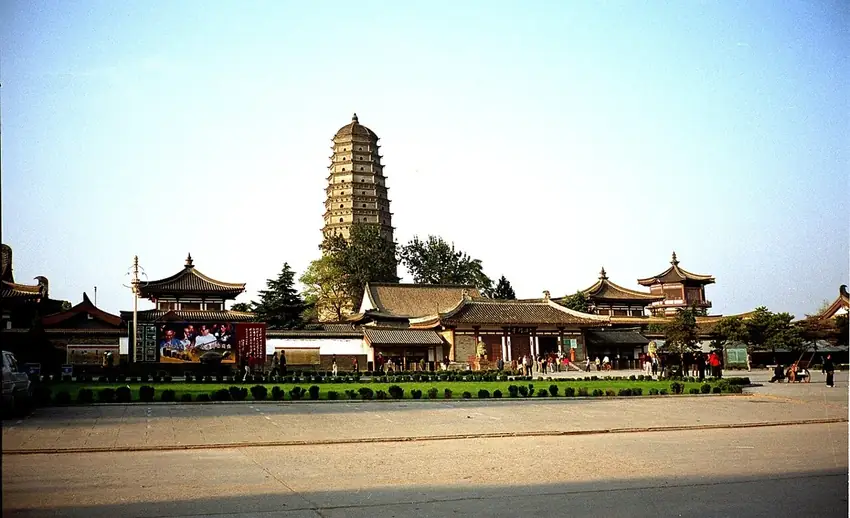
Gisling Image source ↗ · CC BY-SA 4.0
A gilt-silver casket with Buddhist guardian figures formed part of a group of nested treasure caskets excavated beneath Famen Temple in 1987. The temple museum lent it for a later exhibition in Shanghai.
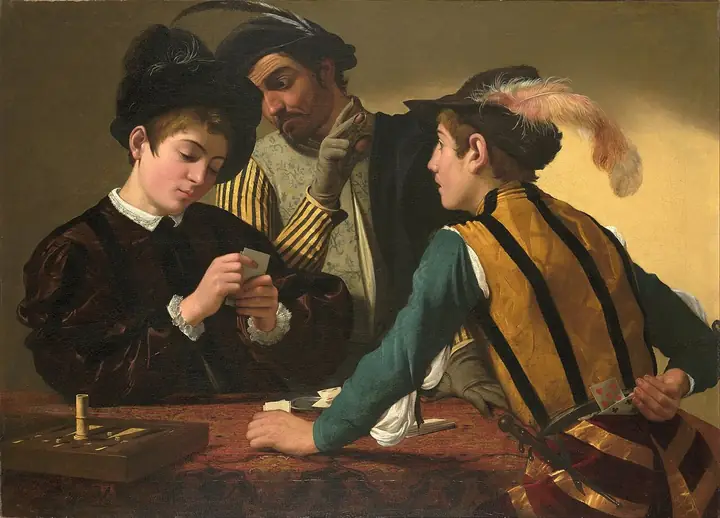
Caravaggio’s The Cardsharps in the Kimbell Art Museum, showing three card players. · Caravaggio / Kimbell Art Museum / Google Art Project (public domain) · Resized for display Image source ↗ · Public domain / Domaine public
Caravaggio’s long-unlocated Cardsharps emerged from a European private collection and entered the Kimbell collection in 1987. Treatment removed a later canvas strip and exposed Cardinal del Monte’s collection seal on the reverse. Together with the painting’s revisions, that evidence supported recognition of the lost original rather than another copy.
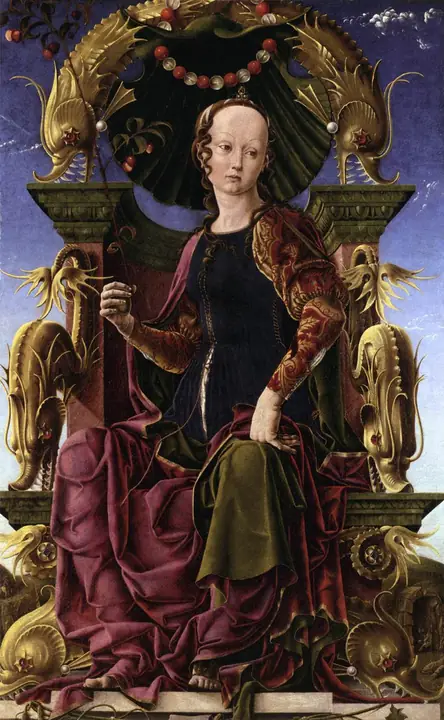
Cosmè Tura, A Muse, the Allegorical Figure examined in the 1987 technical investigation. · Cosimo Tura / Wikimedia Commons · Public domain · Resized for display Image source ↗ · Public domain / Domaine public
X-radiographs and infrared imaging of Tura’s Allegorical Figure exposed major changes beneath its visible surface. The artist redrew the lower figure and scored a new throne design into earlier paint and ground. The National Gallery’s 1987 technical investigation distinguished this reworking from panel repairs and Molteni’s nineteenth-century restoration.
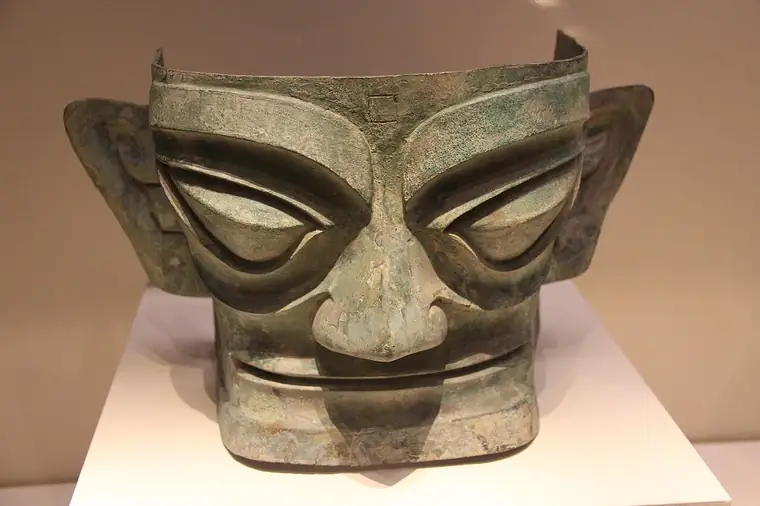
Gary Todd / Wikimedia Commons · Resized for display Image source ↗ · CC BY-SA 4.0
Two pits discovered at Sanxingdui in 1986 produced remarkable bronze masks, statues, gold objects and other ancient Shu artefacts. They established the site’s international prominence long before six further pits were excavated in 2020–2022. This entry concerns the original pair of pits rather than treating the later campaign as the same discovery.
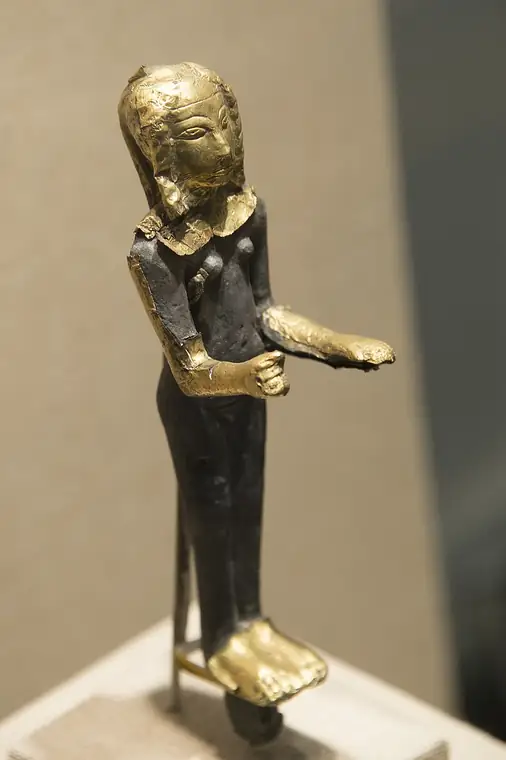
Dosseman / Wikimedia Commons · Resized for display Image source ↗ · CC BY-SA 4.0
A sponge diver’s 1982 discovery off Kaş led archaeologists to a Late Bronze Age ship carrying luxury goods across the Mediterranean. Excavations from 1984 to 1994 recovered carved ivory containers, gold and gemstone jewellery and other crafted objects alongside metal cargo. The Institute of Nautical Archaeology documents the finds as evidence of elite exchange.
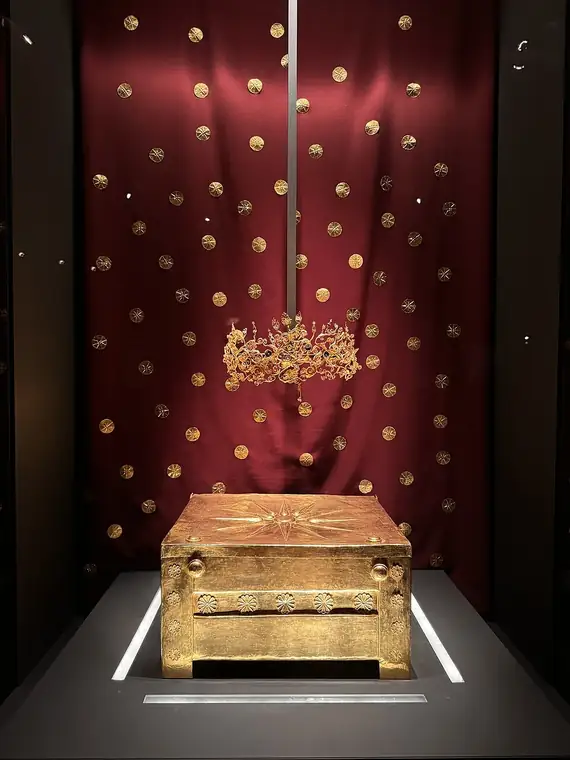
Digitalphilologist / Wikimedia Commons · Resized for display Image source ↗ · CC BY-SA 4.0
Manolis Andronikos and his team opened an unlooted royal tomb at Vergina on 8 November 1977. Its grave goods included gold larnakes, a finely worked gold wreath and silver vessels, alongside a hunting fresco. The discovery transformed knowledge of Macedonian court art; this entry records the excavation without treating every royal identification as settled.
The week’s key developments in art theft, forgery, recovery, restitution and the courts. Every Monday.
Subscribe →