The fairy tales hidden inside an SS officer’s villa
Created under coercion, concealed for decades, then divided by a disputed removal: Schulz’s murals have a documented afterlife.
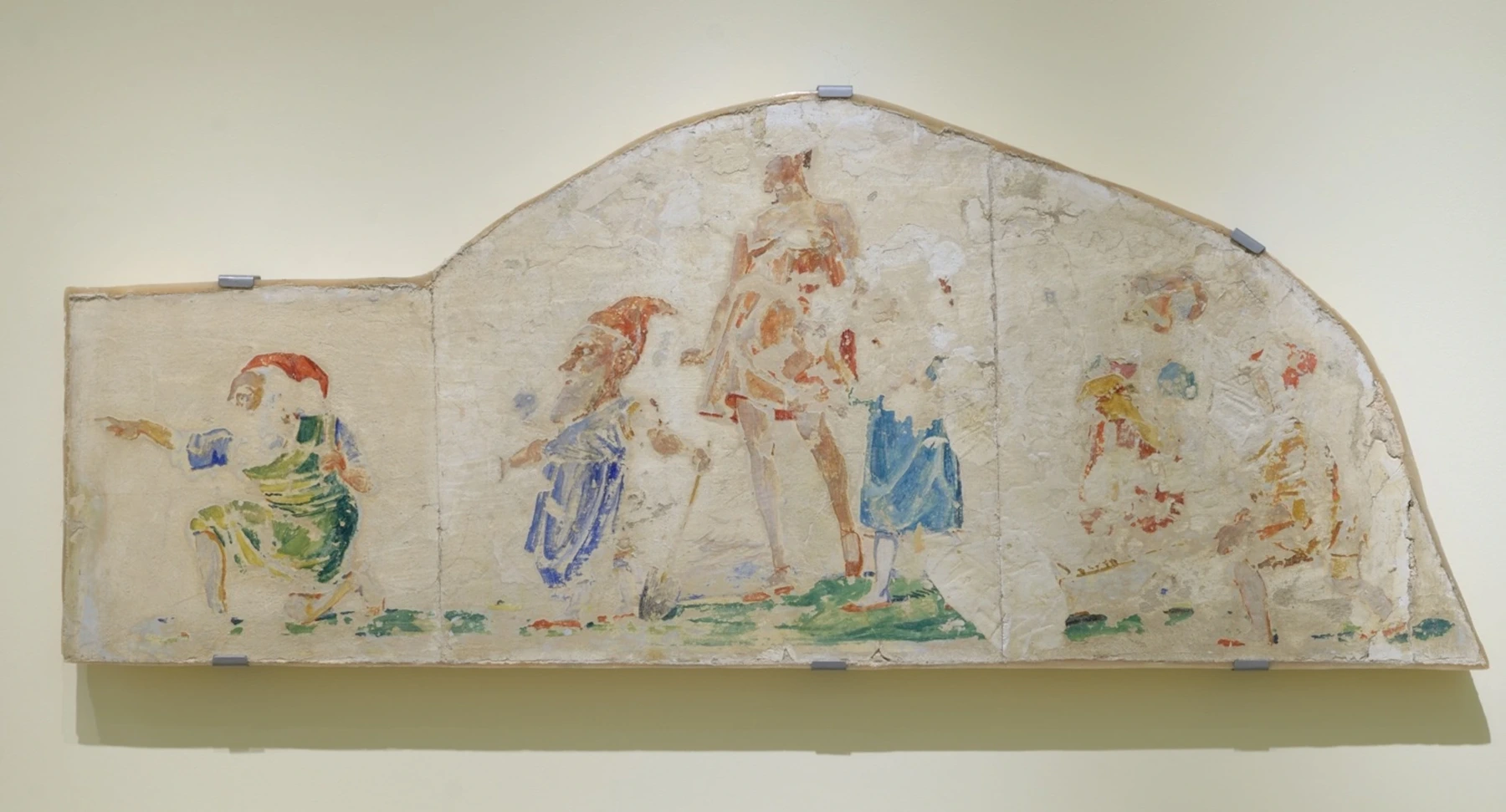
An artist forced to decorate a nursery
Under German occupation, Jewish writer and artist Bruno Schulz was compelled to paint fairy-tale figures in the villa used by SS officer Felix Landau. The children’s imagery belongs to a history of persecution, not a freely chosen commission. Schulz was killed in Drohobych on 19 November 1942. His surviving works and biography must be distinguished from later speculation about the precise circumstances of his death. [1][2]
The wall yields its figures
In February 2001, filmmaker Benjamin Geissler’s search brought the concealed paintings back to view. Their discovery was followed by a second, more public drama: Yad Vashem removed fragments to Jerusalem in May. The transfer prompted objections and a dispute over cultural heritage, preservation and authority. Rediscovery and removal were separate events; neither should be compressed into a simple story of recovery and return. [1][3]
The agreement after the controversy
On 28 February 2008, Israel and Ukraine signed an agreement allowing the transferred fragments to remain at Yad Vashem on a twenty-year loan, renewable in five-year periods. Public display followed in February 2009. Other fragments remained in Drohobych. The dramatic rediscovery therefore does not describe works still missing: an acknowledged custody arrangement followed the controversy, although arguments about memory and belonging endured. [2][3]
Rediscovered; custody addressed by a 2008 loan agreement
The cited accounts document fragments in Jerusalem under the 2008 arrangement and others in Drohobych. This is not a present-day missing-art case.
Artwork Details & DocumentationIdentification, ownership history and supporting records
Individual artwork identification details have not yet been documented in this record. Missing specifications are not inferred from the photograph or report headline.
Not documented in this record: object type · materials & technique · measurements · inscriptions & markings · distinguishing features · artwork title · maker / attribution · creation date / period · subject.
Record sources
Identification details follow the Object ID categories where documented. Ownership history is recorded separately; this documentation is not an authentication or a certificate of ownership.
Sources & documentation
- Culture.pl / Adam Mickiewicz Institute: Bruno Schulz biography ↗
- Jüdische Allgemeine: mural exhibition and custody agreement, 12 March 2009 ↗
- The Times of Israel: rediscovery, removal and 2008 agreement, 30 June 2023 ↗
An original ArtTraceX feature based on the cited sources, checked 9 November 2026. Legends and hypotheses are distinguished from established facts. Images are identified in their captions.
More mysteries
All stories →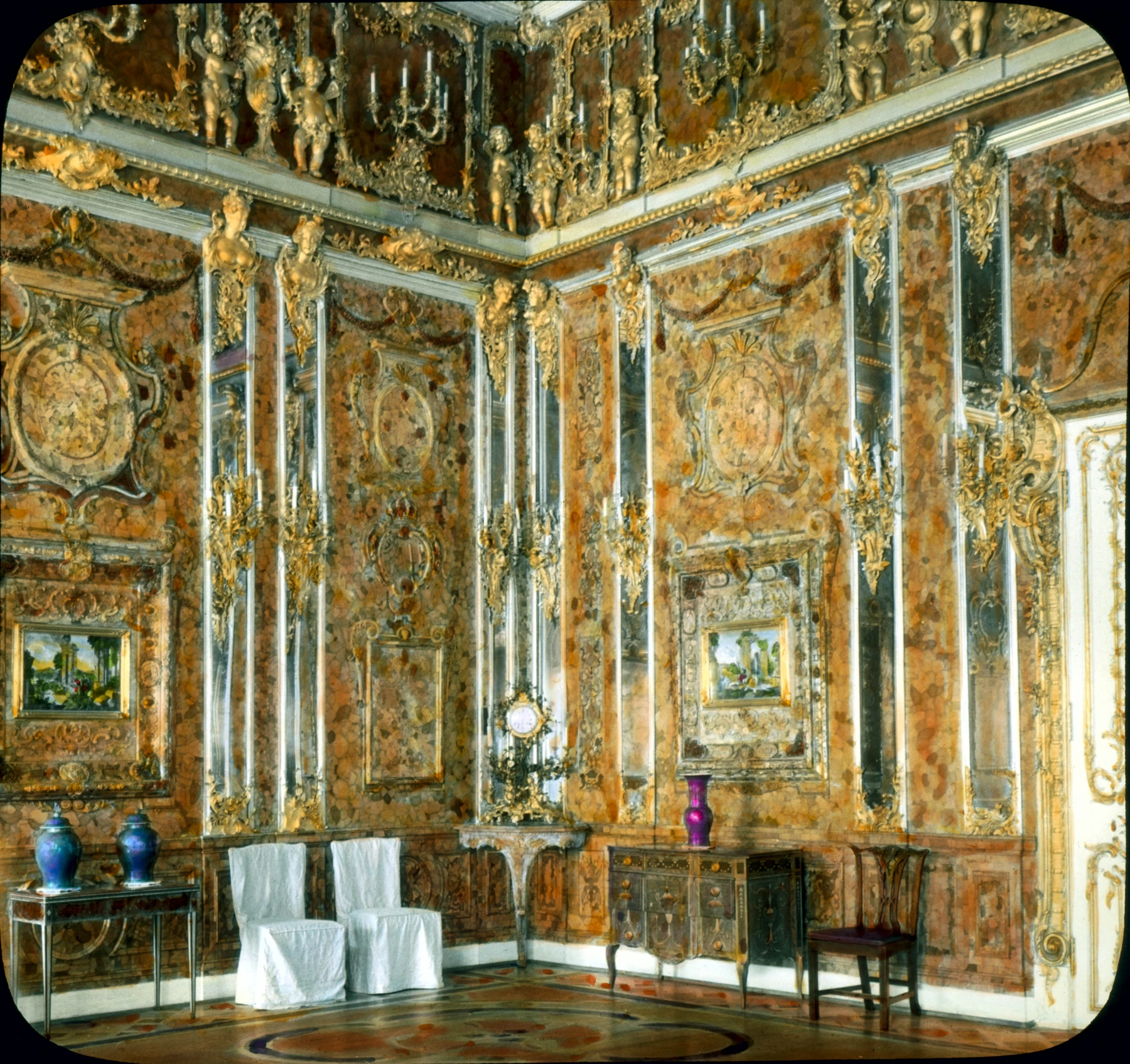
The room that vanished after it was taken apart
Original ensemble missing; some original elements returnedA palace interior disappeared in wartime. The room visitors see today is a reconstruction, not its rediscovery.
Follow the clues ↗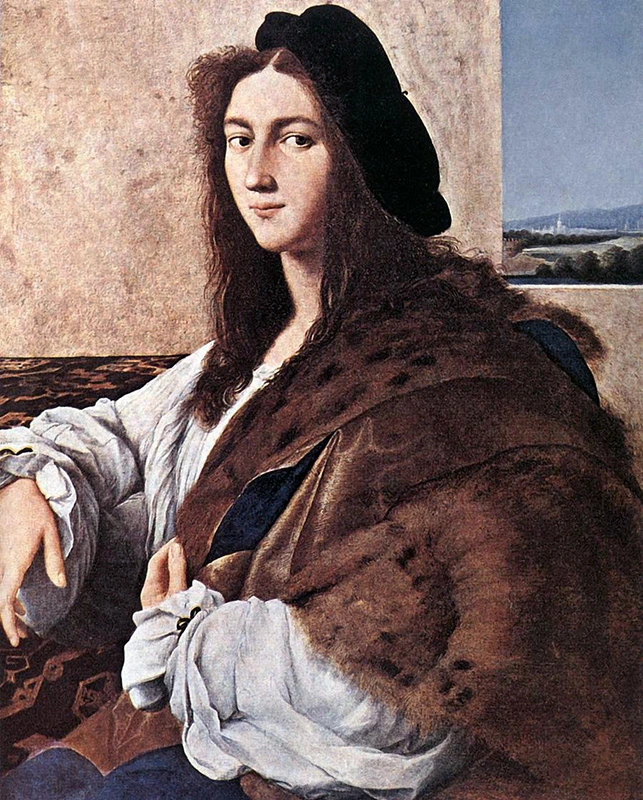
The portrait whose wartime trail ends in silence
Missing since 1945; survival unconfirmedRaphael’s young sitter survives in photographs and copies. The original has not been verifiably recovered.
Follow the clues ↗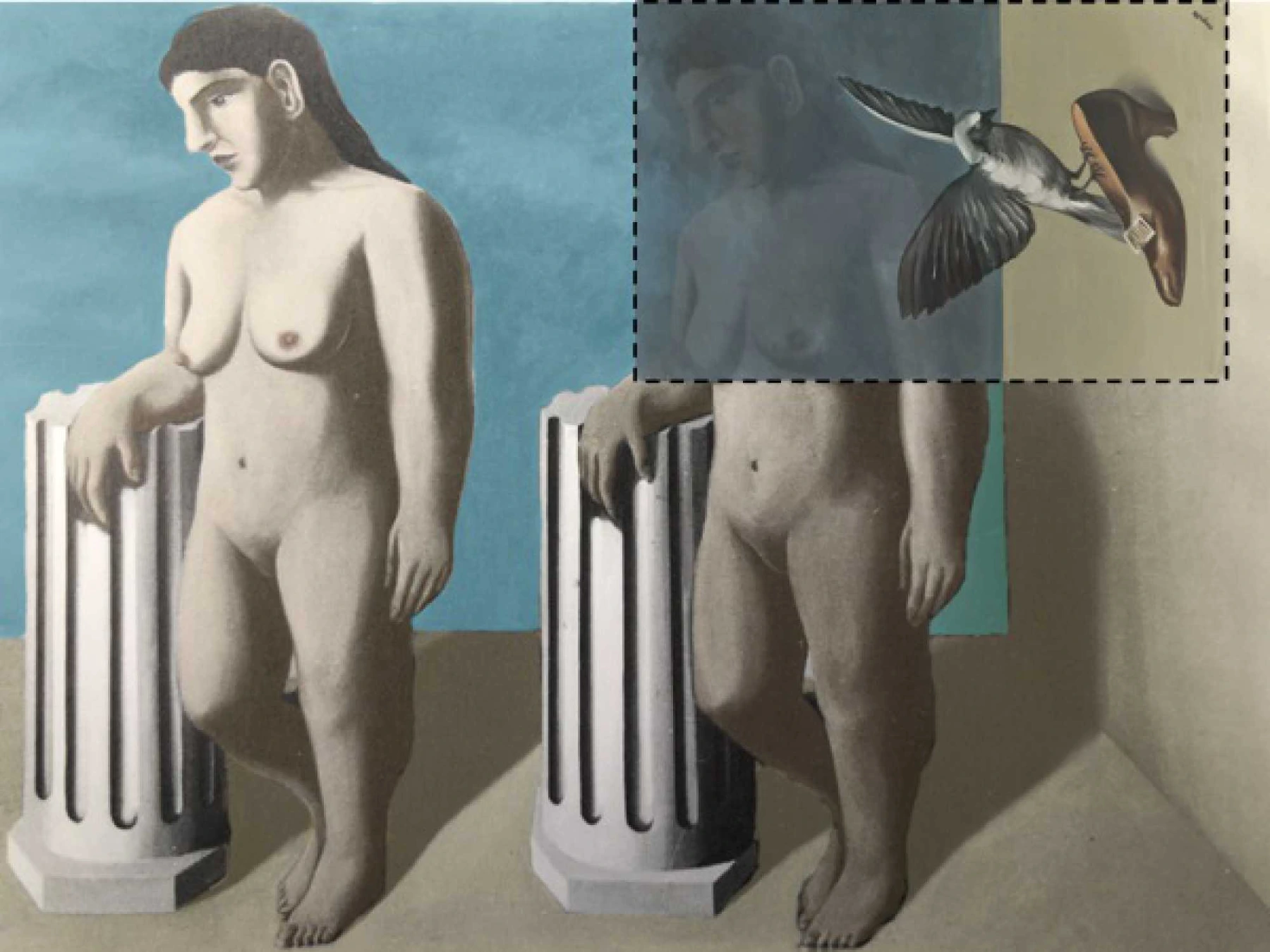
The missing Magritte hidden beneath four other Magrittes
Four quarters identified; composition virtually reconstructedAn X-ray turned a vanished composition into a puzzle spread across four museum collections.
Follow the clues ↗
Three heads rose from the canal. None was Modigliani’s.
Solved hoax; the three heads are not authentic Modigliani worksLivorno went looking for a legend and briefly found the masterpieces it expected to see.
Follow the clues ↗