The day the Mona Lisa became a missing person
A portrait vanished from the Louvre in 1911. Two years later, an attempt to sell it in Florence brought its disappearance to an end.
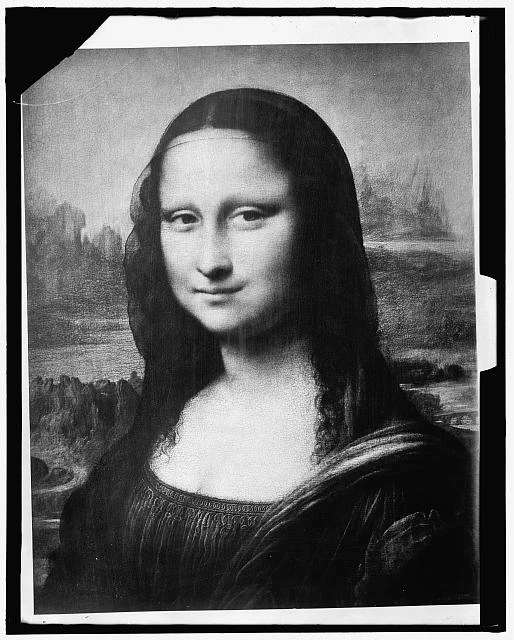
An absence at the Louvre
On 21 August 1911, the Mona Lisa was stolen from the Louvre. Vincenzo Peruggia, a glazier who had worked at the museum, took the portrait. The missing object was a painting on a wooden panel, not a rolled canvas. Its disappearance transformed an already important Renaissance work into a story followed far beyond the museum. [1][2]
The painting and the letters
The Florence State Archives traces a less romantic chapter than the familiar patriotic legend. Peruggia kept the painting in Paris for more than two years. In 1913, he approached possible intermediaries and wrote letters concerning its sale. His appeals to return the work to Italy coexisted with demands for compensation. Those documents complicate any simple account of a purely selfless rescue. [3]
A return, not a repatriation
An approach to an Italian art dealer led to the authorities being alerted. The Library of Congress dates the recovery in Florence to 12 December 1913. The Louvre’s history also corrects a persistent misconception: Leonardo had brought the portrait to France, and François I acquired it in 1518. Its presence in Paris was not the result of Napoleon looting it from Italy. The theft added another layer to the painting’s fame, while its recovery closed a very real criminal episode. [1][2][3]
Recovered
Recovered in Florence in December 1913 and returned to the Louvre. The theft is resolved; the painting is not a currently missing artwork.
Sources checked 8 November 2026.Artwork Details & DocumentationIdentification, ownership history and supporting records
Mona Lisa
- Artwork title
- Mona LisaMusée du Louvre — INV 779 ↗ · checked
- Maker / attribution
- Leonardo da VinciMusée du Louvre — INV 779 ↗ · checked
- Object type
- PaintingMusée du Louvre — INV 779 ↗ · checked
- Creation date / period
- 1503–1519 (Louvre dating)Musée du Louvre — INV 779 ↗ · checked
- Materials & technique
- Oil on poplar panelMusée du Louvre — INV 779 ↗ · checked
- Measurements
- 79.4 × 53.4 cm, without accessories (current Louvre record).Musée du Louvre — INV 779 ↗ · checked
- Accession / inventory number
- INV 779; MR 316Musée du Louvre — INV 779 ↗ · checked
- Subject
- Portrait of Lisa Gherardini, wife of Francesco del Giocondo.Musée du Louvre — INV 779 ↗ · checked
- Distinguishing features
- An 11 cm split descends from the panel’s upper edge.Musée du Louvre — INV 779 ↗ · checked
Not documented in this record: inscriptions & markings.
Documented ownership history
- 1518 (probable)
Probably acquired by François I; the Louvre qualifies this transfer.
Musée du Louvre — INV 779 ↗ · checked - 1793
Only stages supported by the cited sources are shown. This list is not a complete chain of ownership.
Record sources
Identification details follow the Object ID categories where documented. Ownership history is recorded separately; this documentation is not an authentication or a certificate of ownership.
Sources & further reading
- Musée du Louvre · The Mona Lisa ↗
- Library of Congress · Theft chronology ↗
- Archivio di Stato di Firenze · Attempts to sell the painting ↗
- Library of Congress · Historic thefts and repatriation ↗
An original narrative synthesis of the sources above. Images depict the artworks; they are not reconstructions of the thefts.